
Fix Sagging Gutter: Hangers, Supports and Slope
Part of: Outdoors and garage
- Difficulty
- Moderate
- Time
- 1 to 3 hours
- Tools
- Stable ladder, drill, long gutter screws or spikes, new hangers, level, chalk line, gloves, safety glasses, bucket
- Call a pro if
- the fascia board is rotten, the gutter is bent or the roof is steep or high
In this guide
- Ladder safety
- Wear protection
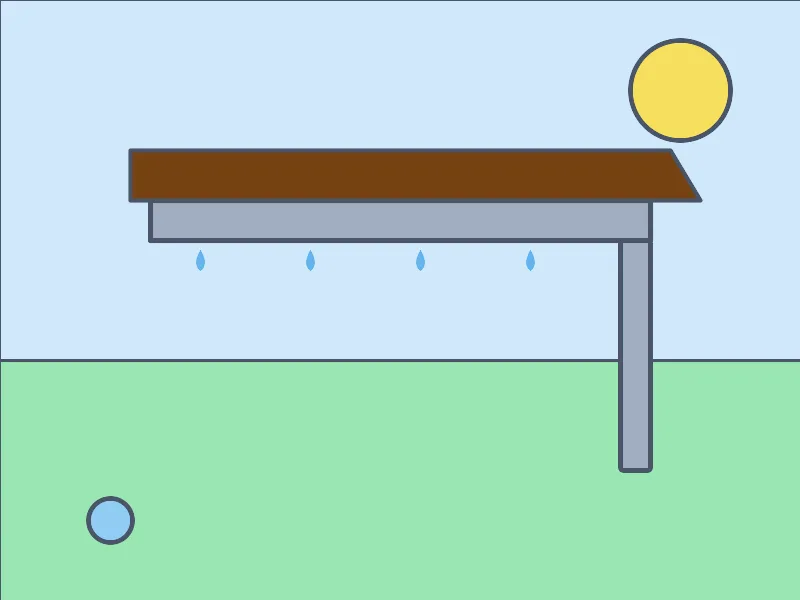
You can fix sagging gutter runs by resetting the hangers and restoring the slope toward the downspout. A gutter should slope slightly toward the downspout so water runs out. When it sags, water pools, overflows and leaks onto the siding and the ground. Weight from leaves, ice or old hangers is the usual cause. Most sagging gutters can be fixed with new hangers and a few screws. This guide shows how to find the problem, set the slope and secure the gutter.
This guide is part of our wider guide to gutters and drainage.
Find the sag
Look along the gutter and find where it dips. Pour water in with a hose or wait for rain to see where it pools. Check the hangers, the spikes and the fascia behind. Loose hangers, missing screws and rotten wood are common. Clean the gutter first. See How to clean gutters.
The right slope
A gutter should slope about a quarter inch for every ten feet toward the downspout. Mark the high end and the low end. Snap a chalk line between them. Use the line as a guide to place the hangers.
Step by step
1. Set up the ladder on firm ground, and have a helper hold it.
2. Remove debris from the gutter.
3. Find the hangers near the sag. Take out loose spikes or screws.
4. Lift the gutter to the chalk line and hold it in place.
5. Install a new hanger at each trouble spot. Place hangers every 2 feet or so.
6. Drive screws through the hanger into a solid rafter tail or the fascia. Do not just screw into thin trim.
7. Check the slope with a level and a bit of water.
8. Add a support under long runs. Check the hangers near corners and the downspout.
9. Run water through the gutter and watch it flow.
10. Seal any leaks at seams. See Leaking gutter seam: how to fix.
Fix rotted fascia
If the screws spin or the wood is soft, the fascia has rot. Remove the damaged board and replace it. Soft fascia will not hold hangers. A pro may be needed if the rot is large, or if it extends into the roof edge.
Signs that point to each cause
A gutter that sags in one place has a loose hanger or a clog. A gutter that sags along a long run has widely spaced hangers. A gutter that pulls away from the fascia has loose spikes or rot. A gutter that holds water in the middle has the wrong slope. Water behind the gutter points to a missing drip edge or flashing. Ice damage in winter often bends gutters. Check that the downspout is not clogged. See Downspout drainage: how to direct water away.
Choose the right hangers
Hidden hangers clip inside the gutter and screw through the front and back. They hold better than old spikes. Strap hangers wrap under the gutter. Use hangers made for your gutter type and size. Stainless or coated screws resist rust.
Prevention
Clean gutters twice a year. Keep hangers tight. Remove heavy snow and ice from the edge when it is safe. Trim branches that drop leaves. Check the slope after a storm. Consider guards if leaves are a problem.
Plan for ice
Ice adds a lot of weight and bends gutters. Keep the gutter clear before winter so water drains and does not freeze in place. Do not chip ice off with a hammer, which can break the gutter. See How to winterize your home.
Reseal the ends and check the end caps
After you re-hang a gutter, check the end caps and the corners for leaks. Clean the seam, dry it, and apply gutter sealant if it weeps. A leak at a corner can look like a sag problem but only needs sealing.
Check the roof edge
Look at the roof edge above the gutter. Shingles should overhang the gutter by about half an inch, so water drips in. If water runs behind the gutter, a drip edge may be needed. A roofer can add one. This prevents rot in the fascia and a repeat sag.
Related guides
- How to Install a Rain Barrel and Collect Water From a Downspout
- Fix Leaking Garden Hose: Split, End or Coupling
- How to Install a Gutter Downspout Strainer
- How to Install a Gutter on a Shed
FAQ
How many hangers do I need? One about every 2 feet is common.
What slope do I need? About a quarter inch per ten feet.
Can I fix it from the ground? No. Use a safe ladder or call a pro.
Why does my gutter keep sagging? Hangers may be too far apart, or the fascia may be soft.
More from this topic
- How to Replace a Downspout That Is Leaking or Blocked: Learn how to replace a downspout: measure and match the profile, unclip the old pipe, fit the new one with...
- How to Fix a Gutter That Pulls Away From the Fascia: Learn how to fix a gutter that pulls away from the fascia: find the cause, reset the hangers, replace rotten...
- How to Fix a Sagging Gate So It Closes Properly: Learn how to fix a sagging gate with a diagonal brace, an anti-sag kit or tightened hinges so it latches and...
- How to Paint a Concrete Step: Learn how to paint a concrete step: clean and etch the surface, patch cracks, prime and apply a porch paint...
- How to Repair a Chain-Link Fence: Learn how to repair a chain-link fence. Fix a cut or bent section, replace tie wires, tighten the top rail...
 Garage and OutdoorsHow to Replace a Downspout That Is Leaking or BlockedLearn how to replace a downspout: measure and match the profile, unclip the old pipe, fit the new one with the right fall and direct water away from the wall.
 Garage and OutdoorsHow to Fix a Gutter That Pulls Away From the FasciaLearn how to fix a gutter that pulls away from the fascia: find the cause, reset the hangers, replace rotten fascia and restore the slope so water drains.
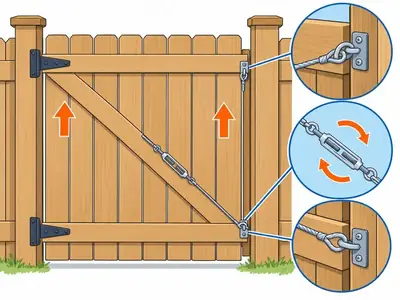 Garage and OutdoorsHow to Fix a Sagging Gate So It Closes ProperlyLearn how to fix a sagging gate with a diagonal brace, an anti-sag kit or tightened hinges so it latches and swings freely without dragging.
 Garage and OutdoorsHow to Paint a Concrete StepLearn how to paint a concrete step: clean and etch the surface, patch cracks, prime and apply a porch paint with a non-slip additive.
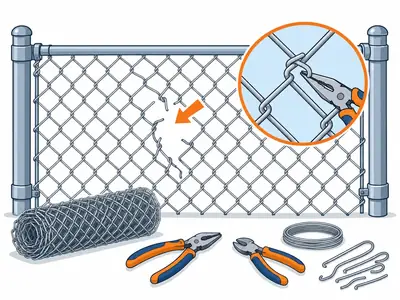 Garage and OutdoorsHow to Repair a Chain-Link FenceLearn how to repair a chain-link fence. Fix a cut or bent section, replace tie wires, tighten the top rail and straighten a leaning post with simple tools.