
How to Install a Rain Barrel
Part of: Outdoors and garage
- Difficulty
- Easy to medium
- Time
- 2 to 3 hours
- Tools
- Hacksaw or tin snips, tape measure, level, pencil, drill, screwdriver, work gloves, concrete pavers or cinder blocks, gravel
- Call a pro if
- your downspout ties into an underground drain, the ground slopes steeply or local rules limit rain barrels
In this guide
- Ladder safety
- Wear protection
- Call 811 before digging
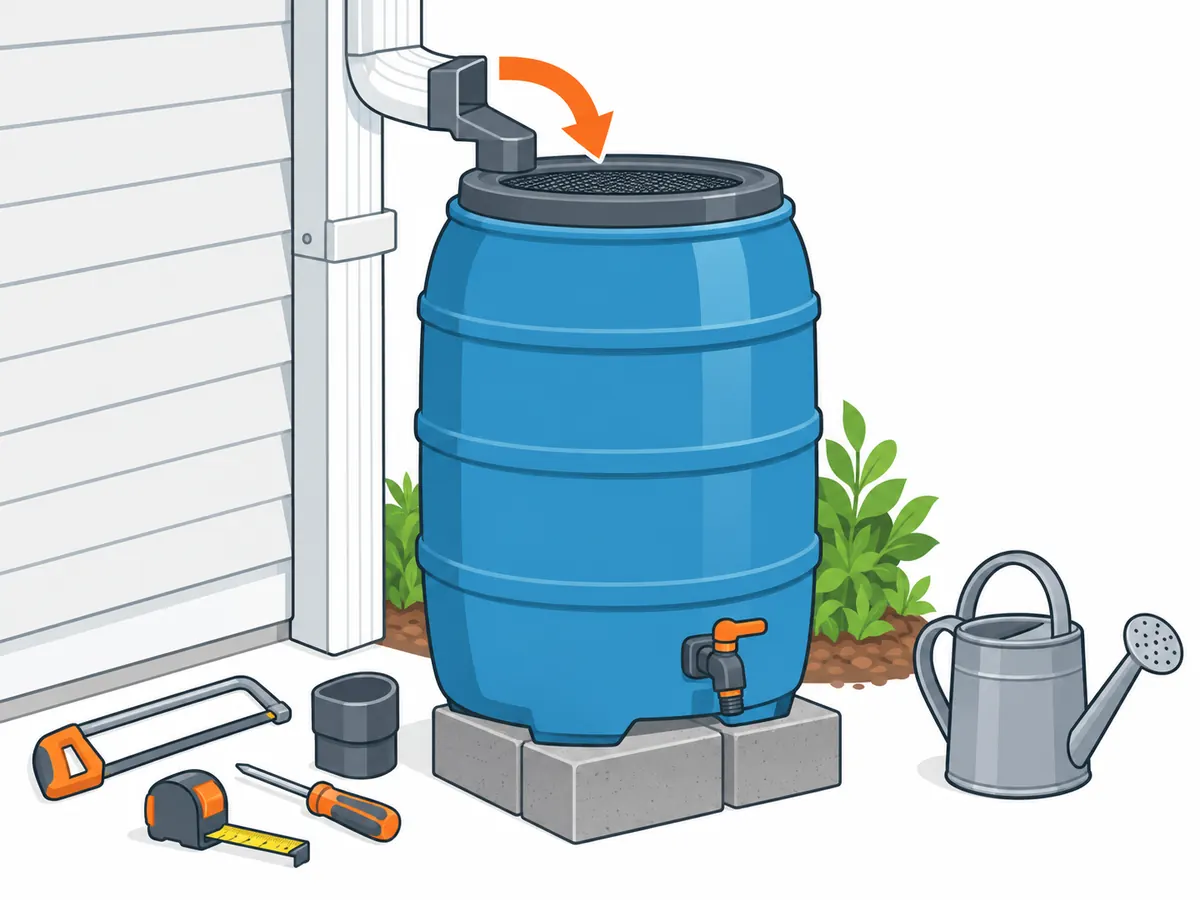
A rain barrel catches water from your roof and stores it for the garden. It saves tap water and keeps runoff away from the foundation. You can install a rain barrel in an afternoon with a hacksaw and a level. This guide shows the steps and the safety rules.
This guide is part of our wider guide to gutters and drainage.
Plan the location
1. Pick a downspout that collects water from a large roof section, and is close to where you need the water.
2. Check local rules. Some areas have rules on rainwater collection. Check with your city or water authority.
3. Choose a flat spot next to the downspout. The barrel will be heavy when full, about eight pounds for every gallon.
4. Think about overflow. Water must go away from the house when the barrel is full.
Build a stable base
1. Clear and level the ground. Remove grass, and add a layer of gravel.
2. Place pavers or blocks in a square, a little wider than the barrel. Check with a level in both directions.
3. Raise the barrel, if possible, by 1 to 2 feet. This gives the water pressure and makes it easy to put a bucket or a can under the spout.
Make sure the base is strong. A full barrel that tips over is dangerous.
Step by step: connect the barrel
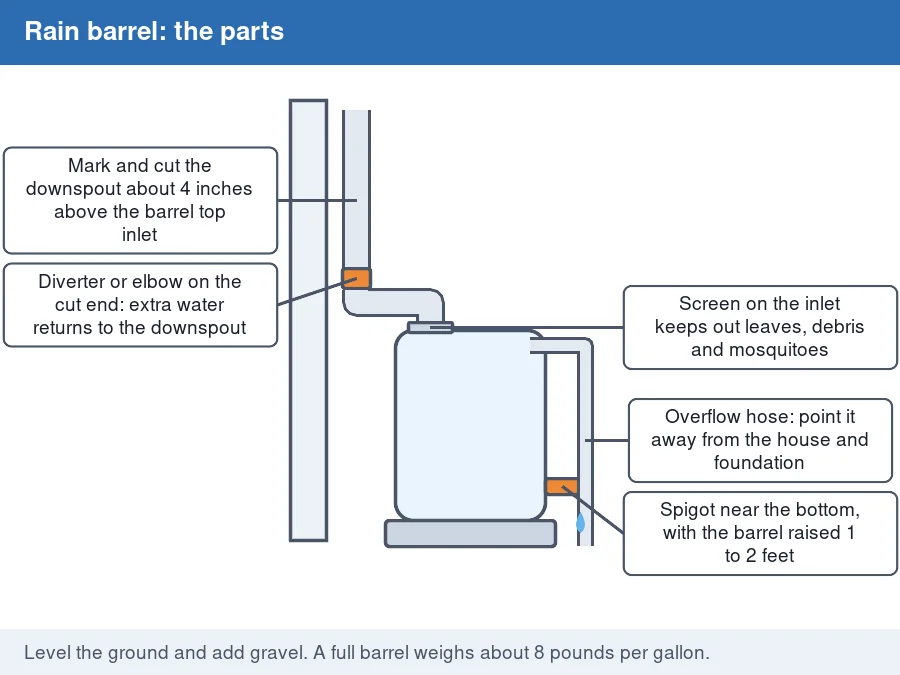
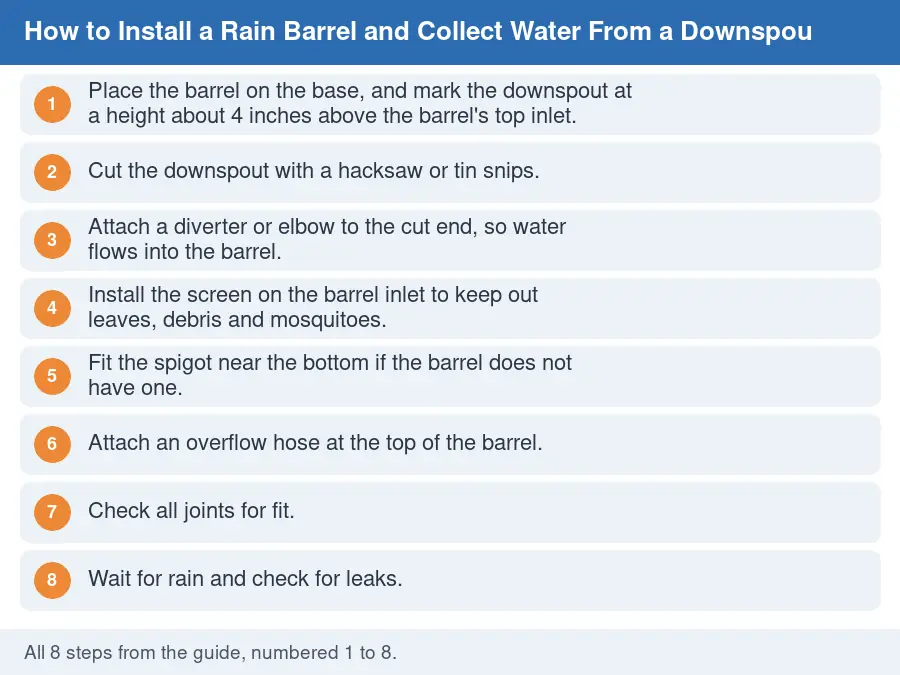
1. Place the barrel on the base, and mark the downspout at a height about 4 inches above the barrel's top inlet.
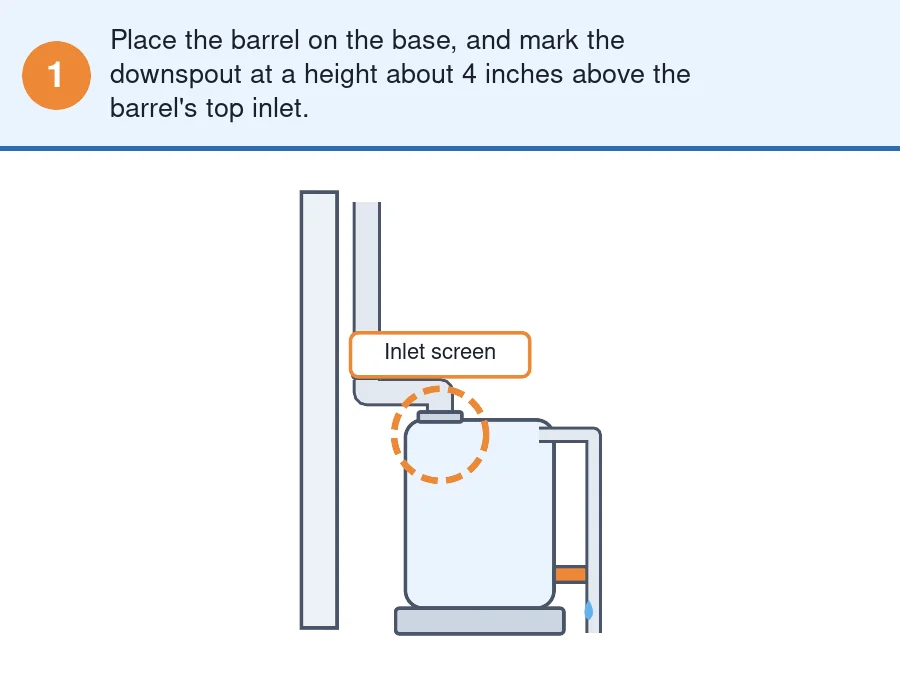
2. Cut the downspout with a hacksaw or tin snips. Wear gloves, since cut edges are sharp. Remove the lower section.
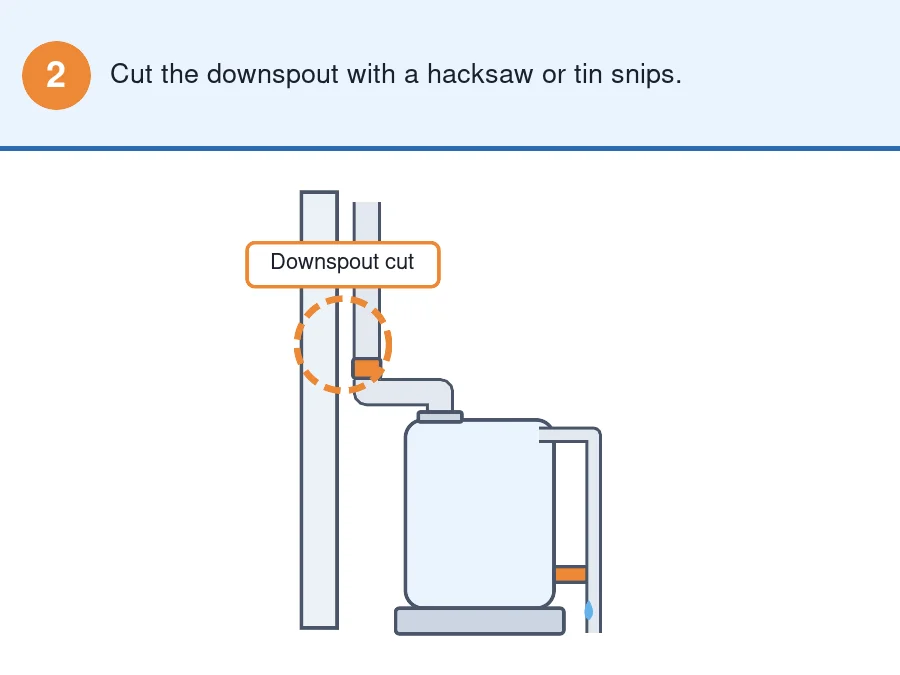
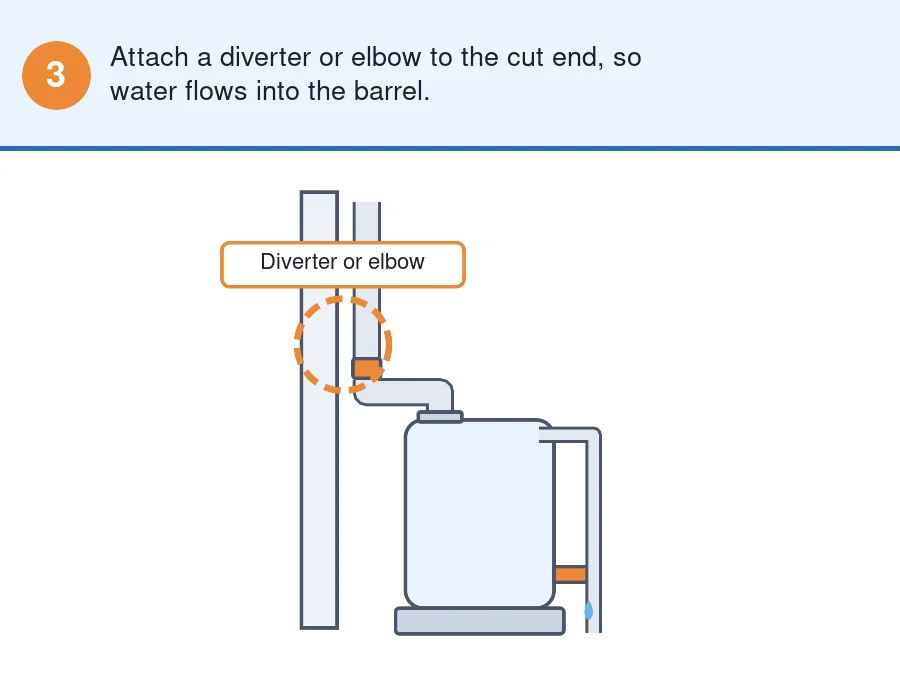
3. Attach a diverter or elbow to the cut end, so water flows into the barrel. A diverter kit lets extra water go back to the downspout once the barrel is full.
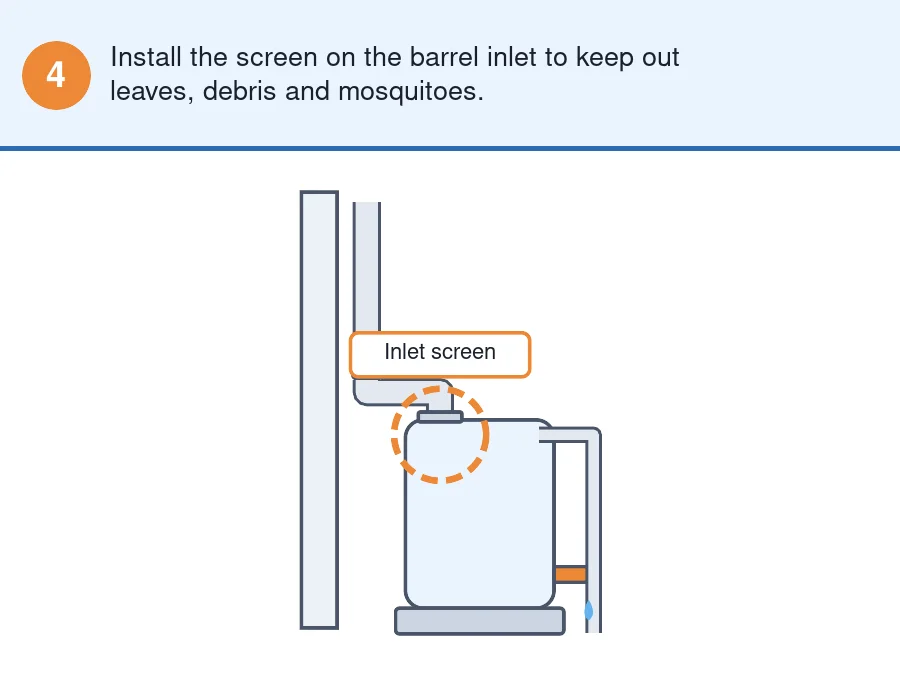
4. Install the screen on the barrel inlet to keep out leaves, debris and mosquitoes. Check that the lid is tight.
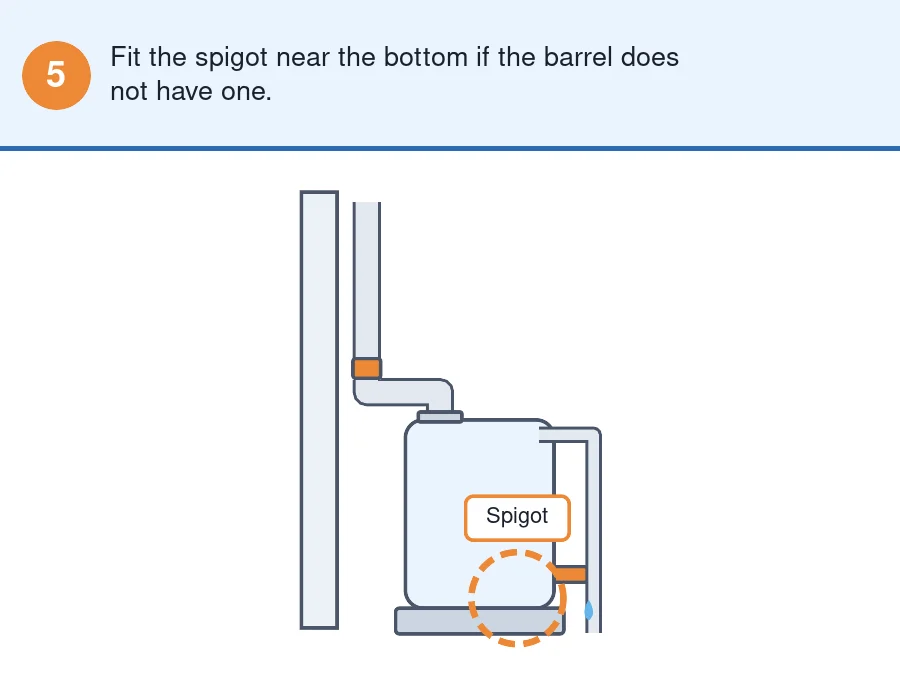
5. Fit the spigot near the bottom if the barrel does not have one. Drill a hole of the right size, and use a bulkhead fitting with a rubber washer.
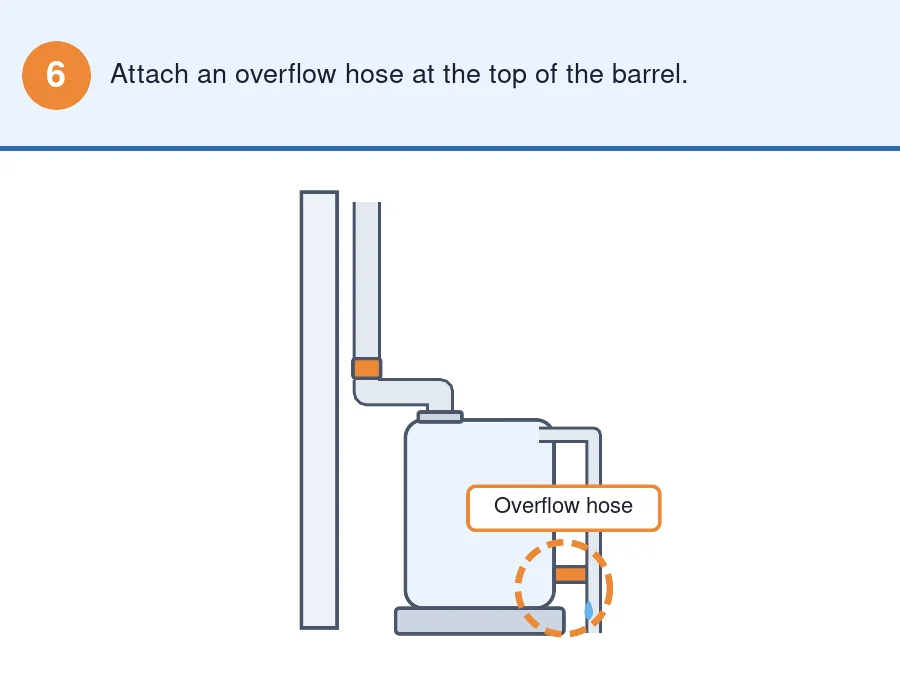
6. Attach an overflow hose at the top of the barrel. Point it away from the house and the foundation, to a safe drainage area. See Downspout drainage: how to direct water away.
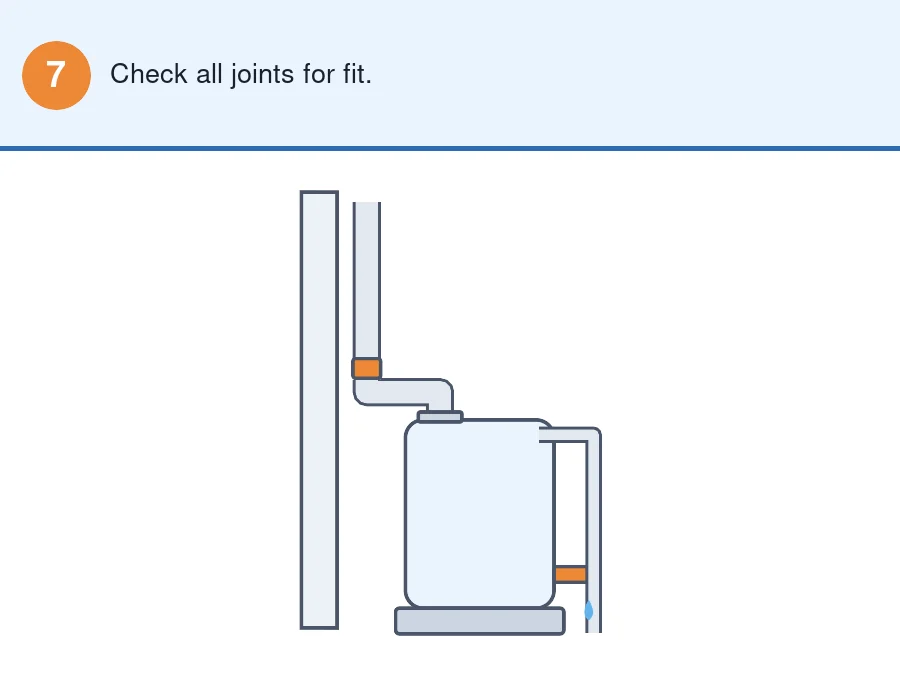
7. Check all joints for fit. Test with a bucket of water poured through the inlet.
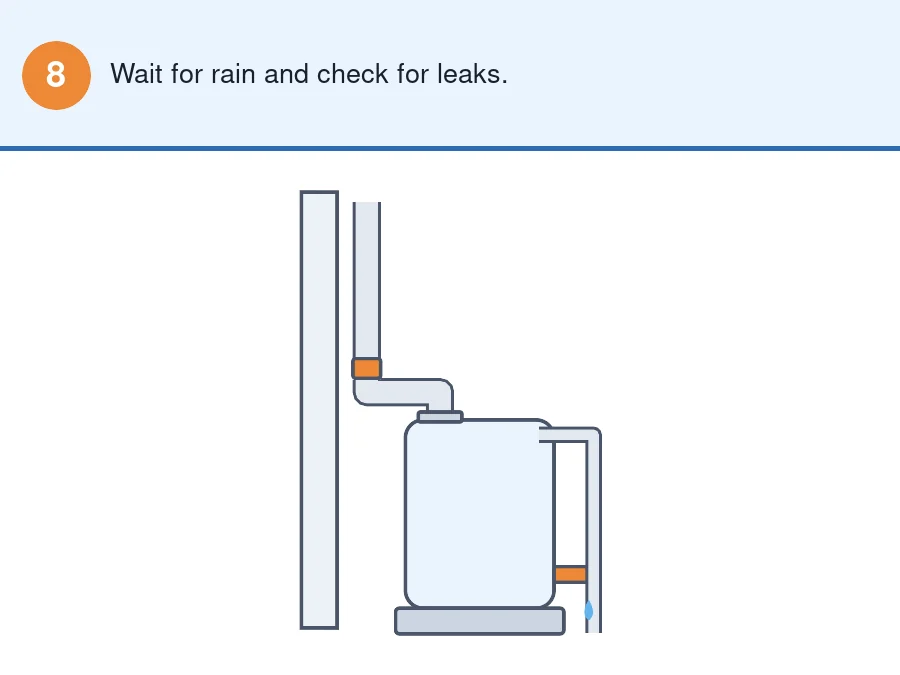
8. Wait for rain and check for leaks.
Signs that point to problems
A barrel that overflows near the house needs a better overflow line. Mosquitoes in the water mean the screen or lid is not sealed. A barrel that smells has debris or algae. A leaking spigot has a worn washer. A leaning barrel needs a better base. Slow filling can mean a clogged gutter. See How to clean gutters.
How to use the water
Rainwater is good for watering plants, washing the car or cleaning tools. Do not drink it. Do not use it on leafy vegetables unless you know your roof and gutters are clean. Roof materials and bird droppings can add contaminants. Use a watering can or a hose at the spigot.
Winter care
Drain the barrel before freezing weather. Ice can crack it. Disconnect the diverter and send the water back down the downspout. Store the barrel upside down, or leave it open and draining. Clean the barrel and screen in spring.
Prevention
Clean the gutters and the screen every season. Keep the lid closed. Check the base each year. Empty the barrel before long dry spells, since stale water can smell. Use the water within a few weeks.
Choosing a barrel
Pick a barrel made of food-grade or UV-resistant plastic with a solid lid, a screened inlet and a spigot. A dark color slows algae. Check that the barrel has an overflow port. A larger barrel holds more water but is harder to place and needs a stronger base. Two small barrels linked together can be easier to handle than one large one. Test the fit under the downspout before you cut anything.
Related guides
- How to Start a Compost Bin at Home Without Smells or Pests
- How to Water a Lawn Properly: How Much, How Often, and When
- How to Store Garden Tools for Winter So They Last Another Season
- How to Install a Hose Bib Cover for Winter
FAQ
How much water will a barrel hold?
Many hold about 50 to 60 gallons.
Can I link two barrels?
Yes, with a linking hose near the top.
Is it safe for edible plants?
Use it with care. Water the soil, not the leaves.
Will it breed mosquitoes?
Not if the lid and screen are tight.
More from this topic
- How to Install a Rain Barrel Diverter: Learn how to install a rain barrel diverter: cut the downspout, fit the diverter and fill the barrel without...
- How to Install a Rain Barrel Overflow Pipe: Learn how to install a rain barrel overflow pipe: fit the bulkhead, run the pipe downhill and lead excess...
- How to Install a Soaker Hose System: Learn how to install a soaker hose system: run the hose along the plants, set the water flow and cover it so...
- How to Set Up a Drip Irrigation Line for a Garden Bed: Learn how to set up a drip irrigation line for a garden bed. Choose parts, connect to the spigot, lay tubing,...
- How to Winterize a Rain Barrel: Learn how to winterize a rain barrel: drain it, disconnect the diverter and store it so ice does not split...
 Garage and OutdoorsHow to Install a Rain Barrel DiverterLearn how to install a rain barrel diverter: cut the downspout, fit the diverter and fill the barrel without overflowing.
 Garage and OutdoorsHow to Install a Rain Barrel Overflow PipeLearn how to install a rain barrel overflow pipe: fit the bulkhead, run the pipe downhill and lead excess water away.
 Garage and OutdoorsHow to Install a Soaker Hose SystemLearn how to install a soaker hose system: run the hose along the plants, set the water flow and cover it so water reaches the roots.
 Garage and OutdoorsHow to Set Up a Drip Irrigation Line for a Garden BedLearn how to set up a drip irrigation line for a garden bed. Choose parts, connect to the spigot, lay tubing, add emitters and test for even watering.
 SeasonalHow to Winterize a Rain BarrelLearn how to winterize a rain barrel: drain it, disconnect the diverter and store it so ice does not split the barrel.