
How to Spot a Roof Leak Before It Ruins a Ceiling
Part of: Outdoors and garage
- Difficulty
- Easy
- Time
- 1 to 2 hours of inspection
- Tools
- Flashlight, binoculars, ladder, camera, tape measure, notebook, moisture meter if available
- Call a pro if
- Water is running, the ceiling is sagging, or the leak is at a valley or around a chimney, since those need a roofer and possibly emergency work.
In this guide
- Ladder safety
- Wear protection
A roof leak rarely shows up where it enters. Water runs along rafters and sheathing and appears somewhere else entirely, which is why people patch the wrong spot. How to spot a roof leak starts indoors with the stain, since a brown ring on a ceiling is a slow leak and a stain near an outside wall is usually flashing.
1. Read the stains indoors
- Brown ring on a ceiling: a slow leak that has dried between rains.
- Stain near an outside wall: often a wall flashing or a gutter problem.
- Stain in the middle of a room: water has traveled along a joist.
- Paint bubbling: trapped water behind the paint.
- Dark streaks on a wall: water running down inside the wall cavity.
2. Note when it appears
1. Does it only appear during rain? Note the wind direction.
2. Does it appear hours after rain stops? Water is traveling far.
3. Does it appear in winter only? Ice dams are likely.
4. Does it appear in heavy, driving rain only? A wind-driven entry point.
5. Write it down; the pattern narrows the cause.
3. Check the attic after rain
1. Go up with a flashlight during or just after rain.
2. Look for water stains on the roof sheathing and rafters.
3. Check for daylight through the roof boards.
4. Look at insulation for dark, compressed patches.
5. Follow any drip upward, along the rafter, to the entry point.
4. Inspect from the ground
1. Use binoculars to scan the roof line.
2. Look for missing, lifted or cracked shingles.
3. Check the ridge and the valleys for gaps.
4. Look at the flashing around the chimney, vents and skylights.
5. Check the gutters for granules, which mean shingles are wearing.
5. Check the usual suspects
- Chimney flashing: the most common leak point.
- Vent boots: rubber collars crack with age.
- Valleys: where two roof planes meet.
- Skylights: seals fail at the frame.
- Gutter joints and hangers: water backs up under the shingles.
- Nail pops: exposed fasteners let water in.
6. Test carefully
1. Have someone in the attic with a flashlight.
2. Run a garden hose on a suspect area, starting low.
3. Move up slowly, one area at a time.
4. Note where water appears inside.
5. Never do this alone, and never on a wet roof.
7. Deal with ice dams
1. Ice at the eaves backs water up under the shingles.
2. Look for icicles along the edge and water inside near the wall.
3. Improve attic insulation and ventilation.
4. Clear the gutters before winter.
8. Fix small things, call for big ones
You can handle:
- Replacing a cracked vent boot.
- Resealing a small flashing gap with roof caulk.
- Clearing a blocked gutter.
Call a roofer:
- Missing shingles over a large area.
- A leak at a valley or chimney.
- Sagging decking.
- Any leak you cannot trace.
9. Prevent the next one
- Inspect the roof twice a year and after storms.
- Keep gutters clear.
- Trim branches away from the roof.
- Replace worn flashing before it fails.
- Keep a record of stains with dates and photos.
Common mistakes
- Patching the ceiling instead of the roof.
- Assuming the stain is under the leak.
- Walking a wet roof.
- Sealing over a wet surface.
- Ignoring a small stain that grows each rain.
Related guides
- How to Inspect Your Roof From the Ground
- How to Fix a Roof Vent Leak
- How to Seal Roof Flashing Around a Chimney or Vent
- How to Patch a Flat Roof
- How to Clean a Roof Valley
- How to Clean Soffit Vents
FAQ
How do I find a roof leak myself?
Read the stains, check the attic after rain and use a hose test on suspect areas with a helper inside.
Why does my ceiling stain grow even when it is not raining?
Water already trapped in the ceiling is spreading, or the leak is from condensation or plumbing.
Can I seal a roof leak from inside?
Only as a temporary measure. The repair belongs on the roof.
When should I call a roofer?
For any leak you cannot trace, anything at a valley or chimney, or if the roof is old.
More from this topic
- How to Inspect Your Roof From the Ground: How to inspect your roof from the ground: use binoculars and a checklist, spot the warning signs early, and...
- How to Spot Termite Damage: Learn how to spot termite damage: mud tubes, discarded wings, hollow wood and frass. Know the difference from...
- How to Find an Attic Roof Leak: How to find an attic roof leak: read the stains, trace the water uphill, test with a hose, and tell a roof...
- How to Tell If a Ceiling Stain Is an Active Leak: How to tell if a ceiling stain is an active leak: signs to check, a simple tracking test, and safe first...
- How to Fix a Leaky Roof Temporarily Until a Pro Arrives: Learn how to fix a leaky roof temporarily from the inside: catch water, protect belongings, stay off the roof...
 Garage and OutdoorsHow to Inspect Your Roof From the GroundHow to inspect your roof from the ground: use binoculars and a checklist, spot the warning signs early, and know when to call a roofer.
 Garage and OutdoorsHow to Spot Termite DamageLearn how to spot termite damage: mud tubes, discarded wings, hollow wood and frass. Know the difference from flying ants and when to call a licensed pro.
 First HomeHow to Find an Attic Roof LeakHow to find an attic roof leak: read the stains, trace the water uphill, test with a hose, and tell a roof leak from condensation before you repair.
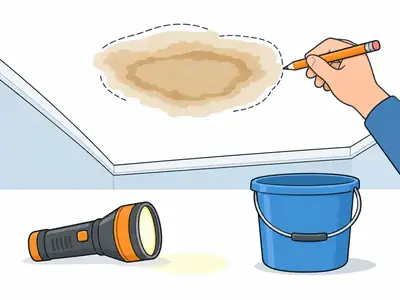 SafetyHow to Tell If a Ceiling Stain Is an Active LeakHow to tell if a ceiling stain is an active leak: signs to check, a simple tracking test, and safe first steps. Includes when to call a roofer or plumber.
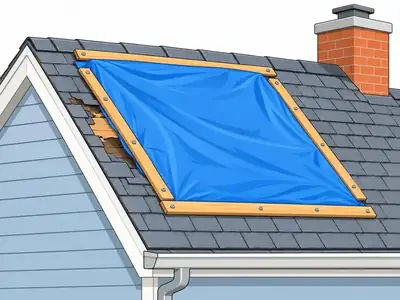 Garage and OutdoorsHow to Fix a Leaky Roof Temporarily Until a Pro ArrivesLearn how to fix a leaky roof temporarily from the inside: catch water, protect belongings, stay off the roof and call a roofer quickly.