
How to Tell If a Ceiling Stain Is an Active Leak
Part of: Electrical safety
- Difficulty
- Easy
- Time
- 30 minutes to check, then a few days to watch
- Tools
- Pencil, flashlight, phone camera, bucket, towels, moisture meter (optional)
- Call a pro if
- The ceiling sags or bulges, the stain grows, water drips near a light fixture or outlet, insulation is wet, or you cannot find the source.
In this guide
- Power off first
- Ladder safety
A brown ring on the ceiling can mean an old leak that was fixed years ago, or a new leak that is getting worse. Knowing how to tell if a ceiling stain is an active leak helps you act fast and avoid costly damage. The checks below take about half an hour.
Step 1: Look at the stain
Stains from active leaks tend to look damp, darker in the middle, and may have a fresh, wet edge. Old stains are dry, yellowish or tan, and have a hard line at the edge. Rings can show repeated wetting and drying. Several rings mean the leak comes and goes.
Step 2: Touch it
Press a clean, dry finger on the stain. Cool, damp or soft drywall means moisture is still there. A paper-dry, firm surface suggests the stain is old. Do not press hard on a sagging spot.
Step 3: Mark it
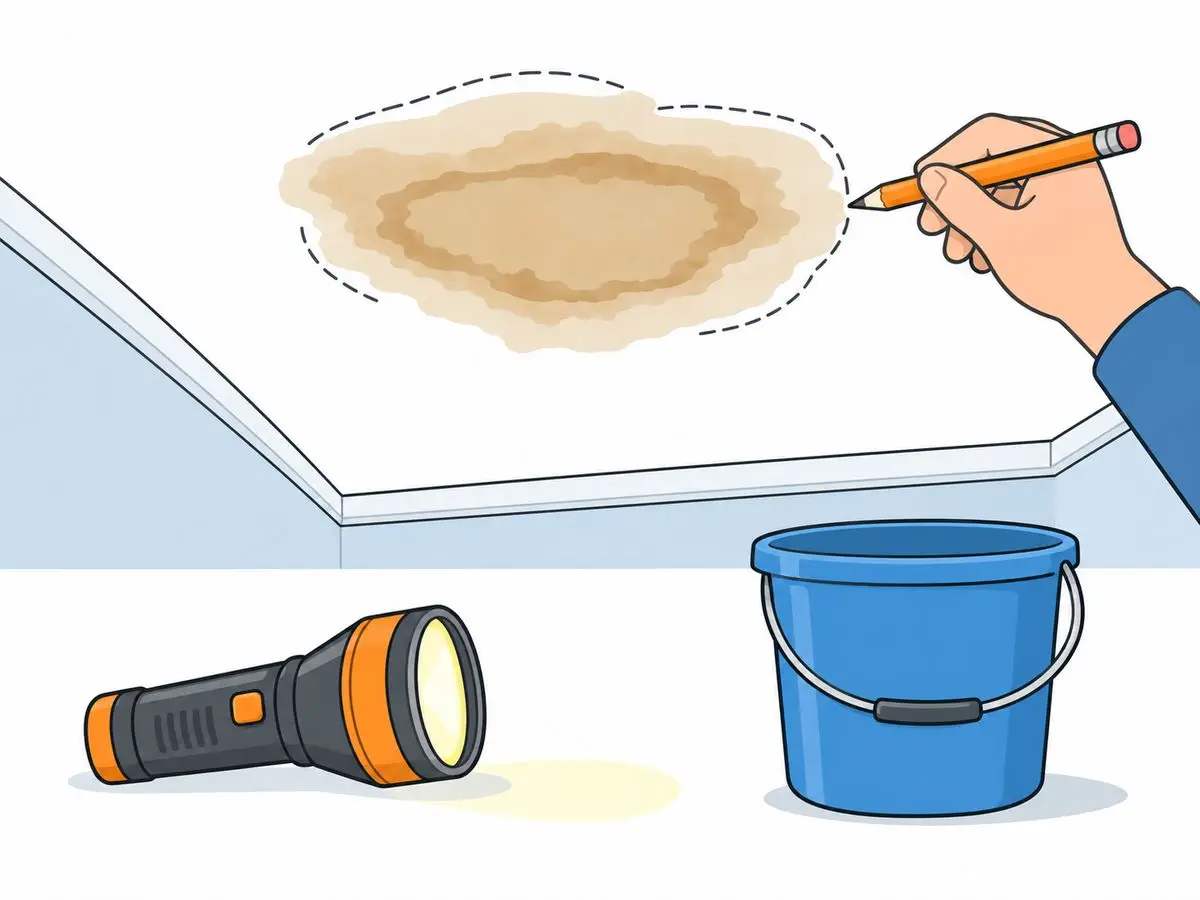
Trace the outline of the stain with a pencil and write the date. Take a photo with a ruler or coin for scale. Check again after 24 hours, after rain, and after someone uses the bath or washing machine upstairs. If the outline grows, you have an active leak.
Step 4: Match the stain to a source
The pattern of when it grows points to the source.
- Grows only after rain or snow melt: likely the roof, a vent flashing or a gutter overflowing. Check the roof from the ground with binoculars. Our guide on how to fix a leaky roof temporarily covers short-term steps.
- Grows when water runs upstairs: likely a pipe, a tub drain, a shower pan or a toilet seal above. Ask someone to run the shower while you watch.
- Constant, even in dry weather: often a supply line or a condensation problem from an air handler or an attic duct.
- Near a bathroom or kitchen: check for a failed caulk line. See how to find a water leak in your house.
Step 5: Check the attic or the room above
If you can safely reach the attic, look above the stain with a flashlight. Look for dark wood, wet insulation, rusty nail tips or drip marks. In a room above, check the floor around the tub, toilet and sink. Do not walk on attic insulation without a clear path on joists.
Step 6: Stop more damage
- Move furniture away and put a bucket under any drip.
- If the ceiling bulges with water, keep people out from under it and call a pro right away. Do not poke it yourself, since the weight of the water can bring down a section of ceiling and wires may be above it.
- If a supply pipe is the cause, shut off water. See how to shut off the water main.
- Take photos of the damage and the date, in case you need to file a claim.
Step 7: Dry it out
The U.S. Environmental Protection Agency advises drying water-damaged materials within 24 to 48 hours, which helps keep mold from starting. Run a fan or a dehumidifier. If the material stays wet, or you see mold, ask a pro.
Step 8: Repair the ceiling after the leak is fixed
Do not paint over a wet stain. Wait until it is completely dry, fix the leak, then apply a stain-blocking primer, and paint. A stain that bleeds through new paint may mean the area is still damp.
More help
If the water is coming from somewhere else, plumbing leaks sorts every common leak by location and links to the repair.
Related guides
- How to Fix a Leaky Faucet (Step by Step)
- Bathroom Sink Faucet Drips From the Base: How to Fix It
- How to Replace a Bathroom Faucet: Step by Step for Beginners
FAQ
Can a ceiling stain be just condensation?
Yes. Poor insulation, a bathroom fan that vents into the attic, or a leaking duct can cause damp spots. A stain that appears on cold days and does not come with drips is a clue.
Should I wait to see if it gets worse?
Mark and watch it, but do not wait if the ceiling sags or the area is near wiring.
Will homeowner's insurance cover this?
It depends on the cause and your policy. Call your insurer and ask before you start any repairs, and save photos.
Sources
More from this topic
- Ceiling Stain After Rain: What It Means and What to Do: A ceiling stain after rain means water is getting in: roof, flashing, gutters or a plumbing line above. Trace...
- How to Clear a Plumbing Vent: How to clear a plumbing vent: recognize the symptoms, work safely from the roof and flush the stack...
- How to Install a Water Leak Sensor Where It Matters Most: Learn how to install a water leak sensor near the water heater, washer, sinks and sump pit. Choose a type,...
- How to Install an Outdoor Shower: Cold-Water Basics: How to install an outdoor shower: tap a cold supply, run the line to the fixture, drain it right and...
- How to Test a Window for Leaks: Learn how to test a window for leaks using a garden hose and a helper: find where water gets in, mark the...
 Walls and PaintCeiling Stain After Rain: What It Means and What to DoA ceiling stain after rain means water is getting in: roof, flashing, gutters or a plumbing line above. Trace it by when and where it appears.
 Drains and SewersHow to Clear a Plumbing VentHow to clear a plumbing vent: recognize the symptoms, work safely from the roof and flush the stack clear.
 PlumbingHow to Install a Water Leak Sensor Where It Matters MostLearn how to install a water leak sensor near the water heater, washer, sinks and sump pit. Choose a type, place it right and test it for early warning.
 Outdoor PlumbingHow to Install an Outdoor Shower: Cold-Water BasicsHow to install an outdoor shower: tap a cold supply, run the line to the fixture, drain it right and winterize every fall.
 Doors and WindowsHow to Test a Window for LeaksLearn how to test a window for leaks using a garden hose and a helper: find where water gets in, mark the spot, and decide on caulk, flashing, or repair.