
Ceiling Stain After Rain: What It Means and What to Do
Part of: Floors, walls and doors

- Difficulty
- Moderate
- Time
- 1 to 2 hours of investigation
- Tools
- A flashlight, a ladder, binoculars for the roof, towels
- Call a pro if
- The stain grows with every rain, the ceiling sags or feels soft, or you cannot find the entry point, since hidden leaks rot framing fast.
In this guide
- Power off first
- Ladder safety
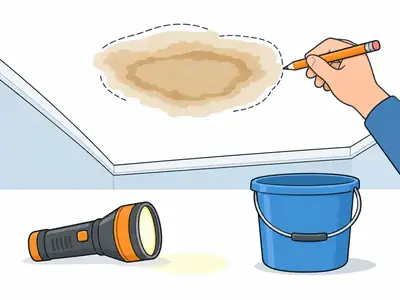
A ceiling stain after rain, usually a brown ring, is your house reporting a leak. The rain timing narrows the suspect list: water coming from above, through the roof or the exterior, not a random pipe.
1. Read what the stain is telling you
The stain's behavior is the first clue.
1. A stain that appears or grows only during rain means a roof or exterior-wall leak.
2. A stain that appears regardless of weather means plumbing or condensation, a different suspect list entirely.
3. A stain near an outside wall points to gutters, flashing or siding; mid-ceiling points to the roof field or a vent.
4. Fresh stains feel damp and dark; old dry ones are history, but confirm they stay dry.
2. Check the attic first if you have one
1. During or right after rain, go into the attic with a flashlight and look for wet sheathing, drips or water trails.
2. Water travels along rafters before dripping, so trace stains uphill toward the roof peak.
3. Mark the wet spot with tape or chalk so you can find it from outside.
4. No attic access means working from the stain's position and the roof features above it.
3. Inspect the usual roof suspects
Most rain leaks come from five places.
1. Flashing around chimneys, skylights, vents and wall joints: the number one leak source.
2. Missing, cracked or slipped shingles in the roof field.
3. Plumbing vent boots, whose rubber collars crack with age.
4. Valleys where two roof slopes meet, especially where debris collects.
4. Do not forget the gutters
Overflow masquerades as a roof leak.
1. Clogged gutters push water under the roof edge and down the wall, staining ceilings near exterior walls.
2. Check for waterfalls over the gutter edge during rain.
3. Cleaning them twice a year prevents most of this; use a stable ladder and gloves, or hire it out.
4. Gutter leaks often stain the ceiling right below the soffit line.
5. Rule out the upstairs bathroom
Not every rain-timed stain comes from the sky.
1. If a bathroom sits above, a shower used during the storm is an easy false correlation.
2. Check caulk lines, the toilet base and supply lines above the stain.
3. A stain that also appears on dry days after showers is plumbing, not rain.
4. When the source refuses to show itself, a moisture meter from the hardware store traces damp paths through drywall.
6. Dry and assess the damage
Fix the water before the cosmetics.
1. The leak source must be fixed before any ceiling repair, or the stain returns.
2. Dry the area with fans and dehumidifiers; damp drywall and insulation grow mold within days.
3. Press the ceiling gently: soft, crumbly drywall needs replacement, not paint.
4. If drywall stays damp after two days of fans, cut out the wet section rather than sealing moisture inside.
7. Repair the stain the right way
1. Stains bleed through ordinary paint, so seal first with a stain-blocking primer.
2. How to paint a bathroom ceiling covers technique for the rooms where these stains live most.
3. Repaint the whole ceiling section to the nearest break line for an invisible blend.
4. Keep a photo of the repair in case the stain returns; recurring stains mean the leak was never found.
Common mistakes
- Painting over the stain without fixing the leak.
- Assuming the stain sits directly below the entry point; water travels.
- Climbing a wet roof to investigate.
- Ignoring a small stain because it only appears in heavy rain.
- Skipping the attic check that would have found the trail in minutes.
FAQ
Why is there a water stain on my ceiling after it rains?
Rain is entering through the roof or exterior: failed flashing, damaged shingles, a cracked vent boot, or overflowing gutters are the usual sources. A bathroom above can mimic the pattern, so rule that out first.
Is a ceiling water stain serious?
The stain itself is cosmetic, but the leak behind it rots framing, ruins insulation and grows mold. Treat every new or growing stain as urgent even when the ceiling looks intact.
How do I find where a ceiling leak is coming from?
Check the attic during or right after rain and trace wet trails uphill to the entry point. Then match that position to roof features outside: flashing, vents, valleys and gutters are the usual answers.
Can I just paint over a water stain on the ceiling?
Only after the leak is fixed and the ceiling has dried completely, and even then seal the stain with a stain-blocking primer first. Ordinary paint lets the brown bleed straight back through.
Related guides
- How to Tell If a Ceiling Stain Is an Active Leak: How to tell if a ceiling stain is an active leak: signs to check, a simple tracking test, and safe first...
- How to Paint Over a Water Stain Without It Bleeding Back: Learn how to paint over a water stain the right way: fix the leak first, dry the surface, seal with a...
- How to Spot a Roof Leak Before It Ruins a Ceiling: Learn how to spot a roof leak: read the attic and ceiling signs, trace water back to its entry point, check...
- How to Fix a Sagging Ceiling: How to fix a sagging ceiling: find whether it is water, a loose fastener or a structural problem, then repair...
- Brown Water From the Faucet: What It Means: Brown water from the faucet usually means stirred-up sediment, old galvanized pipes or water heater rust....
 SafetyHow to Tell If a Ceiling Stain Is an Active LeakHow to tell if a ceiling stain is an active leak: signs to check, a simple tracking test, and safe first steps. Includes when to call a roofer or plumber.
 Walls and PaintHow to Paint Over a Water Stain Without It Bleeding BackLearn how to paint over a water stain the right way: fix the leak first, dry the surface, seal with a stain-blocking primer, then paint so the mark stays gone.
 Garage and OutdoorsHow to Spot a Roof Leak Before It Ruins a CeilingLearn how to spot a roof leak: read the attic and ceiling signs, trace water back to its entry point, check flashing and vents and know who to call.
 Walls and PaintHow to Fix a Sagging CeilingHow to fix a sagging ceiling: find whether it is water, a loose fastener or a structural problem, then repair the cause and flatten the surface.
 PlumbingBrown Water From the Faucet: What It MeansBrown water from the faucet usually means stirred-up sediment, old galvanized pipes or water heater rust. Learn the checks that tell them apart.