
How to Paint Over a Water Stain Without It Bleeding Back
Part of: Floors, walls and doors

- Difficulty
- Easy to moderate
- Time
- 1 to 2 hours plus drying
- Tools
- Stain-blocking primer, brush and roller, paint matched to the surface, sandpaper, filler if needed, a moisture meter if available, drop cloths, a mask, a fan
- Call a pro if
- The stain is damp or growing, the surface is soft or bubbling, or the stain sits under a ceiling below a bathroom or roof, since paint over an active leak will fail and the leak will keep damaging the structure.
In this guide
- Power off first
- Chemical safety
A brown ring on a ceiling is one of the most common sights in a home, and painting over it without sealing it is one of the most common mistakes. Water carries minerals and tannins into the plaster or drywall, and ordinary paint lets them bleed straight back through, usually within days. The fix is a stain-blocking primer and, before that, a dry surface. How to paint over a water stain starts with whether the leak is fixed, since the stain is only a record of it.
This guide is part of our wider guide to drywall, paint and wall repair.
1. Find out whether the leak is fixed
A water stain is a record of a leak. Before any paint, you need to know the leak is dealt with:
- A roof leak that has been repaired
- A failed shower seal that has been resealed
- A pipe that has been fixed
- Condensation that has been addressed
If you do not know the cause, assume it is active. Painting over it wastes the paint and hides a problem that will keep damaging the structure.
2. Check the surface is dry
Press the stain with a paper towel or the back of your hand. A damp or cold patch means moisture is still there. If you have a moisture meter, compare the reading with a dry area of the same surface.
A stain that is dry to the touch can still be damp inside. Give it several days with good airflow, and use a fan if the room is closed up.
3. Check the surface condition
Look for bubbling paint, soft board or a ceiling that moves when pressed. Those mean the material has been damaged, not just stained.
- Bubbling or flaking paint: scrape it back and fill, then prime.
- Soft or crumbly board: cut out and replace the section before painting.
- Sagging ceiling: stop and get professional help.
4. Clean the area
Wipe the surface with a mild soap solution and let it dry, to remove dust and any residue. Do not scrub hard at old stains, since you can damage the paper face of the drywall.
5. Use a stain-blocking primer
This is the step that actually solves the problem. Ordinary paint and ordinary primer will not hold back water stains.
- Shellac-based primer is the strongest for tannin and water stains, and it works on most surfaces. It dries fast and seals completely.
- Water-based stain-blocking primer is easier to use and lower odor, and works for lighter stains.
Apply two coats over the stain, extending well beyond the visible edge, since the stain often spreads further than it looks. Let each coat dry fully.
6. Paint the surface
Once the primer is dry, paint with the same color and finish as the surrounding surface. Two thin coats over the sealed area, feathering the edges so the repair blends.
On a ceiling, roll a wider area than the patch so the sheen matches. On a wall, paint to a corner if the paint is old, since a patch of new paint can read as a bright spot. Our guide on touching up paint on walls covers blending.
7. Deal with a stain that keeps coming back
If the stain returns after a proper primer and paint, the leak is still active, or the moisture is condensing on a cold surface. Do not keep painting. Find the source:
- Check the roof and the attic above.
- Check the bathroom above for a failed seal or a leaking pipe.
- Check for condensation from poor ventilation, especially in a bathroom or kitchen.
Our guide on fixing bubbling paint on walls covers the moisture side, and our guide on removing mold from a bathroom ceiling covers what to do if mold has already started.
8. Prevent the next one
- Fix small leaks early; a stain is cheaper to prevent than to repair.
- Keep gutters clear and downspouts discharging away from the house.
- Ventilate bathrooms and kitchens properly.
- Check under sinks and around the water heater a couple of times a year.
Common mistakes
- Painting straight over a stain with ordinary paint.
- Using a primer that is not designed to block stains.
- Painting while the surface is still damp.
- Sealing only the visible ring, so the edge bleeds.
- Ignoring a stain that keeps returning.
Related guides
- Renter-Friendly Ways to Hang Things Without Damage
- How to Cut In Paint Along Ceilings and Trim (Crisp Lines)
- How to Paint a Front Door That Looks Good and Lasts
- How to Paint Over Wallpaper (When Removal Is Not an Option)
FAQ
Will regular primer cover a water stain?
Usually not. Water stains need a shellac-based or dedicated stain-blocking primer, or they bleed through.
Why does the stain come back after painting?
Either the leak is still active or the stain was not sealed with a blocking primer.
Can I paint a water stain on a ceiling?
Yes, after the leak is fixed and the ceiling is dry, with a stain-blocking primer and a ceiling paint in a matching finish.
How many coats of primer does a stain need?
Two thin coats over and beyond the stain, letting each dry. A heavy stain may need a third.
More from this topic
- How to Clean Nicotine Stains From Walls: Learn how to clean nicotine stains from walls with degreasing washes and TSP style solutions, plus the primer...
- How to Tell If a Ceiling Stain Is an Active Leak: How to tell if a ceiling stain is an active leak: signs to check, a simple tracking test, and safe first...
- How to Paint a Ceiling Without Streaks, Drips or a Sore Neck: Learn how to paint a ceiling cleanly: prep and cover everything, cut in the edges, roll in overlapping bands,...
- How to Paint Over a Dark Wall With a Light Color: Paint over a dark wall with a light color by cleaning the surface, using a stain-blocking primer, and...
- Ceiling Stain After Rain: What It Means and What to Do: A ceiling stain after rain means water is getting in: roof, flashing, gutters or a plumbing line above. Trace...
 Walls and PaintHow to Clean Nicotine Stains From WallsLearn how to clean nicotine stains from walls with degreasing washes and TSP style solutions, plus the primer that blocks what remains.
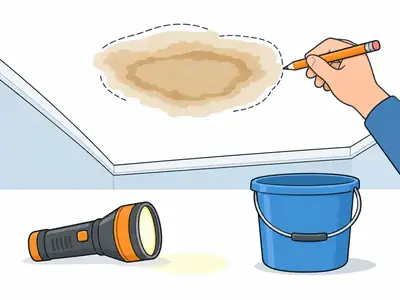 SafetyHow to Tell If a Ceiling Stain Is an Active LeakHow to tell if a ceiling stain is an active leak: signs to check, a simple tracking test, and safe first steps. Includes when to call a roofer or plumber.
 Walls and PaintHow to Paint a Ceiling Without Streaks, Drips or a Sore NeckLearn how to paint a ceiling cleanly: prep and cover everything, cut in the edges, roll in overlapping bands, keep a wet edge and avoid the lap marks that show.
 Walls and PaintHow to Paint Over a Dark Wall With a Light ColorPaint over a dark wall with a light color by cleaning the surface, using a stain-blocking primer, and applying two thin finish coats for even coverage.
 Walls and PaintCeiling Stain After Rain: What It Means and What to DoA ceiling stain after rain means water is getting in: roof, flashing, gutters or a plumbing line above. Trace it by when and where it appears.