
How to Touch Up Paint Walls Without Visible Patches
Part of: Floors, walls and doors · Also in: The Complete Guide to Home Wall and Floor Repair
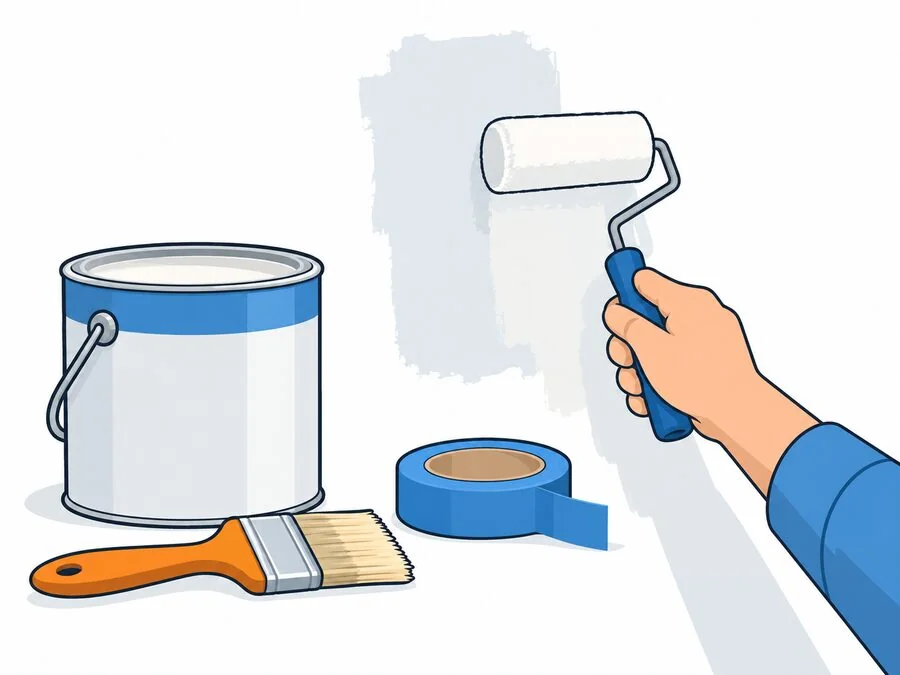
- Difficulty
- Easy
- Time
- 30 to 60 minutes
- Tools
- Matching paint, small roller or brush, sandpaper, damp cloth, painter's tape
- Call a pro if
- The wall has water damage or peeling paint over a large area.
In this guide
- Chemical safety
Scuffs, nail holes and marks happen in every home. A small touch-up can make a wall look new again, but a bad one leaves a patch that is more noticeable than the mark. This guide shows how to touch up paint walls so the repair blends in.
This guide is part of our wider guide to drywall, paint and wall repair.
What you need
- Matching paint, ideally from the same can
- A small brush or a mini foam roller
- A damp sponge and mild soap
- Fine sandpaper, 220 grit
- Spackle and a putty knife for dents
- Painter's tape and a drop cloth
Step 1: Find the right paint
Matching is the hardest part. Paint fades over time, so even the same color can look different on an old wall. If you have the leftover can, stir it well. If you do not, scrape a small chip or take a photo of the label and take it to a paint store, where they can scan and match the color. Match the sheen as well. A flat paint over a satin wall will show.
Step 2: Clean the area
Wipe the spot with a damp sponge and a drop of mild soap. Let it dry. Paint will not stick to grease or dust. For crayon or marker, you may need a gentle cleaner. Test it first in a hidden place.
Step 3: Fill dents and holes
For nail holes or dents, fill each nail hole with a thin smear of spackle and scrape it flat. Let it dry, then sand it lightly until it is smooth and flush with the wall. Wipe off the dust. For a larger hole, see our guide on how to patch drywall hole.
Step 4: Prime if needed
Stained or patched spots can show through the paint. A small dab of primer stops that. Let it dry first.
Step 5: Apply the paint in thin coats
Dip only the tip of the brush, or use a mini roller. Dab the paint on the spot and feather the edges outward so there is no hard line. Use thin coats. Let each coat dry as the can says, then add another if needed. Thick paint makes a bump that shows in the light.
Step 6: Blend and check
Look at the wall from several angles and in different light. If you see a shiny or dull patch, it is called flashing. Painting the whole section of the wall, from corner to corner, avoids this.
When to repaint the whole wall
If the paint is more than a couple of years old and faded, or the color match is poor, repaint the whole wall from corner to corner. Our how to paint a room guide covers the steps.
Tips for a better match
- Use the same tool as the original. A roller leaves a slight texture and a brush does not.
- Work in good light.
- Let the paint dry fully before judging the color, because it changes as it dries.
- Keep leftover paint in a sealed can with the color and date written on the lid.
Safety note
Homes built before 1978 may have lead in the old paint. Do not sand or scrape it without testing first. Use an EPA-recognized lead test kit, or call a certified professional. Open windows for ventilation when painting, and keep paint away from children and pets.
Common mistakes
- Skipping the cleaning step.
- Using a different sheen.
- Applying thick coats.
- Not feathering the edges.
- Touching up with a color that has dried differently.
Related guides
- How to Cut In Paint Along Ceilings and Trim (Crisp Lines)
- How to Paint a Front Door That Looks Good and Lasts
- How to Paint a Room Like a Pro (Beginner Guide)
- How to Remove Crayon and Scuff Marks from Walls
- How to Clean Walls With Flat Paint
- How to Fill Picture Holes Before Moving Out
FAQ
Why does touched-up paint look different?
Old paint fades, and a different sheen shows. Feather the edges, use the same sheen and paint to a natural break, like a corner.
How can I match old paint?
Take a chip to a paint store for a color match. Keep leftover paint in a sealed can.
Should I wash the wall first?
Yes. Dirt and grease keep paint from sticking.
Can I touch up paint without repainting the whole wall?
Yes; if you have the original paint and the wall is not too faded. Use the same application method as the original (roller texture matters); feather the edges; and expect the touch-up to blend better as it cures over a week or two.
Why does my touch-up look shiny or darker than the rest?
Fresh paint has a different sheen until it fully cures; and aged walls have faded and collected grime. Wash the wall first; thin the paint slightly; and dab rather than brush for a closer match. Flat finishes blend far better than satin or semi-gloss.
How should I store leftover paint for touch-ups?
Seal the can tightly; store it upside down or with plastic wrap under the lid; and keep it at room temperature away from freezing. Label it with the room; color name; and date. Properly stored latex paint stays usable for several years.
More from this topic
- Drywall, Paint and Wall Repair: Fixes You Actually Need: Wall repair: patch a hole, fix nail pops and cracks, match texture, then paint it so the repair disappears: a...
- How to Strip Paint With a Heat Gun: Learn how to strip paint with a heat gun safely: test for lead first, keep the gun moving and lift the...
- How to Fix Bubbling Paint on Walls: How to fix bubbling paint on walls: find the moisture or adhesion cause, cut out the blisters, sand, prime,...
- How to Fix Paint Drips and Runs on a Wall: Fix paint drips and runs by letting them dry, scraping or sanding the ridge flat, touching up with thin...
- How to Paint a Room Like a Pro (Beginner Guide): Want to know how to paint a room with a smooth finish? Follow these steps for prep, taping, cutting in,...
 Walls and PaintDrywall, Paint and Wall Repair: Fixes You Actually NeedWall repair: patch a hole, fix nail pops and cracks, match texture, then paint it so the repair disappears: a practical order of work for walls and ceilings.Walls and PaintHow to Strip Paint With a Heat GunLearn how to strip paint with a heat gun safely: test for lead first, keep the gun moving and lift the softened paint with a putty knife.
 Walls and PaintHow to Fix Bubbling Paint on WallsHow to fix bubbling paint on walls: find the moisture or adhesion cause, cut out the blisters, sand, prime, fill and repaint the patch.
 Walls and PaintHow to Fix Paint Drips and Runs on a WallFix paint drips and runs by letting them dry, scraping or sanding the ridge flat, touching up with thin coats, and adjusting your rolling technique.
 Walls and PaintHow to Paint a Room Like a Pro (Beginner Guide)Want to know how to paint a room with a smooth finish? Follow these steps for prep, taping, cutting in, rolling and cleanup. Steps and safety tips included.