
How to Test a Window for Leaks
Part of: Floors, walls and doors
- Difficulty
- Easy to moderate
- Time
- 30 to 60 minutes
- Tools
- Garden hose with a spray nozzle, helper, flashlight, towels, painter's tape, camera or phone, caulk, putty knife
- Call a pro if
- You find rot, soft wood, water inside the wall, mold, or stains that keep returning after you caulk, or the leak comes from the roof or flashing you cannot reach safely.
In this guide
- Power off first
- Ladder safety
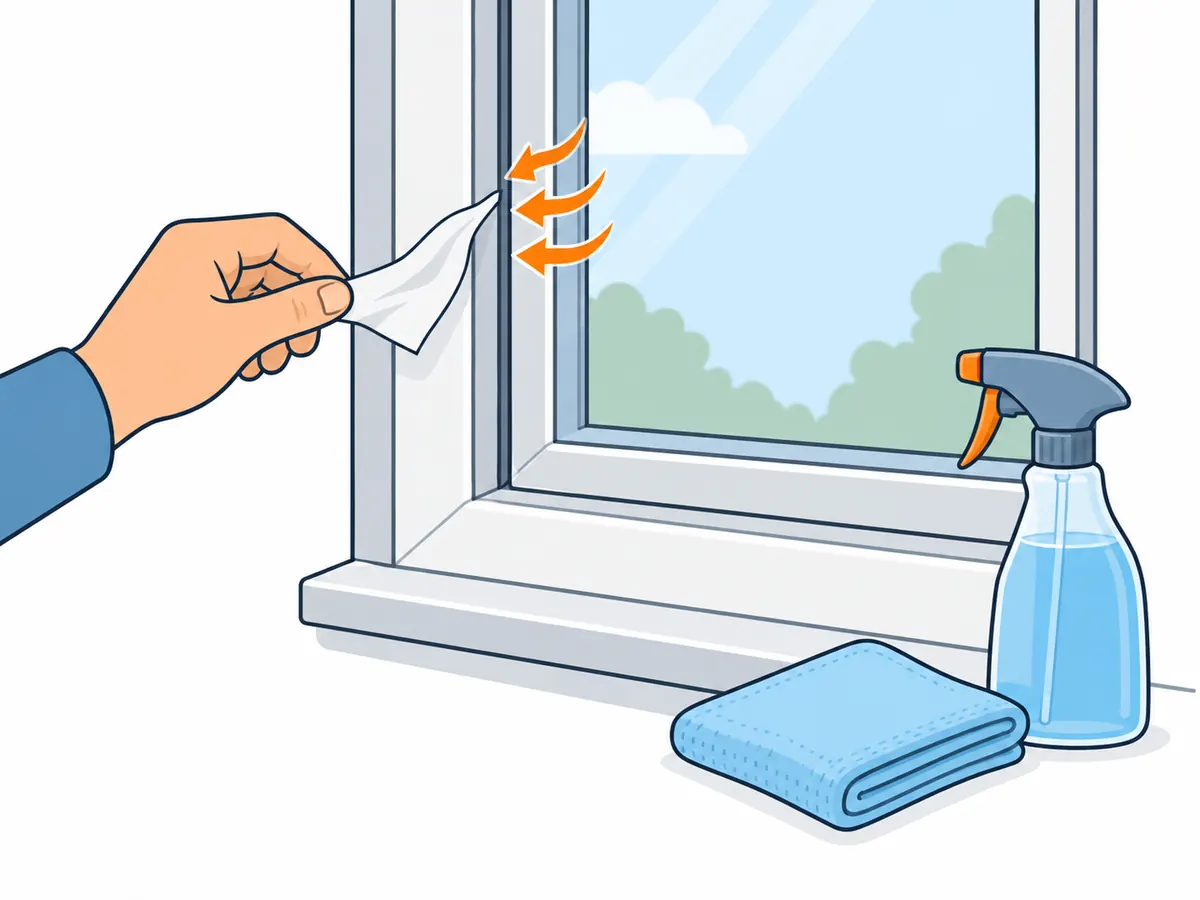
A drip on the sill after a rainstorm is hard to trace. Water can enter at the glass, the frame, the trim, or from the wall above. A simple hose test tells you where it comes in. Here is how to test a window for leaks safely and what to do with the answer.
Why windows leak
Windows leak when caulk cracks, flashing fails, weep holes clog, or the frame has gaps. Wind driven rain can reach spots that never leak in a normal storm. Water can also run along the wall and show up far from the real source. A test narrows it down.
Get ready
Pick a dry day. Move furniture and put towels on the sill and floor. Take a few photos of existing stains and date them. Check that nearby outlets and wiring are dry and clear.
Ask a helper to stay inside with a flashlight and a towel. You will spray from outside.
Step by step
1. Start low. Aim the hose at the bottom of the window frame, with a gentle spray, not a jet. Run it for a couple of minutes. Ask your helper to look for drips.
2. Move up one step at a time. Spray the sides next, then the top. Spend a few minutes on each area. Do not spray the whole window at once, or you will not know which spot leaks.
3. Test the glass. Spray the glass with the sash closed. Then spray the joint between the glass and frame.
4. Test the wall and trim. Spray the wall above the window, the flashing, and the siding.
5. Mark leaks. When your helper sees water, mark the inside spot with painter's tape and note the location where you were spraying.
6. Stop and dry. Wipe the water and let the area dry before you repeat the test on any other spot.
7. Photograph the results. Photos help if you need to talk with a contractor.
Common sources and fixes
- Cracked caulk or caulk on the outside: scrape out loose caulk and apply a fresh bead of exterior grade caulk. See how to seal a drafty window.
- Clogged weep holes: clear them with a soft tool so water can drain.
- Failed seal around the sash: the sash may need a new gasket or adjustment.
- Flashing above the window: missing or bent flashing sends water behind the siding. This usually needs a pro.
- Gutter overflow: water running down the wall can reach the window. Clean gutters. See how to clean gutters.
- Condensation: it can look like a leak but forms on the glass. See how to stop window condensation.
Check for hidden damage
After a leak, look at the wood under the sill and around the frame. Press with a screwdriver. Soft wood means rot. Look for stains, bubbling paint, and mold on nearby walls. See how to tell if a ceiling stain is an active leak for a similar approach to stains.
What a pro should handle
Call a pro if the leak comes from flashing, if you see rot in the frame, or if water gets inside the wall. Repairs can involve removing trim or siding. A window pro can also tell whether the window needs replacing.
Prevent future leaks
Check caulk each fall. Keep gutters clear. Trim plants so they do not hold moisture against the house. Clean tracks and weep holes. Add this to your home maintenance checklist by season.
Related guides
- How to Fix a Patio Door That Leaks Air or Water
- How to Caulk Around a Window to Stop Drafts and Water
- How to Replace Window Weatherstripping to Stop Drafts
- How to Replace a Garden Hose Washer
- How to Weatherstrip a Sliding Glass Door That Leaks Air
FAQ
How long should I spray each spot?
A few minutes per area is a good start.
Can I do the test alone?
It is easier with a helper who can see inside.
Is every drip a leak?
No. Condensation can look the same. Check the glass surface and humidity.
Should I caulk the weep holes?
No. They let water drain out.
More from this topic
- How to Read Your Water Meter: Dials, Leak Tests and Bills: How to read your water meter: find it, read the dial or display, run the leak test, and use it to catch the...
- How to Fix a Patio Door That Leaks Air or Water: How to fix a patio door that leaks air or water: separate the draft from the leak, clear the weep holes,...
- Washer Leaks From the Bottom: How to Find the Source: Washer leaks from the bottom? Check the hoses, the drain pump, the door seal and the tub. Find where the...
- How to Test Water Hardness: Strips, Soap and Lab Kits: How to test water hardness with test strips, the soap bottle method or a lab kit, and what the results mean...
- How to Test Your Water for Lead: How to test your water for lead: collect the sample correctly, use a certified lab and read the results...
 PlumbingHow to Read Your Water Meter: Dials, Leak Tests and BillsHow to read your water meter: find it, read the dial or display, run the leak test, and use it to catch the leaks your bill never explains.
 Doors and WindowsHow to Fix a Patio Door That Leaks Air or WaterHow to fix a patio door that leaks air or water: separate the draft from the leak, clear the weep holes, reseal the threshold, and check the flashing.
 KitchenWasher Leaks From the Bottom: How to Find the SourceWasher leaks from the bottom? Check the hoses, the drain pump, the door seal and the tub. Find where the water comes from and fix it with simple steps.
 PlumbingHow to Test Water Hardness: Strips, Soap and Lab KitsHow to test water hardness with test strips, the soap bottle method or a lab kit, and what the results mean for your appliances and fixtures.
 Water QualityHow to Test Your Water for LeadHow to test your water for lead: collect the sample correctly, use a certified lab and read the results against the action level.