
How to Split Firewood
Part of: Outdoors and garage
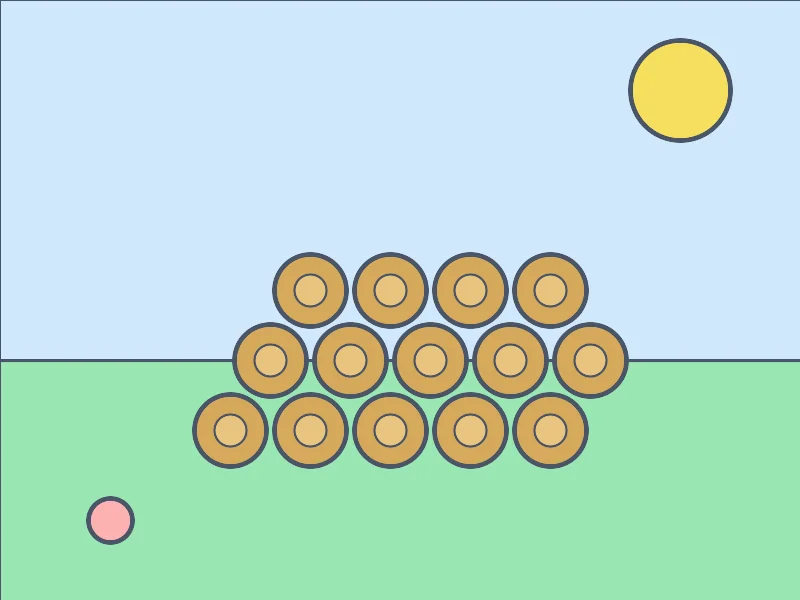
- Difficulty
- Medium
- Time
- An afternoon for a decent stack
- Tools
- A splitting maul or axe, a chopping block, wedges for tough rounds, gloves, safety glasses and sturdy boots
- Call a pro if
- Nothing routine; extremely large rounds may need a powered log splitter, which you can rent for the day.
In this guide
- Wear protection
Splitting your own firewood saves money and, done right, is satisfying work instead of a battle. Technique beats strength every time. How to split firewood starts with the tool, since a splitting maul with its heavy wedge head does most of the work.
1. Choose the right tool
1. A splitting maul, with its heavy wedge head, does most of the work.
2. A lighter axe suits kindling and small rounds.
3. Keep metal wedges and a sledge for stubborn, knotty wood.
4. A sharp, sound tool is safer than a dull, damaged one.
2. Set up a solid base
1. Split on a wide, knee-high chopping block.
2. Set the block on level, firm ground.
3. The block absorbs the blow and saves your back.
4. Never split on bare soil or concrete.
3. Read the round
1. Look for existing cracks and split along them.
2. Aim around knots, never through them.
3. Position the round so checks face up.
4. Ten seconds of reading saves ten wasted swings.
4. Stand and grip correctly
1. Face the round with feet shoulder-width apart.
2. Grip near the head with one hand, the end of the handle with the other.
3. Let your top hand slide down the handle as you swing.
4. Balance and grip control where the maul lands.
5. Swing with your whole body
1. Raise the maul overhead and let gravity do the work.
2. Bend your knees and drive down through the round.
3. Aim for the far edge of the crack, not the center of the wood.
4. Speed and accuracy split wood, not brute force.
6. Handle stuck rounds
1. If the maul lodges in the round, lift both and strike the block together.
2. For truly stubborn rounds, drive a wedge into the crack with a sledge.
3. Add a second wedge if the first does not finish the split.
4. Never twist the maul sideways to pry; handles break that way.
7. Split to the right size
1. Split rounds into pieces four to six inches across.
2. Split smaller for kindling and shoulder-season fires.
3. Uniform sizes stack tighter and burn more evenly.
4. Oversized chunks season slowly and smolder.
8. Stack and season the wood
1. Stack split wood off the ground with airflow around it.
2. Cover the top only, leaving the sides open.
3. Season most hardwoods six months to a year.
4. Dry wood lights easily and burns hot with less creosote.
Common mistakes
- Swinging at knots and the exact center instead of reading the cracks.
- Splitting on the ground, which deadens the blow and wrecks your back.
- Gripping the handle with both hands at the end, losing control of the head.
- Burning unseasoned wood, which hisses, smokes and builds creosote.
FAQ
What is the easiest wood to split?
Straight-grained hardwoods like ash and oak split cleanly, especially once slightly dried. Knotty species like elm and sycamore fight back and often need wedges or a powered splitter.
Should I split wood green or seasoned?
Most wood splits more easily green, right after felling. Splitting green also speeds seasoning dramatically, since split surfaces dry far faster than whole rounds.
Axe or maul: which is better for splitting?
A maul for splitting: its heavy, wedge-shaped head drives rounds apart. An axe is thinner and designed to cut across grain for felling and limbing, though it handles kindling well.
How long does firewood need to season?
Typically six months to a year split and stacked with good airflow, longer for dense hardwoods like oak. Properly seasoned wood is light, dark at the ends, and sounds hollow when knocked together.
Related guides
- How to Build a Wood Storage Rack Against a Fence: Learn how to build a wood storage rack against a fence: keep the stack off the ground, leave an air gap...
- How to Spot Termite Damage: Learn how to spot termite damage: mud tubes, discarded wings, hollow wood and frass. Know the difference from...
- How to Store Firewood So It Stays Dry and Pest-Free: Learn how to store firewood: stack it off the ground, cover the top only, keep it away from the house, and...
- How to Cut a Notch in Wood: Learn how to cut a notch in wood cleanly: mark both edges, cut the shoulders with a saw, and clear the waste...
- How to Glue Wood With Wood Glue: Learn how to glue wood with wood glue so the joint holds: dry fit it, spread a thin even coat, clamp it...
 Garage and OutdoorsHow to Build a Wood Storage Rack Against a FenceLearn how to build a wood storage rack against a fence: keep the stack off the ground, leave an air gap behind it and cover only the top.
 Garage and OutdoorsHow to Spot Termite DamageLearn how to spot termite damage: mud tubes, discarded wings, hollow wood and frass. Know the difference from flying ants and when to call a licensed pro.
 Garage and OutdoorsHow to Store Firewood So It Stays Dry and Pest-FreeLearn how to store firewood: stack it off the ground, cover the top only, keep it away from the house, and season it before burning.
 Garage and OutdoorsHow to Cut a Notch in WoodLearn how to cut a notch in wood cleanly: mark both edges, cut the shoulders with a saw, and clear the waste with a chisel.
 Garage and OutdoorsHow to Glue Wood With Wood GlueLearn how to glue wood with wood glue so the joint holds: dry fit it, spread a thin even coat, clamp it square and let it cure.