
How to Build a Rain Garden
Part of: Outdoors and garage
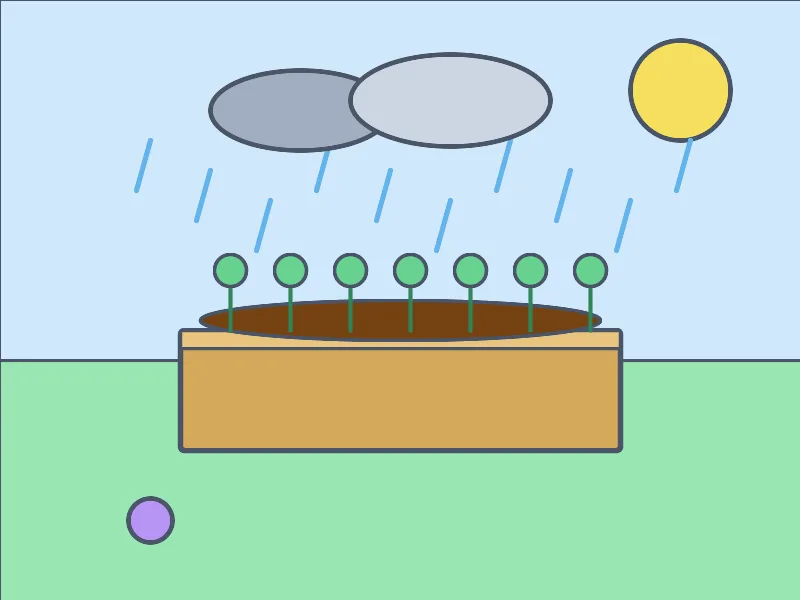
- Difficulty
- Moderate
- Time
- 1 to 2 weekends
- Tools
- Shovel, wheelbarrow, hose or string for marking, level, rake, compost, mulch, plants, gloves
- Call a pro if
- The spot stays wet for days, the water table is high, or the garden would sit within ten feet of a foundation.
In this guide
A rain garden is a shallow bowl planted with tough perennials that catches runoff and lets it soak in. It keeps water out of the basement and takes pressure off storm drains. Here is how to build a rain garden.
1. Check the soil drains
1. Dig a test hole a foot deep where you plan the garden.
2. Fill it with water and let it drain.
3. Refill and time how long the second lot takes to disappear.
4. If it drains within a day, the spot works.
2. Pick the spot
1. Keep it at least ten feet from the house.
2. Put it downhill from the roof or driveway it will serve.
3. Avoid the spot where downspouts dump at full force.
3. Size it
1. Measure the roof or driveway area feeding it.
2. A garden about a tenth of that area is a sensible start.
3. Deeper is not better. Keep the basin shallow.
4. Mark the shape
1. Lay a hose or string on the ground in a curve.
2. Keep the edges gentle, not a straight trench.
3. Check the low point sits in the middle.
5. Dig the basin
1. Strip the turf and keep it for patching.
2. Dig a bowl about six to eight inches deep at the center.
3. Slope the sides gently in.
4. Keep the soil you dig for the berm.
6. Build the berm
1. Pile the dug soil around the downhill edge.
2. Shape it into a low, even lip.
3. Compact it lightly with your boots.
4. Check the lip is level so water does not spill early.
7. Make the inlet
1. Cut a shallow channel where water enters.
2. Line the channel with a few flat stones.
3. Keep the entry wider than the flow.
8. Improve the soil
1. Dig compost into the basin floor.
2. Keep the mix loose, not compacted.
3. Test drainage again before planting.
9. Plant it
1. Choose plants that tolerate wet roots and dry spells.
2. Put the thirstiest plants in the middle.
3. Use taller plants at the edges.
4. Space them so they fill in within two seasons.
10. Mulch and water in
1. Spread two inches of mulch, keeping it off stems.
2. Water deeply after planting.
3. Top up mulch each spring.
4. Keep the inlet clear of leaves.
Common mistakes
- Building the garden where the soil does not drain.
- Digging too close to the foundation.
- Making the basin too deep and narrow.
- Planting bog plants in a spot that dries out.
- Letting the inlet clog with leaves.
Related guides
- How to Build a Dirt Berm to Direct Water
- How to Build a Gravel Boardwalk
- How to Install a Rain Chain
- How to Install a Rain Barrel
- How to Build a Raised Garden Bed
- How to Build a Stone Garden Step
FAQ
How deep should a rain garden be?
Six to eight inches at the center is enough for most homes.
Do rain gardens breed mosquitoes?
Not if they drain within a day or two. Standing water for a week means the soil is wrong.
Can I build one without digging?
A shallow planted depression works. A raised berm alone will not hold water.
What plants suit a rain garden?
Anything that tolerates wet roots and summer drought. Ask at a local nursery for native choices.
More from this topic
- How to Build a Dirt Berm to Direct Water: Learn how to build a dirt berm to direct water: shape a low mound on the high side, compact it and plant it...
- How to Build a Stone Drainage Ditch: Learn how to build a stone drainage ditch: cut a shallow channel on the water line, line it and fill with...
- How to Install a Dry Well: Learn how to install a dry well: size it for the roof area, dig and line the pit, connect the downspout and...
- How to Build a Gravel Boardwalk: Learn how to build a gravel boardwalk: frame a shallow bed with timber edging and compact gravel so the path...
- How to Build a Compost Bin That Actually Works: Learn how to build a compost bin: pick the spot, build or assemble the bin, layer greens and browns, turn it...
 Garage and OutdoorsHow to Build a Dirt Berm to Direct WaterLearn how to build a dirt berm to direct water: shape a low mound on the high side, compact it and plant it so runoff goes where you want.
 Garage and OutdoorsHow to Build a Stone Drainage DitchLearn how to build a stone drainage ditch: cut a shallow channel on the water line, line it and fill with stone.
 Garage and OutdoorsHow to Install a Dry WellLearn how to install a dry well: size it for the roof area, dig and line the pit, connect the downspout and keep silt out so it drains between storms.
 Garage and OutdoorsHow to Build a Gravel BoardwalkLearn how to build a gravel boardwalk: frame a shallow bed with timber edging and compact gravel so the path stays firm underfoot.
 Garage and OutdoorsHow to Build a Compost Bin That Actually WorksLearn how to build a compost bin: pick the spot, build or assemble the bin, layer greens and browns, turn it and harvest finished compost.