
How to Build a Compost Bin That Actually Works
Part of: Outdoors and garage
- Difficulty
- Easy
- Time
- Two to three hours to build, months to compost
- Tools
- A shovel, a drill, screws, pallets or lumber or a ready bin, a pitchfork, gloves
- Call a pro if
- You want to compost meat or dairy at scale or deal with a persistent rodent problem, since hot composting systems and advice vary by area.
In this guide
- Wear protection
Compost turns kitchen scraps and yard waste into free soil food. A bin keeps it tidy, and building one takes an afternoon. Here is how to build a compost bin and keep it producing.
1. Pick the right spot
1. Choose a level, well-drained spot with partial sun.
2. Keep it close enough to the kitchen that you will actually use it.
3. Stay a few feet from fences and walls so air circulates.
4. Bare earth underneath is best; worms and microbes move up into the pile.
2. Choose your bin style
- Pallet bin: three or four pallets screwed into a box; cheap and sturdy.
- Lumber slat bin: boards with gaps for airflow, built to your size.
- Wire mesh cylinder: the fastest build; unroll, stake, fill.
- Bought tumbler or bin: tidy and fast, good for small yards.
- A bin about three feet square holds enough heat to compost well.
3. Build the bin
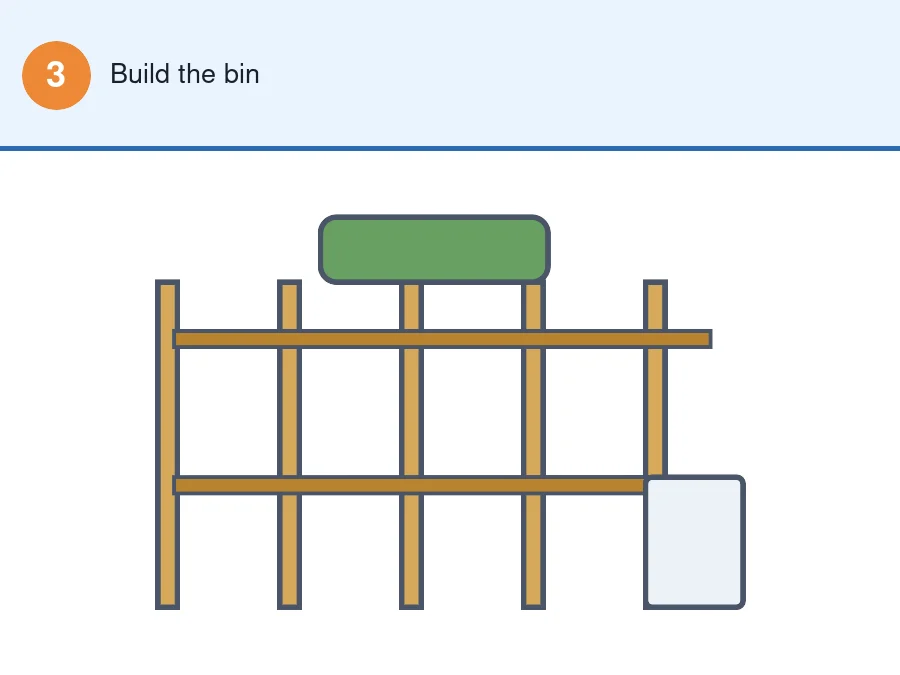
1. Stand the sides and screw or wire the corners together.
2. Leave gaps between boards for airflow; compost needs oxygen.
3. Make the front removable or slatted low so you can shovel compost out.
4. Add a lid or cover of cardboard or tarp to control moisture in wet climates.
4. Learn the recipe
1. Compost needs greens and browns: roughly two parts brown to one part green.
2. Greens are kitchen scraps, grass clippings and fresh garden waste.
3. Browns are dry leaves, cardboard, straw and wood chips.
4. Too many greens and it goes slimy; too many browns and nothing happens.
5. What goes in and what stays out
- In: fruit and vegetable scraps, coffee grounds, eggshells, leaves, grass, shredded cardboard.
- Out: meat, dairy, oils, pet waste, diseased plants and weeds gone to seed.
- Chop big pieces small; they break down far faster.
- Avoid glossy paper and treated wood completely.
6. Build the pile in layers
1. Start with a layer of twigs or coarse browns for drainage.
2. Add alternating layers of greens and browns.
3. Keep the pile as damp as a wrung-out sponge; water it if it dries.
4. Bury kitchen scraps in the center to avoid flies and smells.
7. Turn and wait
1. Turn the pile with a pitchfork every week or two to add air.
2. A warm, active pile can finish in two to three months.
3. A cold, unturned pile still composts; it just takes a year.
4. Finished compost is dark, crumbly and smells like forest floor.
8. Use and maintain it
- Spread finished compost on beds as mulch or mix it into planting holes. Our guide on installing a raised garden bed puts it to work.
- Sift out unfinished chunks and throw them back in.
- Start a second bin so one can cook while you fill the other.
- In winter the pile slows; keep adding scraps and it wakes up in spring.
Common mistakes
- Piling only grass clippings, which mat into a smelly slab.
- Letting the pile dry out completely; microbes need moisture.
- Adding meat and dairy, then fighting rats and raccoons.
- Never turning it and wondering why nothing happens.
- Using finished-looking compost that still has weed seeds from a cold pile.
Related guides
- How to Build a Simple Potting Bench
- How to Build a Simple Cold Frame for Winter Greens
- How to Build a Rain Garden
FAQ
How long does compost take to make?
Two to three months in a warm, turned pile, up to a year in a cold, unturned one. Chopping materials small speeds everything up.
Why does my compost smell bad?
Too many greens or too wet. Mix in dry browns like leaves or cardboard and turn it to add air.
Can I compost in winter?
Yes. The pile slows or pauses in freezing weather but picks up again in spring. Keep adding scraps through winter.
Do I need two compost bins?
It helps. Fill one while the other finishes, so you always have somewhere for scraps and something ready to harvest.
More from this topic
- How to Start a Compost Bin at Home Without Smells or Pests: Learn how to start a compost bin: pick a spot and bin, balance greens and browns, keep it damp and aerated,...
- How to Build a Compost Heap From Pallets: Learn how to build a compost heap from pallets: stand four pallets into a bay and layer greens and browns for...
- How to Build a Compost Sifting Screen: Learn how to build a compost sifting screen: frame a mesh panel to size, brace it square and sift finished...
- How to Build a Brick Planter Wall: Learn how to build a brick planter wall: set a footing, lay courses with drainage and line it so plants...
- How to Build a Garden Wall From Concrete Blocks: Learn how to build a garden wall from concrete blocks: set a level footing, lay courses true and cap it so it...
 Garage and OutdoorsHow to Start a Compost Bin at Home Without Smells or PestsLearn how to start a compost bin: pick a spot and bin, balance greens and browns, keep it damp and aerated, and avoid smells and pests as it breaks down.
 Garage and OutdoorsHow to Build a Compost Heap From PalletsLearn how to build a compost heap from pallets: stand four pallets into a bay and layer greens and browns for fast rot.
 Garage and OutdoorsHow to Build a Compost Sifting ScreenLearn how to build a compost sifting screen: frame a mesh panel to size, brace it square and sift finished compost over a wheelbarrow.
 Garage and OutdoorsHow to Build a Brick Planter WallLearn how to build a brick planter wall: set a footing, lay courses with drainage and line it so plants thrive.
 Garage and OutdoorsHow to Build a Garden Wall From Concrete BlocksLearn how to build a garden wall from concrete blocks: set a level footing, lay courses true and cap it so it lasts.