
Shower Curtain Rod Keeps Falling? How to Fix It for Good
Part of: Basic plumbing
- Difficulty
- Easy
- Time
- 15 to 45 minutes
- Tools
- Measuring tape, level, screwdriver or drill for a mounted rod, stud finder or wall anchors, rubber grip pads or shelf liner, a step stool
- Call a pro if
- The wall is damaged or crumbly where any bracket must anchor, or the surround is tile you are not comfortable drilling.
In this guide
A shower curtain rod keeps falling when the tension, the mounting surface or the rod length is wrong. A falling shower rod usually crashes at the worst moment, mid-shower, curtain and all. Tension rods fail for three reasons: not enough tension, not enough grip, or too much weight. Each has a quick fix, and if you are done fighting physics entirely, a mounted rod ends the problem permanently. Here is how to fix a shower curtain rod that keeps falling.
This guide is part of our wider guide to bathroom fixtures, tile and grout.
Step 1: Check the tension itself
Most tension rods are installed too weakly. The rod should require real effort to compress into place. Take the rod down, extend it about an inch longer than the wall-to-wall measurement, and compress it into position. If it goes up with light hand pressure, it is undertensioned and will walk loose with every curtain pull.
Twist-to-tighten models need more turns than most people give them. After mounting, give the rod several more twists until it feels locked. Tug downward firmly in the middle: a properly tensioned rod holds your weight briefly without budging.
Step 2: Add grip where the rod meets the wall
Smooth tile and fiberglass surrounds give rubber end caps almost nothing to bite. Improve the grip:
- Cut small circles of rubber shelf liner or non-slip grip pad and place one behind each end cap. This single change fixes most falling rods.
- Clean the wall contact points with rubbing alcohol first, since soap film is a lubricant.
- Check the end caps themselves. Hardened, shiny rubber grips poorly; roughing the face lightly with sandpaper restores bite.
Step 3: Level it and pick the right height
A rod installed at a slight angle slides downhill over time. Hold a level against it as you mount. Height matters too: mount the rod so the curtain hangs inside the tub edge by an inch or two, keeping water in without the curtain dragging, since a curtain catching on the tub adds the daily tugs that walk a rod loose.
Step 4: Lighten the load
Heavy fabric curtains with liners, especially when wet, exceed what many tension rods can hold. Options: switch to a lighter curtain, hang the liner and curtain on separate rings so they slide instead of drag, or replace a sagging thin rod with a sturdier one rated for the span. Rods spanning wide showers flex in the middle, and a flexed rod loses end pressure; a thicker rod solves it.
Step 5: The permanent fix, a mounted rod
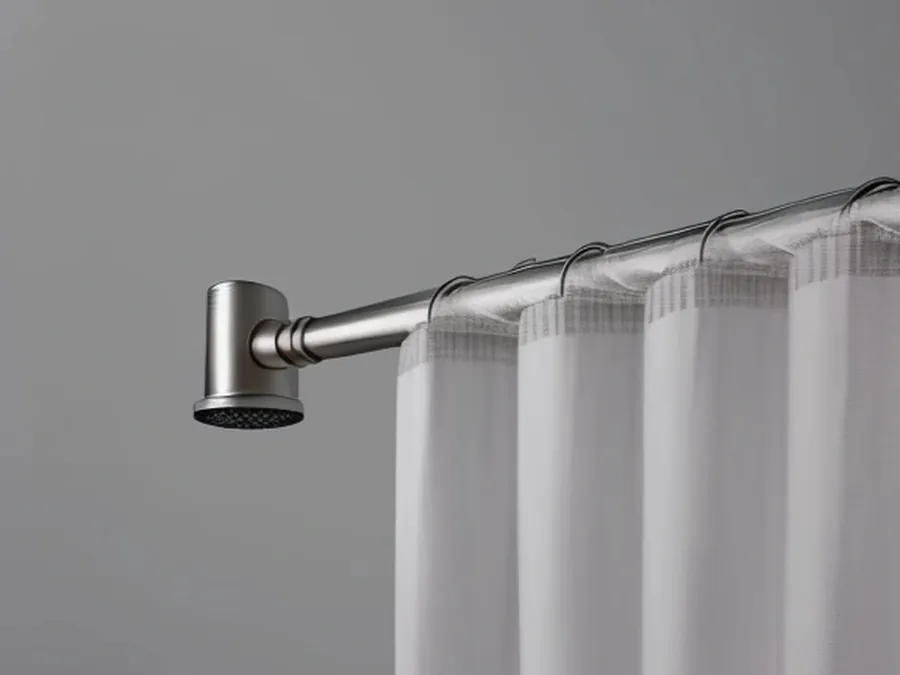
If the rod falls monthly, stop re-tensioning and mount it. Screw-mounted rods come in straight and curved versions, and the curved style adds welcome elbow room in the shower.
Mark bracket positions level at your chosen height. Into studs is ideal; into drywall, use the anchors supplied or toggle anchors rated for the load. On tile, drill slowly with a tile bit, then anchor into the wall behind. Tighten the brackets, set the rod in, and hang the curtain. It never falls again, and it holds wet towels and heavy curtains without complaint.
For renters: no-drill options
Landlords rarely want holes, so lean on the grip upgrades: shelf-liner pads, alcohol-cleaned contact points, and a quality rod with large rubber feet. Adhesive-mounted bracket cups that cradle the rod ends are another no-drill option; they stick to clean tile and give the rod a pocket to sit in so it cannot slide down the wall.
Common mistakes
- Installing the rod with barely any compression, then blaming the product.
- Mounting over soap film, which defeats even new rubber caps.
- Hanging a soaked heavy liner daily on a light-duty rod.
- Re-tightening a rod whose end caps have hardened smooth instead of fixing the grip.
Related guides
- How to Install a Shower Shelf Without Damaging Tile or Waterproofing
- How to Fix a Loose Shower Head Arm That Drips or Wobbles
- How to Fix a Leaking Shower Door: Seals, Sweeps and Alignment
- How to Replace a Shower Cartridge: Fix a Dripping or Stiff Shower Valve
- How to Clean a Shower Curtain Liner
FAQ
Why does my rod fall only in winter or only in summer?
Temperature and humidity change wall and rod dimensions slightly. A rod set with marginal tension in one season loses it in another. More tension plus grip pads ends the seasonal cycle.
Are curved rods more stable than straight ones?
Curved mounted rods are very stable because they are screw-mounted by design. Curved tension rods exist too, and follow the same tension and grip rules as straight ones.
Can I mount a rod on a fiberglass surround?
Yes, with care. Fiberglass flexes, so anchor brackets into the wall studs at the surround edges where possible, or use anchors rated for hollow walls, and avoid overtightening against the panel.
More from this topic
- How to Install a Shower Curtain Rod That Stays Up: Learn how to install a shower curtain rod: measure the opening, choose tension or fixed, set the height, fix...
- Shower Caulk Keeps Coming Off: Shower caulk keeps coming off? Learn why it peels, cracks or grows mold, from caulking a wet joint to the...
- How to Fix a Leaking Shower Door: Learn how to fix a leaking shower door: find where the water escapes, replace the sweep and magnetic seal,...
- How to Fix a Loose Shower Head Arm That Drips or Wobbles: Learn how to fix a loose shower head arm: tighten the arm into the wall fitting, replace the thread tape,...
- How to Grout a Shower Wall: Learn how to grout a shower wall so it holds: pack the joints from the bottom up, wipe before it sets and...
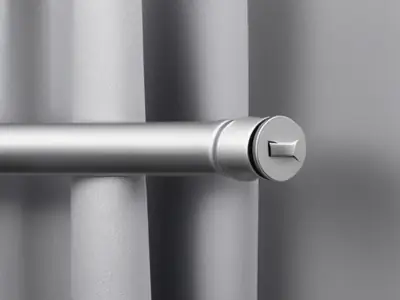 BathroomHow to Install a Shower Curtain Rod That Stays UpLearn how to install a shower curtain rod: measure the opening, choose tension or fixed, set the height, fix into solid surfaces and stop it slipping.
 BathroomShower Caulk Keeps Coming OffShower caulk keeps coming off? Learn why it peels, cracks or grows mold, from caulking a wet joint to the wrong sealant, and how to make the next bead last.
 BathroomHow to Fix a Leaking Shower DoorLearn how to fix a leaking shower door: find where the water escapes, replace the sweep and magnetic seal, adjust the hinges and re-seal the frame and tray.
 BathroomHow to Fix a Loose Shower Head Arm That Drips or WobblesLearn how to fix a loose shower head arm: tighten the arm into the wall fitting, replace the thread tape, deal with a cracked arm and stop the drip.
 BathroomHow to Grout a Shower WallLearn how to grout a shower wall so it holds: pack the joints from the bottom up, wipe before it sets and seal once it cures.