
Tub Stopper Won't Hold Water: How to Fix It
Part of: Basic plumbing
- Difficulty
- Easy to moderate
- Time
- 20 to 60 minutes
- Tools
- Screwdriver, pliers, an old toothbrush, white vinegar, plumber's grease, replacement stopper or gasket if needed, flashlight
- Call a pro if
- The drain fitting itself is corroded or cracked, the linkage is broken off inside the overflow pipe, or water leaks below the tub when it drains.
In this guide
- Wear protection
- Chemical safety
If your tub stopper won't hold water, the seal, the linkage or the drain flange needs attention. You fill the tub, walk away, and come back to two inches of water. A tub stopper that won't hold water is one of the most common bathtub annoyances, and it rarely means a plumbing bill. Hair, soap scum and worn rubber are usually to blame. The fix depends on which type of stopper you have, so identify yours first, then follow the matching steps.
This guide is part of our wider guide to bathroom fixtures, tile and grout.
Know your stopper type
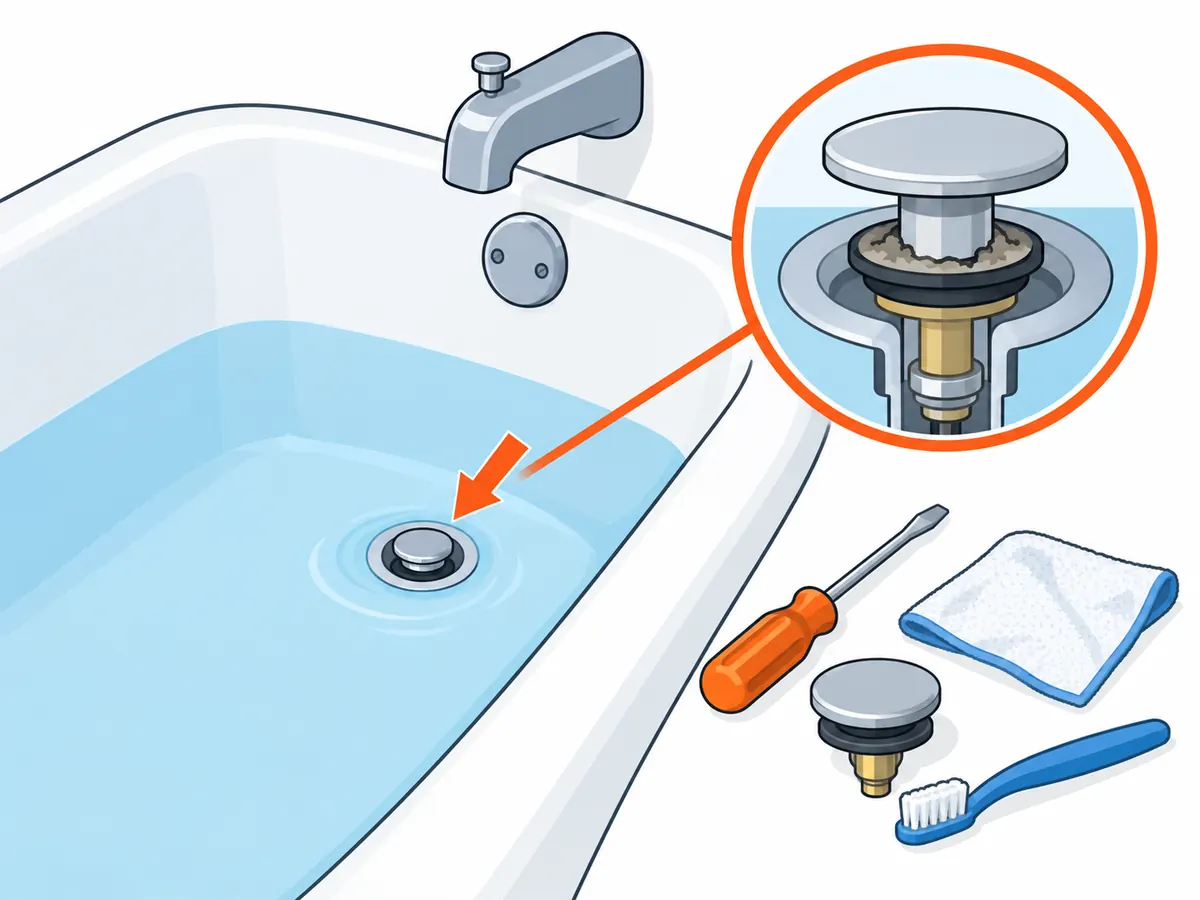
- Lift-and-turn or push-pull: a small knob on top of the stopper itself. The stopper unscrews from the drain.
- Toe-touch (push-push): press with your toe to close, press again to open. It unscrews too.
- Trip lever: a lever on the overflow plate under the spout. It moves a plunger or linkage hidden inside the overflow pipe.
Step 1: Clean the stopper and the drain seat
Most stoppers fail to seal because of buildup, not breakage. For a lift-and-turn or toe-touch stopper, turn the top counterclockwise and lift it out. Some have a hidden set screw on the knob that you loosen first.
Scrub the stopper and its rubber seal with an old toothbrush and warm soapy water. Soak crusty parts in white vinegar for half an hour to dissolve mineral scale. While it is out, pull hair from the drain crossbars and scrub the rim where the stopper seats. Even a thin ridge of soap scum can break the seal. If hair clogs are a recurring theme, our guide on unclogging a bathtub drain with a hair clog covers the deeper clean.
Step 2: Check the rubber seal or gasket
Run a finger around the rubber ring on the bottom of the stopper. If it is cracked, flattened or stiff, it cannot seal no matter how clean it is. Some seals slide off and can be replaced on their own; on others you replace the whole stopper. Take the old part to the hardware store to match the size. A new stopper is inexpensive and screws back in by hand.
Step 3: Adjust a lift-and-turn or toe-touch stopper
These stoppers thread onto a post in the drain. If the stopper sits too high, it never presses down firmly. Screw it a turn or two further onto the post so it seats tighter when closed, then test. There is a balance here: too tight and it will not stay open, too loose and it leaks. Adjust a half turn at a time and run water to check.
A thin smear of plumber's grease on the rubber helps the seal slide and seat.
Step 4: Adjust a trip-lever linkage
Remove the two screws on the overflow plate and pull the plate away. The linkage comes out with it: a rod with either a spring or a brass plunger on the end.
If the tub drains slowly even when open, or will not hold water when closed, the linkage length is off. Most linkages have a threaded section with a lock nut. Lengthen the rod slightly so the plunger seats deeper and seals better, or shorten it if the plunger sits too low and slows drainage. Move the adjustment about an eighth of an inch at a time, reassemble, and test with a few inches of water.
Clean the plunger before reinstalling. Scale on its sides makes it stick in the pipe, which feels exactly like a broken stopper.
Step 5: Test the seal
Close the stopper and fill the tub with two or three inches of water. Mark the level with a piece of tape and wait 15 minutes. If the level holds, you are done. If it drops, recheck the seal seating and the linkage adjustment before assuming a bigger problem.
Common mistakes
- Using drain cleaner to fix a sealing problem. Cleaner clears clogs; it does nothing for a bad seal.
- Forcing a stuck stopper. Mineral scale welds threads together, so soak with vinegar first.
- Overtightening a new stopper. Hand-tight plus a quarter turn is enough.
- Dropping linkage screws into the overflow. Magnet tools help retrieve them, but a cup and care are easier.
Related guides
- Tub Overflow Leak: How to Fix the Plate and Gasket
- Replace Shower Faucet Handle: Tub and Shower
- How to Seal a Shower Floor and Keep Water Out of the Wall
- How to Replace a Pop-Up Drain Stopper in a Bathroom Sink
- Slow Bathroom Sink Drain: How to Fix It
- How to Replace a Tub Spout
FAQ
Why does my tub hold water sometimes but not others?
Temperature. Hot water expands rubber seals slightly and can improve or worsen the seal depending on wear. A borderline seal that behaves inconsistently should be replaced.
Can I replace a trip-lever drain with a simple stopper?
Yes. Conversion kits replace the internal plunger with a toe-touch stopper at the drain opening. It is a popular fix for old linkages that keep sticking.
How long should a stopper seal last?
Rubber seals typically last several years. Hard water and harsh cleaners shorten their life, which is why vinegar cleaning helps.
More from this topic
- Dripping Tub Spout or Diverter: How to Fix It: Dripping tub spout or diverter that leaks to the shower head? Replace the spout or tighten it, and learn when...
- How to Replace a Tub Drain Stopper: How to replace a tub drain stopper: remove the old stopper or trip lever, match the type and fit the new one...
- How to Fix a Leaking Bathtub Drain and Stop the Drip Below: Learn how to fix a leaking bathtub drain: find if it is the drain shoe, overflow gasket or trap, replace...
- Low Water Level Toilet Bowl: How to Fix It: Toilet bowl water too low or dropping? Check the fill tube, vent, trap and tank for a low water level toilet...
- How to Remove Rust Stains From Bathtub Surfaces: Learn how to remove rust stains from bathtub surfaces: baking soda paste or lemon and salt on porcelain,...
 BathroomDripping Tub Spout or Diverter: How to Fix ItDripping tub spout or diverter that leaks to the shower head? Replace the spout or tighten it, and learn when the valve is the real problem. Steps and tools.
 PlumbingHow to Replace a Tub Drain StopperHow to replace a tub drain stopper: remove the old stopper or trip lever, match the type and fit the new one in under an hour.
 BathroomHow to Fix a Leaking Bathtub Drain and Stop the Drip BelowLearn how to fix a leaking bathtub drain: find if it is the drain shoe, overflow gasket or trap, replace washers and putty, and check the ceiling below.
 BathroomLow Water Level Toilet Bowl: How to Fix ItToilet bowl water too low or dropping? Check the fill tube, vent, trap and tank for a low water level toilet bowl, and fix it step by step.
 BathroomHow to Remove Rust Stains From Bathtub SurfacesLearn how to remove rust stains from bathtub surfaces: baking soda paste or lemon and salt on porcelain, gentler methods for acrylic and fiberglass.