
How to Install Carpet Tiles
Part of: Floors, walls and doors
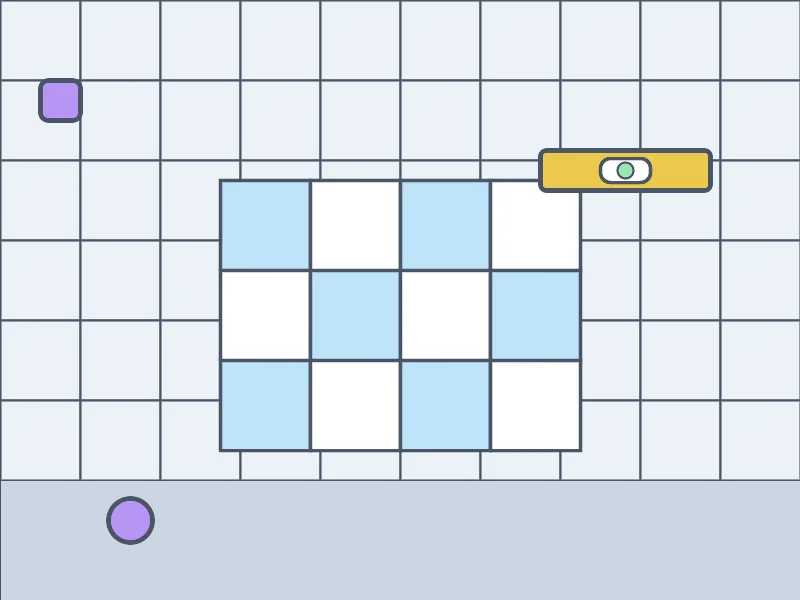
- Difficulty
- Easy
- Time
- a few hours for one room
- Tools
- tape measure, chalk line, utility knife, straightedge, knee pads, vacuum, floor scraper, notched trowel if using adhesive, carpet roller
- Call a pro if
- The floor is below grade and damp, the slab has active cracks or a high moisture reading, or the subfloor is soft or squeaks across the whole room.
In this guide
- Check the floor and the moisture
- Remove everything that would telegraph
- Acclimate the tiles
- Decide the pattern and the direction
- Find a square starting point
- Lay the first tile
- Work out in a staircase
- Cut the edges as you go
- Roll or press the whole floor
- Finish the edges and clean up
- Common mistakes
- Related guides
- FAQ
- When to call a pro
- Chemical safety
Knowing how to install carpet tiles is a good first flooring project for a basement, a home office, or a rental where the floor has to come back up later. The tiles hide small imperfections, insulate a cold slab, and soften noise in a way that hard flooring does not.
The one thing that separates a good job from a bad one is the starting line. Tiles laid off square show as a staircase of seams across the room, and no amount of pattern can hide it. Take the extra ten minutes to snap a true line.
1. Check the floor and the moisture
Sweep and vacuum the floor, then check it for flatness with a straightedge. On a concrete slab, tape a square of plastic down for a day and see whether moisture collects underneath. Carpet tiles over a damp slab grow a smell that never goes away, so fix moisture first.
2. Remove everything that would telegraph
Scrape up paint drips, old adhesive, and hardened blobs. Nail down any proud nail heads in a wood subfloor and fill shallow divots with a patching compound. Carpet tile is thin, and a pebble under it shows as a bump for years.
3. Acclimate the tiles
Open the boxes and let the tiles sit in the room for a day at normal temperature. Tiles that are cold or stiff do not lie flat, and tiles from different boxes can differ slightly in shade. Mix tiles from several boxes as you stack them so any shade variation is spread across the room.
4. Decide the pattern and the direction
Carpet tiles have a pile direction, and some have an arrow on the back. Lay them all in the same direction for a flat, even look, or quarter turn them for a subtle checkerboard. Pick the pattern before you start, because changing halfway leaves a visible line.
5. Find a square starting point
Pick a corner or a doorway and use the 3-4-5 method to find a true right angle: measure 3 feet along one wall, 4 feet along the other, and adjust until the diagonal between the marks is 5 feet. Snap a chalk line along each leg. Every tile follows these two lines.
6. Lay the first tile
Set the first tile into the corner of your chalk lines with the arrows pointing the way you decided. Press it down firmly across the whole face, working from the center out so no air is trapped. If the tile is peel and stick, pull only part of the backing at first so you can reposition it.
7. Work out in a staircase
Lay the next tiles along both chalk lines, then fill in the square between them, working in a staircase pattern. This keeps the seams straight and lets you check the lines every few tiles. Do not work in a spiral or from both ends toward the middle.
8. Cut the edges as you go
When you reach a wall, press a tile into the gap, mark it with a pencil against the wall, and cut it face down with a straightedge. Leave a small gap at the wall for expansion and cover it with baseboard. Cut edges look best against a wall, never in the middle of the room.
9. Roll or press the whole floor
Once the tiles are down, go over the floor with a carpet roller, or press each tile with a board and your weight. Good contact is what keeps tiles from curling at the corners. If you used a spread adhesive, follow the open time on the label before laying tile into it.
10. Finish the edges and clean up
Reinstall the baseboard or add a transition strip at doorways. Vacuum the new floor, then go over it again a day later, since loose fibers work up from new carpet. Keep a few spare tiles stored flat; a stained tile can be swapped in minutes if you have a match.
Common mistakes
- Starting from a wall instead of a chalk line, so the seams run out of square.
- Mixing pile directions, which makes the floor look blotchy under different light.
- Cutting tiles face up, which leaves ragged edges along the walls.
- Skipping the moisture check on a basement slab.
- Pressing tiles only in the middle, so the corners curl within weeks.
- Leaving no gap at the walls, so the floor buckles in humid weather.
Related guides
- How to Install Engineered Hardwood Flooring
- How to Remove Carpet Stains
- Furniture Dents in Carpet: How to Lift Them Out
- How to Vacuum Carpet Correctly for Deeper Cleaning
- How to Replace a Cracked Floor Tile
FAQ
Do carpet tiles need adhesive?
Many have peel and stick backing, and some need a spread adhesive or carpet tape. In a small room, loose laid tiles with tape at the seams can work, but adhesive is safer in traffic areas.
Can I install carpet tiles over concrete?
Yes, if the slab is dry, clean, and flat. Test for moisture first, and use a tile rated for below grade use.
How many extra tiles should I buy?
Add about 10 percent for cuts and future replacements. Buying a few extra from the same batch is the only way to match the color later.
Can I install carpet tiles over old carpet?
No. Remove the old carpet and padding, and take up the tack strips and staples before you start.
How long does it take to install carpet tiles?
A 200 square foot room takes most people three to four hours, including cutting and cleanup.
More from this topic
- How to Install Engineered Hardwood Flooring: How to install engineered hardwood flooring: check the subfloor and moisture, plan the layout, nail or float...
- How to Install a Stair Runner: How to install a stair runner: measure the stairs, cut and bind the carpet, set the padding, and fasten each...
- How to Install a Subfloor in a Basement: How to install a subfloor in a basement: test for moisture, pick the right system, keep the slab able to dry,...
- How to Install Luxury Vinyl Plank Flooring: How to install luxury vinyl plank flooring: check the subfloor, plan the layout, keep the expansion gap, and...
- How to Tile a Floor: How to tile a floor: lay out the field from the center, set tile in thinset with even joints, and check for...
 FloorsHow to Install Engineered Hardwood FlooringHow to install engineered hardwood flooring: check the subfloor and moisture, plan the layout, nail or float the planks, and leave the right gaps.
 FloorsHow to Install a Stair RunnerHow to install a stair runner: measure the stairs, cut and bind the carpet, set the padding, and fasten each step so the runner stays put underfoot.
 FloorsHow to Install a Subfloor in a BasementHow to install a subfloor in a basement: test for moisture, pick the right system, keep the slab able to dry, and lay a floor that stays flat.
 FloorsHow to Install Luxury Vinyl Plank FlooringHow to install luxury vinyl plank flooring: check the subfloor, plan the layout, keep the expansion gap, and click the rows without gaps.
 FloorsHow to Tile a FloorHow to tile a floor: lay out the field from the center, set tile in thinset with even joints, and check for level and lippage as you go.