
How to Remove a Glued Mirror
Part of: Floors, walls and doors
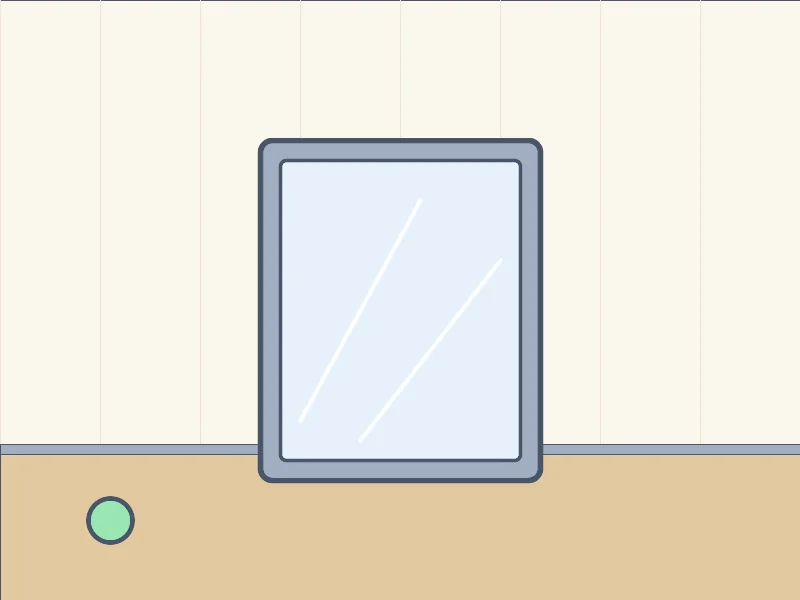
- Difficulty
- Moderate
- Time
- One to three hours
- Tools
- Painter tape or packing tape, hair dryer or heat gun, putty knives, wire or strong cord, pry bar, wood shims, gloves, eye protection, a helper
- Call a pro if
- The mirror is large, glued across its whole back, mounted high, or cracked already, since those combinations break glass.
In this guide
- Tape the face
- Clear and protect below
- Find the adhesive pads
- Warm the adhesive
- Start shims at the top corners
- Saw the pads with wire
- Work down the mirror
- Support the weight constantly
- Lift it off the last pads
- Deal with full bed adhesive
- Handle a break calmly
- Scrape the wall pads
- Repair the wall
- Common mistakes
- FAQ
- When to call a pro
- Wear protection
Builder grade mirrors go up with pads of adhesive and come off reluctantly. The plan is to cut the adhesive, not fight it: heat softens it, wire saws through it, and shims hold the gap open. Prying cold is how mirrors break. How to remove a glued mirror starts with taping the face, so the tape holds the pieces if the glass cracks on the way off.
1. Tape the face
1. Cover the mirror with overlapping strips of strong tape.
2. If it cracks, the tape holds the pieces together.
3. Skip nothing: every square foot gets tape.
2. Clear and protect below
1. Remove everything from the counter or floor below.
2. Lay thick drop cloths or cardboard.
3. A falling mirror shard travels further than you expect.
3. Find the adhesive pads
1. Shine a light along the top edge to spot the pad positions.
2. Most mirrors sit on a grid of pads, sometimes a full bed.
3. Knowing the pattern tells you where to cut.
4. Warm the adhesive
1. Run a hair dryer over each pad location from the front.
2. Warm glass, not hot: heat the adhesive, not the mirror backing.
3. Softened adhesive cuts instead of tearing.
5. Start shims at the top corners
1. Ease wood shims behind the top corners.
2. Ease them in with gentle, light knocks.
3. The goal is a gap, not a lever.
6. Saw the pads with wire
1. Work a length of wire or strong cord behind the top edge.
2. Pull it back and forth in a sawing motion down through each pad.
3. A helper keeps the wire low and the glass supported.
7. Work down the mirror
1. Add shims as the wire descends.
2. Keep outward pressure gentle and even.
3. If the wire binds, warm the spot again.
8. Support the weight constantly
1. As pads release, the mirror's weight shifts to fewer points.
2. Your helper holds the glass against the wall at all times.
3. A mirror that peels suddenly is a mirror that breaks.
9. Lift it off the last pads
1. When the wire reaches the bottom, the mirror hangs on friction.
2. Tilt the top away slowly and lift clear.
3. Set it down on a padded surface, face protected.
10. Deal with full bed adhesive
1. A mirror glued across its whole back rarely survives removal.
2. More heat, more wire and much more patience help.
3. This is the case where a pro with suction handles earns the fee.
11. Handle a break calmly
1. If it cracks, the tape holds it.
2. Lower the pieces in sections.
3. Sweep and vacuum the area twice when done.
12. Scrape the wall pads
1. Warm each pad left on the wall.
2. Shave it off with a putty knife.
3. Torn paper underneath is normal and repairable.
13. Repair the wall
1. Trim torn paper, seal it and skim the area.
2. The full sequence is in fixing a wall after removing a mirror.
3. Rehang the next mirror on clips, per installing a wall mirror with clips, so this job never repeats.
Common mistakes
- Prying the mirror off cold, which snaps the glass or tears the wall in sheets.
- Skipping the face tape, so a crack becomes a shower of shards.
- Working alone on a wide mirror, with nobody holding the far side.
- Overheating one spot, which damages the mirror's silver backing.
FAQ
Can a glued mirror come off in one piece?
Usually, with pads of adhesive, heat and wire. Mirrors on a full bed of adhesive often break no matter the technique.
What wire works for cutting the adhesive?
Thin braided wire or strong cord saws best. Piano wire works but cuts fingers as easily as adhesive, so wrap the ends.
How long does it take?
An hour for a small bathroom mirror on pads, up to three for a large one. Full bed adhesive takes longer and may not succeed.
Will the drywall be ruined behind it?
Expect torn face paper under every pad. It repairs routinely with sealing and skim coating; the mirror is the fragile part.
Related guides
- How to Remove a Built-In Shelf: Learn how to remove a built-in shelf from a wall or alcove, from finding the fixings to patching the wall it...
- How to Remove Sticker Residue From Walls and Tape Marks: Learn how to remove sticker residue from walls without damaging the paint: warm the adhesive, use mild soap...
- How to Remove a Towel Bar From a Wall: Learn how to remove a towel bar from a wall, find the hidden set screws, lift the brackets and repair the...
- How to Remove Wainscoting: Learn how to remove wainscoting panels and cap rail without tearing the wall, plus the filling and repair...
- How to Remove a Non Load Bearing Wall: How to remove a non load bearing wall: confirm it carries no load, shut off the utilities, demo in order, and...
 Walls and PaintHow to Remove a Built-In ShelfLearn how to remove a built-in shelf from a wall or alcove, from finding the fixings to patching the wall it leaves behind.
 Walls and PaintHow to Remove Sticker Residue From Walls and Tape MarksLearn how to remove sticker residue from walls without damaging the paint: warm the adhesive, use mild soap or a little oil, and test hidden spots first.
 Walls and PaintHow to Remove a Towel Bar From a WallLearn how to remove a towel bar from a wall, find the hidden set screws, lift the brackets and repair the anchor holes cleanly.
 Walls and PaintHow to Remove WainscotingLearn how to remove wainscoting panels and cap rail without tearing the wall, plus the filling and repair that gets it ready for paint.
 Walls and PaintHow to Remove a Non Load Bearing WallHow to remove a non load bearing wall: confirm it carries no load, shut off the utilities, demo in order, and cap the floor and ceiling clean.