
How to Remove Sticker Residue From Walls and Tape Marks
Part of: Floors, walls and doors
- Difficulty
- Easy
- Time
- 10 to 30 minutes
- Tools
- Hair dryer, microfiber cloths, warm soapy water, plastic scraper or old credit card, cooking oil or rubbing alcohol, cotton balls, baking soda
- Call a pro if
- The paint peels with the adhesive, the wall is wallpaper or an unsealed finish, or the residue covers a large area.
In this guide
- Chemical safety
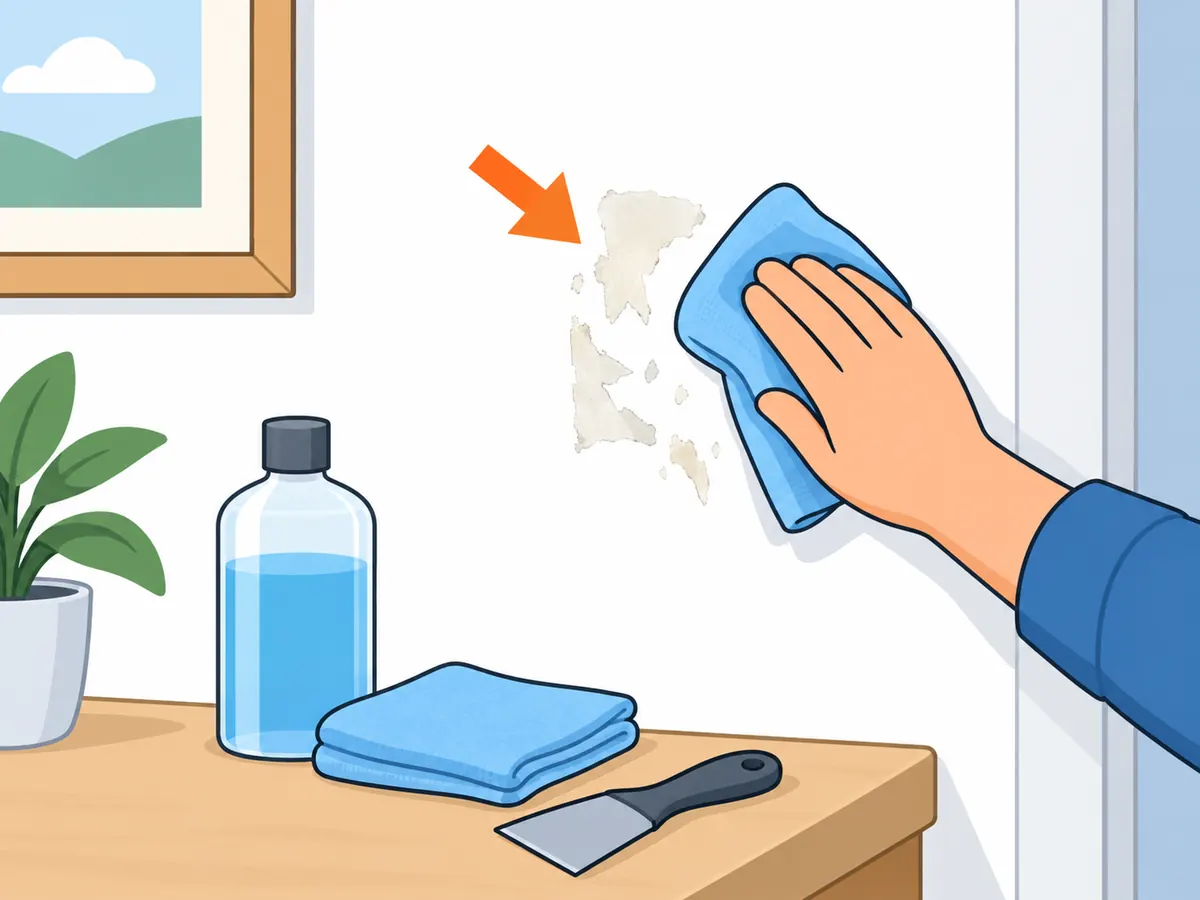
Sticker residue on a wall is a sticky ghost of a decal, a price tag or masking tape. If you pick at it with a fingernail, it smears and attracts dust. The aim is to soften the adhesive and lift it without taking paint with it. How to remove sticker residue from walls depends on the paint, since flat and matte finishes mark easily and can lose color when rubbed hard.
This guide is part of our wider guide to drywall, paint and wall repair.
Know your paint
Flat and matte paints are more delicate than satin or semi-gloss. They mark easily and can lose their color if you rub hard. Test each method in a hidden place first. If the paint is fresh, wait a few weeks for it to cure before you scrub.
Step 1: Peel what you can
Start at a corner and peel the sticker slowly, close to the wall, so the backing and most of the adhesive come away. If it is stuck, warm it. Hold a hair dryer on low heat 4 to 6 inches from the sticker for 30 seconds, then try again. Heat softens the glue.
Step 2: Warm soapy water
Mix a few drops of dish soap into warm water. Dab a microfiber cloth in the mixture, wring it well and press it on the residue for a minute. Then rub gently in small circles. Wipe with a damp cloth and dry. Do not soak the wall.
Step 3: Use a plastic scraper
An old credit card or a plastic scraper can lift sticky bits. Hold it at a shallow angle and push gently. Do not use a metal blade, which can gouge paint and drywall.
Step 4: Try a little oil
Cooking oil or a bit of baby oil on a cotton ball can break down many adhesives. Dab it on the residue and let it sit for a few minutes. Wipe it off, then clean the spot with soapy water to remove the oil, because oil can stain flat paint. Test first.
Step 5: Try rubbing alcohol
For stubborn residue on satin or glossy paint, dampen a cotton ball with rubbing alcohol and dab the spot. Do not soak the paint. Alcohol can dull or lift some finishes, so test first. Wipe with a clean damp cloth after.
Step 6: Baking soda paste for the last bits
Mix baking soda with a little water or oil into a paste. Rub it lightly on the leftover film with a cloth, then wipe. It is a mild abrasive, so use light pressure.
What to avoid
Do not use acetone or nail polish remover on paint, since it can dissolve it. Do not use steel wool or scouring pads. Do not scrape hard. Do not use a heat gun, which can blister paint.
After you clean
If the spot looks dull or a different sheen, touch it up with paint. See our guide to touching up paint on walls. If you pulled off paint, patch the area, prime and repaint.
Tape marks and window decals
Masking tape and painter's tape can leave a faint residue. Warm soapy water often handles it. For window decals, use the same heat-and-soap method, with a plastic scraper on glass. Do not use metal blades on tinted film.
Related guides
- How to Clean Baseboards Fast Without Bending Over for Hours
- How to Remove Wallpaper Without Wrecking the Wall
- How to Paint Trim and Baseboards (Smooth, No Brush Marks)
- How to Remove Grease From Walls
FAQ
Will rubbing alcohol damage paint?
It can on some finishes. Test first.
Can I use a store-bought adhesive remover?
Yes, if the label says it is safe for painted surfaces. Test first.
How long should I wait before I clean fresh paint?
Many paints need several weeks to cure. Check the label.
More from this topic
- How to Remove Crayon and Scuff Marks from Walls: How to remove crayon and scuff marks from walls safely: start gentle, move to a mild abrasive, then touch up...
- How to Remove Mildew From Painted Walls: Learn how to remove mildew from painted walls safely, kill the spores, clean the stains and stop it...
- How to Roll a Wall Without Lap Marks: Learn how to roll a wall without lap marks: keep a wet edge, work in vertical strips and match the paint load...
- How to Clean Painted Walls Without Damaging the Paint: Learn how to clean painted walls: dust first, wash with mild soap, treat scuffs gently, and protect flat...
- How to Remove Candle Wax From a Wall: Learn how to remove candle wax from a wall with gentle heat and absorbent paper, plus the soot and stain...
 Walls and PaintHow to Remove Crayon and Scuff Marks from WallsHow to remove crayon and scuff marks from walls safely: start gentle, move to a mild abrasive, then touch up or repaint only what needs it.
 Walls and PaintHow to Remove Mildew From Painted WallsLearn how to remove mildew from painted walls safely, kill the spores, clean the stains and stop it returning.
 Walls and PaintHow to Roll a Wall Without Lap MarksLearn how to roll a wall without lap marks: keep a wet edge, work in vertical strips and match the paint load so each pass blends.
 Tools and BasicsHow to Clean Painted Walls Without Damaging the PaintLearn how to clean painted walls: dust first, wash with mild soap, treat scuffs gently, and protect flat paint from scrubbing damage.
 Walls and PaintHow to Remove Candle Wax From a WallLearn how to remove candle wax from a wall with gentle heat and absorbent paper, plus the soot and stain cleanup that follows.