
How to Remove Wallpaper Without Wrecking the Wall
Part of: Floors, walls and doors
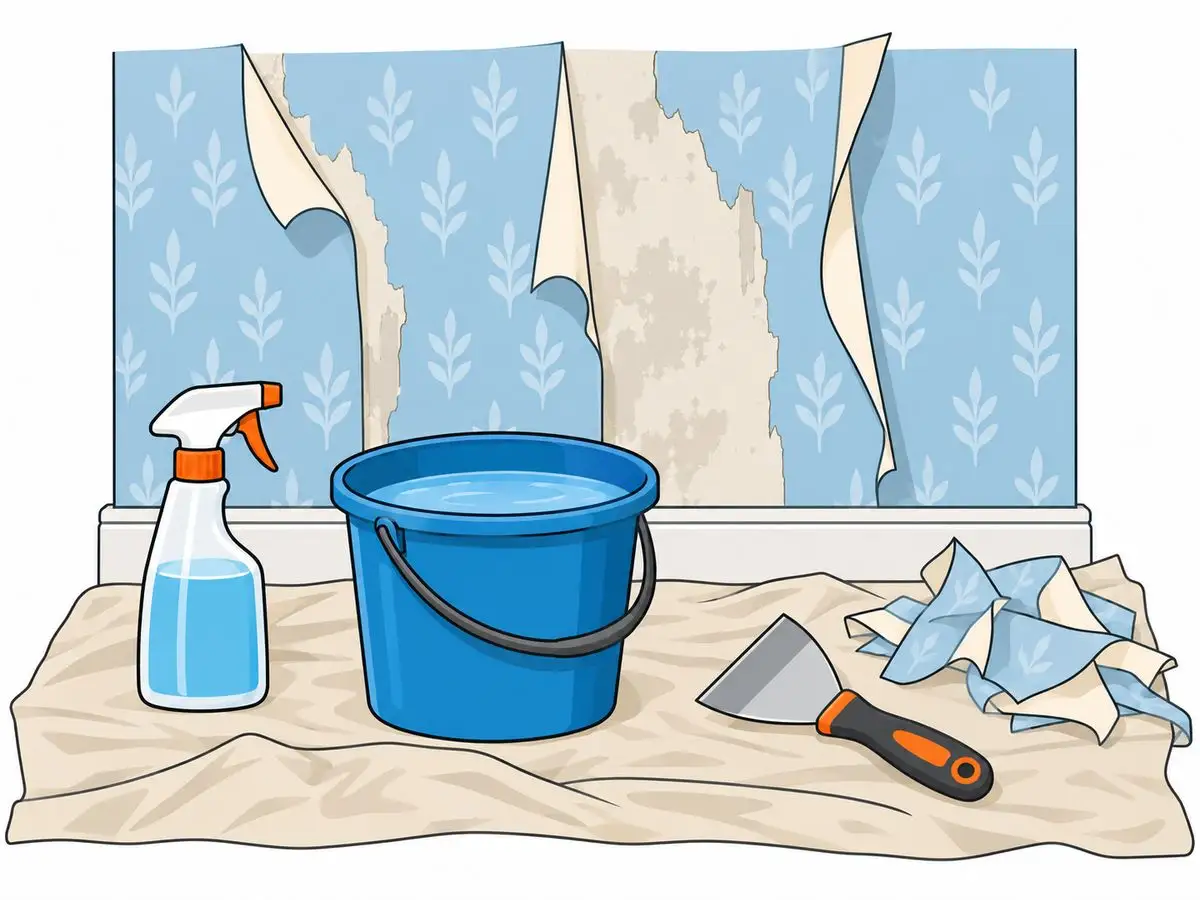
- Difficulty
- Moderate
- Time
- 3 to 6 hours for a medium room
- Tools
- Plastic scraper, scoring tool, spray bottle, warm water, wallpaper remover or fabric softener, sponge, drop cloths, painter's tape, bucket, optional steamer
- Call a pro if
- The wallpaper takes the drywall paper surface off in large patches, the home was built before 1978 and you plan to sand, or you see mold behind the paper.
In this guide
- Power off first
- Ladder safety
Anyone who has bought an older house knows the moment. You peel one corner of the wallpaper, and either the whole sheet comes off in a clean strip, or it tears into confetti and takes the wall with it. Which one you get depends on two things: what kind of paper it is and how the wall was prepared before it was hung. This guide shows how to find out, and how to remove wallpaper in a way that protects the wall.
This guide is part of our wider guide to drywall, paint and wall repair.
First, find out what you have
Peel a corner with a fingernail. Some modern wallpaper is "strippable." The whole layer pulls off dry, leaving a backing sheet or nothing at all. Others are "peelable," where the top layer comes off and a thin backing stays behind, which you can then soak. Older papers, and papers hung on bare drywall, are often neither. They need to be soaked and scraped.
Also check whether the paper has a vinyl or washable coating. Water will not soak through that. You have to score it first.
Prepare the room
Move furniture out or to the center and cover the floor with drop cloths. Water will run down the wall, so tape the drop cloth up the baseboard. Turn off the power and tape over outlet and switch covers. Remove the covers.
Pull off what comes off
Start at a seam or a corner and pull slowly at a low angle. Dry removal is the easiest, so take what comes off easily before you add water. Never force it. If the paper starts to tear the paint or the drywall face, stop pulling and switch to the wet method.
Score and soak
Run a scoring tool lightly over the surface in circles. The goal is tiny holes, not cuts into the wall. Then spray warm water mixed with a little dish soap, or a wallpaper remover product, on a four-foot section. Let it soak for 10 to 15 minutes, and spray again. Some people use diluted liquid fabric softener, which also works to loosen glue. Do not flood the wall. Drywall paper soaks up water and can bubble.
Scrape gently
Hold a plastic scraper at a shallow angle and push the paper off. A metal putty knife can gouge the wall, so use one only if you have to, and use one with rounded corners. Work from the top down. If the paper dries out, spray again.
Steam for stubborn paper
A wallpaper steamer is a good option for thick or vinyl paper. Hold the steam plate on the paper for about 15 to 30 seconds, then scrape. Be careful. The plate is hot, and so is the water that drips. Keep it away from your face, and never use steam near an outlet with the power on.
Wash off the glue
When all the paper is off, you will see a sticky or chalky layer of old adhesive. Wash the wall with a sponge and warm water and a little dish soap. Rinse well and let the wall dry. Painting over leftover glue can cause bubbles and peeling later.
Check and repair the wall
Let the wall dry for a day. Then look for gouges, torn paper or soft spots. Fill them with joint compound and sand lightly when dry. If the drywall paper was torn, seal the spot with a stain-blocking primer before you paint. Our guide to patching a drywall hole and painting a room will help with the finish.
What to avoid
Do not skip the power-off step. Do not soak one spot for hours. Do not use a heat gun or open flame. If you find black or green spots under the paper, the wall has had moisture trouble. Fix the source of the water and treat the mold as the EPA suggests at EPA mold and moisture guide before you repaper or paint.
Related guides
- How to Paint Over a Dark Wall With a Light Color
- How to Fix Paint Drips and Runs on a Wall
- How to Skim Coat a Wall: A Smooth Finish Over Rough or Damaged Drywall
- How to Fix a Seam Between Wallpaper and Paint
- How to Paint Over Wallpaper (When Removal Is Not an Option)
FAQ
How long should I let the water soak?
About 10 to 15 minutes in small sections. Longer is not always better.
Can I paint over wallpaper?
Sometimes, if it is firmly stuck and smooth, but seams may show over time. Removal gives a better finish.
What if the wall paper pulls off the drywall paper?
Stop, let the wall dry, seal it with a primer made for bare drywall and skim coat it with joint compound.
More from this topic
- How to Use a Putty Knife: Learn how to use a putty knife for filling, scraping and patching: pick the right width, keep the blade flat...
- How to Remove a Built-In Shelf: Learn how to remove a built-in shelf from a wall or alcove, from finding the fixings to patching the wall it...
- How to Remove Wainscoting: Learn how to remove wainscoting panels and cap rail without tearing the wall, plus the filling and repair...
- How to Remove a Popcorn Ceiling Safely: How to remove a popcorn ceiling: test for asbestos first, set up containment, wet and scrape the texture,...
- How to Skim Coat a Wall: How to skim coat a wall to smooth texture and patches: prep and prime, mix compound right, apply thin coats,...
 Walls and PaintHow to Use a Putty KnifeLearn how to use a putty knife for filling, scraping and patching: pick the right width, keep the blade flat and feather the edges.
 Walls and PaintHow to Remove a Built-In ShelfLearn how to remove a built-in shelf from a wall or alcove, from finding the fixings to patching the wall it leaves behind.
 Walls and PaintHow to Remove WainscotingLearn how to remove wainscoting panels and cap rail without tearing the wall, plus the filling and repair that gets it ready for paint.
 Walls and PaintHow to Remove a Popcorn Ceiling SafelyHow to remove a popcorn ceiling: test for asbestos first, set up containment, wet and scrape the texture, then repair, prime and paint for a smooth finish.
 Walls and PaintHow to Skim Coat a WallHow to skim coat a wall to smooth texture and patches: prep and prime, mix compound right, apply thin coats, sand flat and seal before paint.