
How to Fix a Seam Between Wallpaper and Paint
Part of: Floors, walls and doors
- Difficulty
- Moderate
- Time
- Half a day plus drying
- Tools
- Seam roller, wallpaper adhesive, small brush, putty knife, joint compound, fine sandpaper, primer, paint, masking tape
- Call a pro if
- The paper edge is peeling across a long run, the wall behind is damp, or the paper is old and brittle enough to tear.
In this guide
- Inspect the edge
- Clean behind the lifted edge
- Reglue the paper edge
- Let the glue cure
- Mask the wallpaper face
- Skim the step with compound
- Feather the filler wide
- Let each coat dry
- Sand the ramp smooth
- Pull the tape and check
- Prime the filler
- Paint to the edge
- Know when to remove instead
- Common mistakes
- Related guides
- FAQ
- When to call a pro
- Wear protection
Where a wallpapered section ends and a painted wall begins, the raw edge of the paper makes a line that catches light, lifts and collects dust. A tidy seam needs the edge glued flat, then the step between paper and wall feathered out with filler. Here is how to fix a seam between wallpaper and paint.
1. Inspect the edge
1. Run a fingertip along the paper edge.
2. Note where it sits flat and where it lifts.
3. A lifted edge must be glued before any filling starts.
2. Clean behind the lifted edge
1. Peel the loose edge back gently.
2. Brush out dust and old dried paste with a dry, soft brush.
3. Old crumbs under the edge stop the new glue from grabbing.
3. Reglue the paper edge
1. Spread a thin coat of wallpaper adhesive behind the edge with a small brush.
2. Press the paper back into place.
3. Roll it down with a seam roller, working away from the edge.
4. Wipe off squeeze out with a damp sponge right away.
4. Let the glue cure
1. Leave the edge alone until the adhesive sets.
2. Filling over wet glue traps moisture and the seam lifts again.
3. Overnight is safest in a cool room.
5. Mask the wallpaper face
1. Run low tack masking tape along the paper, tight to the edge.
2. This keeps filler off the pattern while you work.
3. Press the tape down lightly so it peels off without pulling ink.
6. Skim the step with compound
1. Load a putty knife with ready mixed joint compound.
2. Pull a thin coat from the paper edge out onto the painted wall.
3. Build a gradual ramp about three inches wide that hides the thickness of the paper.
7. Feather the filler wide
1. A narrow ridge reads as a bump under paint.
2. Extend a second, thinner coat an inch or two wider on each pass.
3. Thin coats dry faster and sand flatter than one thick pass.
8. Let each coat dry
1. Wait until the compound is fully white and firm.
2. Damp filler darkens, so color is the simplest dryness test.
3. Rushing coats traps moisture and the seam cracks later.
9. Sand the ramp smooth
1. Sand with fine paper on a flat block.
2. Work in circles with light pressure.
3. Stop the moment a fingertip cannot feel the transition.
10. Pull the tape and check
1. Peel the masking tape away at a low angle.
2. Look along the seam toward a window.
3. Raking light shows any ridge that still needs one more skim.
11. Prime the filler
1. Raw compound flashes through paint as a dull band.
2. Seal it with primer, as in priming a wall.
3. Let the primer dry before the finish coat.
12. Paint to the edge
1. Brush the wall paint right up to the paper edge.
2. Feather the last strokes so the new paint melts into the old.
3. If the whole wall needs fresh paint anyway, painting a room covers the full job.
13. Know when to remove instead
1. Some edges keep lifting no matter how they are glued.
2. Brittle, stained or repeatedly patched paper is better stripped.
3. Removing wallpaper walks through that, and painting over wallpaper covers the alternative.
Common mistakes
- Filling over a loose edge, which lifts again within weeks.
- Skimming a narrow ridge instead of a wide ramp, which shows as a hump in side light.
- Sanding through the paper face, which tears the pattern.
- Painting over unprimed compound, which leaves a dull stripe along the seam.
Related guides
- How to Texture a Wall With a Roller
- How to Fill a Gap Between a Baseboard and a Floor
- How to Install a Ceiling Medallion
FAQ
Can I caulk the seam instead of filling it?
Caulk works for a hairline gap, but it stays slightly rubbery and shiny under paint. Compound feathers flatter and takes paint like the wall.
The paper edge tears when I touch it. What now?
Old paper turns brittle. Trim the torn section back to sound paper with a sharp blade, then glue and fill as normal.
Do I need special adhesive for the edge?
Any ready mixed wallpaper adhesive or border adhesive works for reseating an edge. The key is a thin coat and firm rolling.
Will the seam show through flat paint?
A well feathered ramp disappears under flat paint. Any sheen in the finish is less forgiving, so spend the extra time on sanding.
More from this topic
- How to Fix Drywall Seams That Show Through Paint: Learn how to fix drywall seams that show as ridges or shadows: cut out the failed joint, retape it, feather...
- How to Fix Nail Pops in Drywall and Stop Them Coming Back: Learn how to fix nail pops in drywall: drive a screw nearby, set it below the surface, fill with compound,...
- How to Mix Joint Compound: Learn how to mix joint compound to the right consistency: thin it from the bucket, add water slowly, and get...
- How to Paint Over Wallpaper (When Removal Is Not an Option): Paint over wallpaper successfully by securing loose seams, sealing stains with oil-based primer, and...
- How to Patch Drywall Hole: Small and Medium Repairs: How to patch drywall hole damage, from nail holes to doorknob-sized breaks, with the right filler, tape and...
 Walls and PaintHow to Fix Drywall Seams That Show Through PaintLearn how to fix drywall seams that show as ridges or shadows: cut out the failed joint, retape it, feather the compound wide and prime before you repaint.
 Walls and PaintHow to Fix Nail Pops in Drywall and Stop Them Coming BackLearn how to fix nail pops in drywall: drive a screw nearby, set it below the surface, fill with compound, sand, prime and paint.
 Walls and PaintHow to Mix Joint CompoundLearn how to mix joint compound to the right consistency: thin it from the bucket, add water slowly, and get a smooth mud that spreads clean.
 Walls and PaintHow to Paint Over Wallpaper (When Removal Is Not an Option)Paint over wallpaper successfully by securing loose seams, sealing stains with oil-based primer, and skim-coating seams so the pattern never shows through.
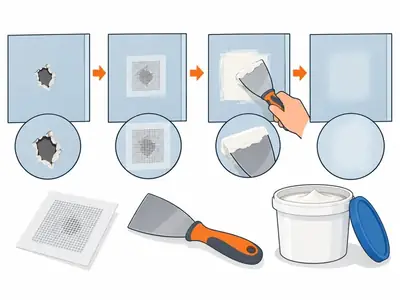 Walls and PaintHow to Patch Drywall Hole: Small and Medium RepairsHow to patch drywall hole damage, from nail holes to doorknob-sized breaks, with the right filler, tape and sanding steps. Steps and safety tips included.