
How to Patch Drywall Hole: Small and Medium Repairs
Part of: Floors, walls and doors · Also in: The Complete Guide to Home Wall and Floor Repair
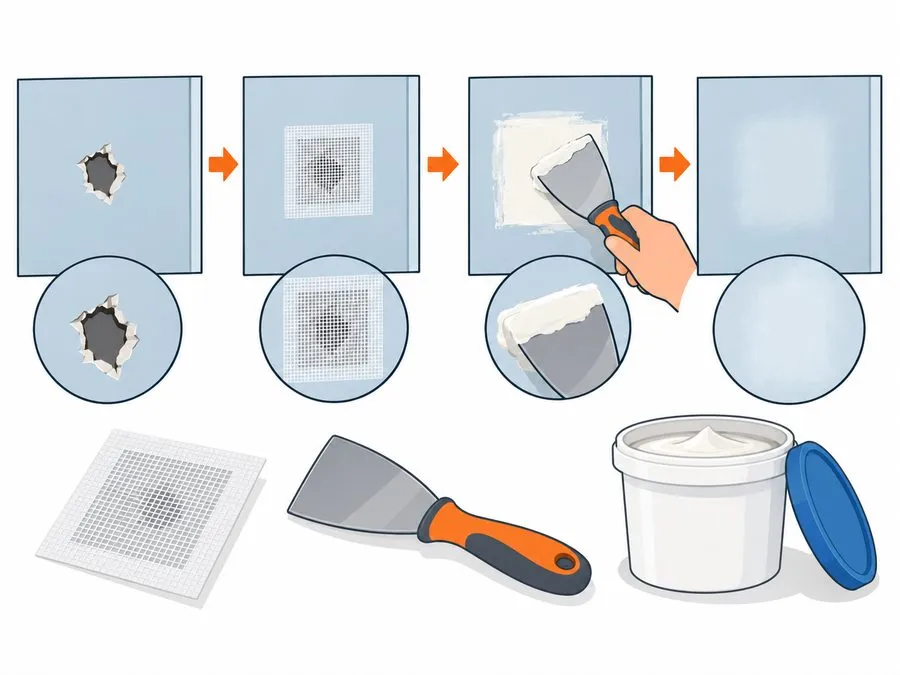
- Difficulty
- Easy to moderate
- Time
- 1 to 2 hours spread over 1 to 2 days
- Tools
- Putty knife, drywall patch or scrap, joint compound, sandpaper, primer and paint
- Call a pro if
- The hole is large, the wall is wet or moldy, or you cannot match the wall texture.
In this guide
- Wear protection
This guide shows how to patch drywall hole damage of any size, from a nail hole to a doorknob dent. Holes in drywall are common in any home. Doors hit walls, furniture bumps corners, and anchors get pulled out. Most damage is easy to repair, and you can patch a hole in drywall with a few cheap supplies. The method depends on the size of the hole.
This guide is part of our wider guide to drywall, paint and wall repair.
What you need
- Putty knife (4 inch and 6 inch or wider)
- Lightweight joint compound or spackle
- Self-adhesive mesh patch or a drywall scrap
- Fine sanding sponge
- Primer and matching paint
- Utility knife and a pencil
Pick the method by size
- Nail holes and tiny dents (smaller than a coin): spackle only.
- Holes up to about the size of a golf ball or a doorknob dent: self-adhesive mesh patch plus joint compound.
- Larger holes (up to about 6 inches): a metal-backed patch kit. Beyond that, see a guide for cutting in a new piece of drywall, or ask a pro.
Small holes (nail holes and dents)
Wipe the area clean. Work spackle into the opening with a putty knife, then scrape the surface flat. Let it dry according to the label. Sand it lightly until it feels smooth, wipe off the dust, then prime and paint. Some fillers shrink as they dry, so you may need a second thin coat.
Medium holes (up to about 6 inches)
Cut away any loose paper or crumbled edges. Press a self-adhesive mesh patch over the hole. It should overlap the hole by at least an inch all around. Spread a thin layer of joint compound over the patch with a wide knife, pressing it into the mesh and feathering the edges a few inches past the patch. Let it dry fully, then apply a second coat, wider than the first. Sand lightly between coats.
For a clean finish, keep each coat thin. Thick coats take longer to dry and crack more often.
Larger holes (doorknob size)
Mesh patches can sag on a larger hole, so a cut-in patch is better. Use a utility knife to square off the hole. Cut a piece of drywall slightly larger than the opening, trace it on the wall, and cut along the line so the opening is a neat square. Screw two scrap boards or furring strips inside the opening, behind the edges, to give the patch something to attach to. Cut the new piece to fit, screw it in, then tape the seams with paper or mesh tape and cover with joint compound in three thin coats.
Build up thin coats
Apply a second coat that reaches a couple of inches past the first. Then a third, wider and thinner. Many thin coats beat one thick coat. Thick coats crack and take a long time to dry. Between coats, scrape off any ridges with the knife.
Sanding
Use a fine sanding sponge, light pressure and a work light held at an angle. The light shows ridges and low spots that you cannot see straight on. Wear a dust mask. Wipe the wall with a damp cloth before painting.
Priming and painting
Joint compound soaks up paint differently from the wall, so use a primer first. Otherwise the patch shows through as a dull spot, which painters call flashing. Apply paint from the patch outward and blend it into the surrounding wall. For the best match, paint the whole wall section from corner to corner.
Common mistakes
- Using too much compound on the first coat.
- Skipping the primer.
- Sanding before the compound is fully dry.
- Not feathering the edges.
- Cutting into a wall without checking for wires or pipes.
Related guides
- How Much Does It Cost to Patch a Hole in Drywall? DIY vs Pro
- How to Match Wall Texture on a Drywall Patch
- How to Skim Coat a Wall: A Smooth Finish Over Rough or Damaged Drywall
- How to Fill Nail Holes in Trim
- How to Anchor Into Drywall: Choose and Install the Right Anchor
FAQ
Can I just fill a small hole with joint compound?
Nail holes and tiny dents, yes. For a doorknob dent or larger, use a patch.
Why does my patch show through paint?
Skip priming and it flashes. Prime the patch before you paint.
How long should I wait between coats?
Wait until it is fully dry, often several hours. Check the product label.
How big a hole can I patch myself?
Nail holes and dents take a dab of compound. Holes up to about 6 inches take a self-adhesive mesh patch. Anything larger usually needs a piece of drywall cut to fit and taped in; which is still very DIY-able with basic tools.
Do I need to sand between coats of joint compound?
A light sanding with fine-grit paper between coats gives the smoothest finish; but the real key is applying thin coats and feathering the edges wide. Thick coats crack and always show through paint.
Can I paint straight over joint compound?
No. Joint compound is porous and will flash; meaning the patched spot shows as a dull patch through the paint. Prime the patch first; or use a primer-sealer; then paint.
More from this topic
- How Much Does It Cost to Patch a Hole in Drywall? DIY vs Pro: How much does it cost to patch a hole in drywall? See sourced price ranges for pros, what a DIY patch costs...
- How to Mix Joint Compound: Learn how to mix joint compound to the right consistency: thin it from the bucket, add water slowly, and get...
- Stucco Repair: Patch Cracks and Holes: Stucco repair for cracks and holes: find the cause, cut back to sound material, build coats at the right...
- How to Smooth a Bumpy Wall: Learn how to smooth a bumpy wall by scraping ridges, skim coating the low spots and sanding, so paint goes on...
- How to Texture a Wall With a Roller: Learn how to texture a wall with a roller using thinned joint compound, from mixing and rolling to knocking...
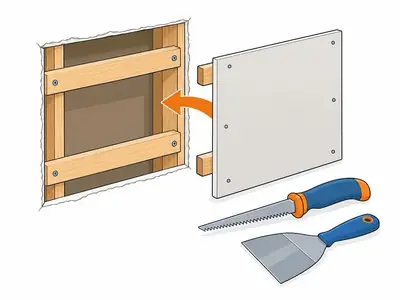 Walls and PaintHow Much Does It Cost to Patch a Hole in Drywall? DIY vs ProHow much does it cost to patch a hole in drywall? See sourced price ranges for pros, what a DIY patch costs and when hiring is worth it.
 Walls and PaintHow to Mix Joint CompoundLearn how to mix joint compound to the right consistency: thin it from the bucket, add water slowly, and get a smooth mud that spreads clean.
 Walls and PaintStucco Repair: Patch Cracks and HolesStucco repair for cracks and holes: find the cause, cut back to sound material, build coats at the right thickness, and match the texture.
 Walls and PaintHow to Smooth a Bumpy WallLearn how to smooth a bumpy wall by scraping ridges, skim coating the low spots and sanding, so paint goes on over a flat surface.
 Walls and PaintHow to Texture a Wall With a RollerLearn how to texture a wall with a roller using thinned joint compound, from mixing and rolling to knocking down for an even finish.