
How to Remove Grease From Walls
Part of: Floors, walls and doors
- Difficulty
- Easy
- Time
- One to two hours
- Tools
- Mild dish soap, warm water, two buckets, soft cloths, non scratch sponge, kitchen degreaser, baking soda, dry towels
- Call a pro if
- The grease covers years of buildup across whole rooms, the walls are flat paint that cannot take scrubbing, or smoke damage accompanies the grease.
In this guide
- Start with dish soap
- Dampen, do not soak
- Let the solution work
- Step up to a non scratch sponge
- Use kitchen degreaser on heavy zones
- Try a baking soda paste on spots
- Mind the switch plates and door frames
- Rinse everything
- Dry the wall
- Treat the grout and backsplash separately
- Degrease before painting
- Prime stained areas
- Keep it from coming back
- Common mistakes
- Related guides
- FAQ
- When to call a pro
- Chemical safety
Kitchen walls collect a sticky film that grabs dust and turns yellow, and painting over it guarantees peeling within months. Grease comes off with the right sequence: mildest method first, patience over pressure. How to remove grease from walls starts with dish soap, which is built to cut grease, worked top to bottom so the drips finish the job.
1. Start with dish soap
1. Dish soap is engineered to cut grease.
2. A few drops in warm water handles most films.
3. Work top to bottom so drips cross dirty areas, not clean ones.
2. Dampen, do not soak
1. Wring the cloth until barely dripping.
2. Soaked walls leave tide marks, especially on flat paint.
3. Rinse and re-wring constantly.
3. Let the solution work
1. Lay the damp cloth on stubborn spots for a minute.
2. Dwell time softens grease better than scrubbing.
3. Wipe and repeat rather than pressing harder.
4. Step up to a non scratch sponge
1. Persistent film yields to a white non scratch pad.
2. Keep pressure light and circular.
3. On flat paint, test first; cleaning walls with flat paint explains the burnish risk.
5. Use kitchen degreaser on heavy zones
1. Behind the stove and beside the fryer need the real thing.
2. Spray, wait per the label, wipe.
3. Repeat applications beat aggressive single passes.
6. Try a baking soda paste on spots
1. Paste of baking soda and water lifts greasy spots.
2. Apply, wait ten minutes, wipe clean.
3. Gentle abrasion without scratching the finish.
7. Mind the switch plates and door frames
1. Hand grease concentrates around switches and handles.
2. Remove plates and clean behind them.
3. The method matches painting a wall around outlets prep.
8. Rinse everything
1. Wipe the whole wall with clean water on a fresh cloth.
2. Cleaner residue grabs the next round of grease.
3. Change the rinse water when it clouds.
9. Dry the wall
1. Towel off the cleaned sections.
2. Dry walls show what actually remains.
3. Judge the job dry, not wet.
10. Treat the grout and backsplash separately
1. Tile and grout near the stove follow their own method.
2. Cleaning a backsplash covers it.
3. Do not fight tile grease with wall techniques or vice versa.
11. Degrease before painting
1. Paint over grease peels, always.
2. After cleaning, a final wipe with a degreasing solution is the paint prep standard.
3. Prepping walls before painting finishes the sequence.
12. Prime stained areas
1. Grease that stained the paint needs a stain blocking primer.
2. Ordinary primer lets the stain bleed through.
3. Spot prime before any repaint.
13. Keep it from coming back
1. Run the exhaust fan every time you fry.
2. A monthly wipe behind the stove stops buildup.
3. Washable sheens on kitchen walls make the next clean easy.
Common mistakes
- Scrubbing flat paint hard, which burnishes shiny patches into the wall.
- Skipping the rinse, so residue attracts new grease within days.
- Painting over a greasy wall, which peels in sheets within months.
- Soaking the wall, which leaves tide marks and can lift the paint film.
Related guides
- How to Remove Candle Wax From a Wall
- How to Remove Sticker Residue From Walls and Tape Marks
- How to Remove Mildew From Painted Walls
- How to Clean Nicotine Stains From Walls
- How to Fix Bubbling Paint on Walls
FAQ
What removes grease from painted walls?
Warm water with dish soap first, kitchen degreaser for heavy zones. Dwell time does the work, not pressure.
Will degreaser damage my paint?
Used per the label on washable sheens, no. On flat paint, test a hidden spot and keep passes gentle.
How do I clean grease off textured walls?
A soft brush with the soapy solution works the valleys. Rinse by dabbing, then towel dry, since texture holds water.
Do I need to degrease a wall before painting?
Yes, anywhere near a kitchen. Paint over grease is the most predictable peeling failure there is, as fixing paint that will not adhere explains.
More from this topic
- How to Remove Candle Wax From a Wall: Learn how to remove candle wax from a wall with gentle heat and absorbent paper, plus the soot and stain...
- How to Remove Crayon and Scuff Marks from Walls: How to remove crayon and scuff marks from walls safely: start gentle, move to a mild abrasive, then touch up...
- How to Texture a Wall With a Roller: Learn how to texture a wall with a roller using thinned joint compound, from mixing and rolling to knocking...
- How to Touch Up Paint Walls Without Visible Patches: Learn how to touch up paint walls so the repair blends in: clean the spot, match the sheen, feather the edges...
- How to Use a Putty Knife: Learn how to use a putty knife for filling, scraping and patching: pick the right width, keep the blade flat...
 Walls and PaintHow to Remove Candle Wax From a WallLearn how to remove candle wax from a wall with gentle heat and absorbent paper, plus the soot and stain cleanup that follows.
 Walls and PaintHow to Remove Crayon and Scuff Marks from WallsHow to remove crayon and scuff marks from walls safely: start gentle, move to a mild abrasive, then touch up or repaint only what needs it.
 Walls and PaintHow to Texture a Wall With a RollerLearn how to texture a wall with a roller using thinned joint compound, from mixing and rolling to knocking down for an even finish.
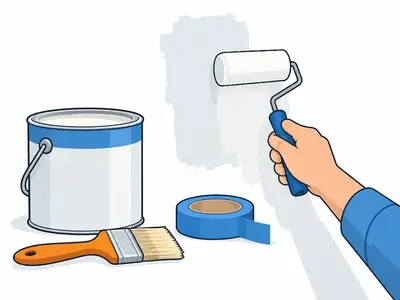 Walls and PaintHow to Touch Up Paint Walls Without Visible PatchesLearn how to touch up paint walls so the repair blends in: clean the spot, match the sheen, feather the edges and avoid flashing and visible patches.
 Walls and PaintHow to Use a Putty KnifeLearn how to use a putty knife for filling, scraping and patching: pick the right width, keep the blade flat and feather the edges.