
How to Clean Baseboards Fast Without Bending Over for Hours
Part of: Floors, walls and doors · Also in: The Complete Guide to Home Wall and Floor Repair
- Difficulty
- Easy
- Time
- 30 to 90 minutes
- Tools
- Vacuum with brush attachment, microfiber cloths, bucket, mild dish soap, melamine sponge, old sock or long-handled mop, dryer sheet, soft brush, knee pad
- Call a pro if
- The baseboards are swollen, soft or stained from water, there is mold, or paint is peeling in large sheets (possible old lead paint).
In this guide
- Wear protection
- Chemical safety
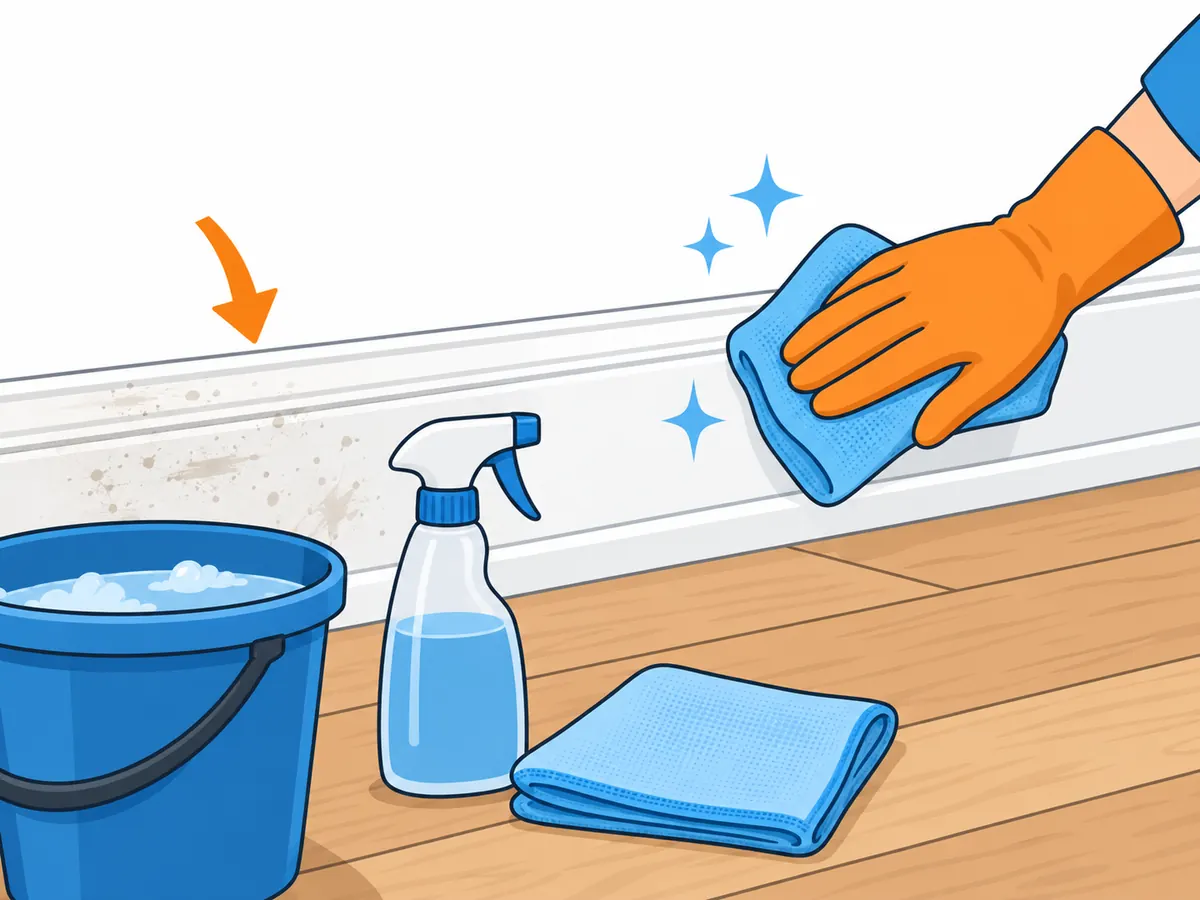
Baseboards collect dust, pet hair, scuffs and splashes, and most people forget them until guests come. The good news is that clean baseboards change a room more than you would expect, and the job goes faster with the right order. Here is how to clean baseboards fast.
This guide is part of our wider guide to drywall, paint and wall repair.
Step 1: Dust or vacuum first
Wet dust turns into mud. Vacuum the top edge and the face of each baseboard with a brush attachment. Go slowly in corners. Floor edges and the gap where the board meets the floor hold the most dust. A dry microfiber cloth or a long-handled duster works too.
Step 2: Wipe with mild soap
Fill a bucket with warm water and a few drops of dish soap. Dip a microfiber cloth, wring it until it is damp but not dripping, and wipe the baseboard from the top down in sections. Rinse the cloth often. Do not soak the wood or the wall, since water can swell the board and lift paint. Dry with a clean cloth.
Step 3: Tackle scuffs
For scuff marks, try a damp melamine sponge. Rub lightly, since it is a mild abrasive and can dull glossy paint. Test it in a hidden spot. For greasy marks in a kitchen, use a drop more soap on the cloth. For crayon or tape marks, see our guide to removing sticker residue from walls for gentle methods.
Step 4: Save your back
Instead of kneeling, wrap a microfiber cloth around the head of a flat mop or a long-handled tool and secure it with a rubber band. Or slip an old sock over your hand. Use a knee pad if you do work by hand. Work in short stretches, and take breaks.
Step 5: Clean corners and trim details
Use a soft brush or an old toothbrush for grooves in ornate baseboards. A cotton swab works for tight spots. Wipe the top ledge, since dust piles there.
Step 6: Finish with a dryer sheet
Some people wipe a clean baseboard with a dryer sheet, which can reduce static so dust sticks less. It is a handy trick, though the effect is mild and varies. Skip it if you have anyone sensitive to fragrance.
Different finishes
- Painted wood or MDF: use little water, and dry well.
- Stained wood: use a cleaner made for wood, or mild soap, and dry.
- Vinyl or rubber cove base: mild soap works, and a stiff brush for textured surfaces.
- Unsealed or raw wood: avoid water. Dust and spot clean.
Fix small damage while you are down there
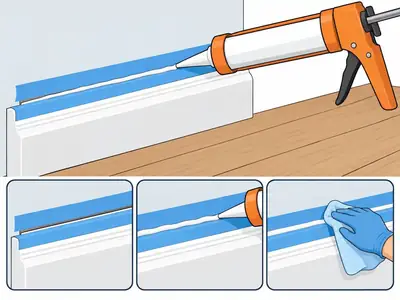
Check for gaps between the board and the wall. A bead of paintable caulk can close them. See our guide to gaps in caulk or baseboards. Touch up chipped paint, and look for soft spots that could mean moisture.
Keep them clean
Vacuum along the edges when you vacuum the floor. Wipe the baseboards once a month, or every few months, depending on pets and traffic. A quick pass takes minutes and stops buildup.
Related guides
- How to Replace Baseboards (Remove and Install)
- How to Install a Closet Rod That Holds a Full Rail of Clothes
- Sagging Closet Rod? How to Fix It and Hold More Weight
- How to Organize a Small Closet: A Simple Plan That Holds Up
FAQ
How often should I clean baseboards?
A few times a year is common. Homes with pets or kids may need monthly wiping.
Is vinegar safe on baseboards?
Diluted vinegar is used by many people on painted trim, but test first, and never mix it with bleach.
Why are my baseboards turning yellow?
Age, smoke, and sun can yellow paint. Cleaning may help, but a fresh coat of paint is the real fix.
More from this topic
- How to Paint Trim and Baseboards (Smooth, No Brush Marks): Paint trim and baseboards without brush marks: clean and sand first, use an angled brush with semi-gloss...
- How to Remove Crayon and Scuff Marks from Walls: How to remove crayon and scuff marks from walls safely: start gentle, move to a mild abrasive, then touch up...
- How to Clean Painted Walls Without Damaging the Paint: Learn how to clean painted walls: dust first, wash with mild soap, treat scuffs gently, and protect flat...
- How to Clean Window Screens Without Bending or Tearing Them: Learn how to clean window screens: remove them safely, brush off dust, wash with mild soap, rinse, dry, and...
- How to Fix a Gap in Caulk or Baseboards: How to fix a gap in caulk or baseboards with paintable caulk, a caulk gun and a damp finger. Easy steps,...
 Walls and PaintHow to Paint Trim and Baseboards (Smooth, No Brush Marks)Paint trim and baseboards without brush marks: clean and sand first, use an angled brush with semi-gloss enamel, and lay off in long strokes.
 Walls and PaintHow to Remove Crayon and Scuff Marks from WallsHow to remove crayon and scuff marks from walls safely: start gentle, move to a mild abrasive, then touch up or repaint only what needs it.
 Tools and BasicsHow to Clean Painted Walls Without Damaging the PaintLearn how to clean painted walls: dust first, wash with mild soap, treat scuffs gently, and protect flat paint from scrubbing damage.
 CleaningHow to Clean Window Screens Without Bending or Tearing ThemLearn how to clean window screens: remove them safely, brush off dust, wash with mild soap, rinse, dry, and put them back so air and light flow freely.
 Walls and PaintHow to Fix a Gap in Caulk or BaseboardsHow to fix a gap in caulk or baseboards with paintable caulk, a caulk gun and a damp finger. Easy steps, tools and a clean finish. Know when to replace trim.