
How to Fix a Gap in Caulk or Baseboards
Part of: Floors, walls and doors · Also in: The Complete Guide to Home Wall and Floor Repair
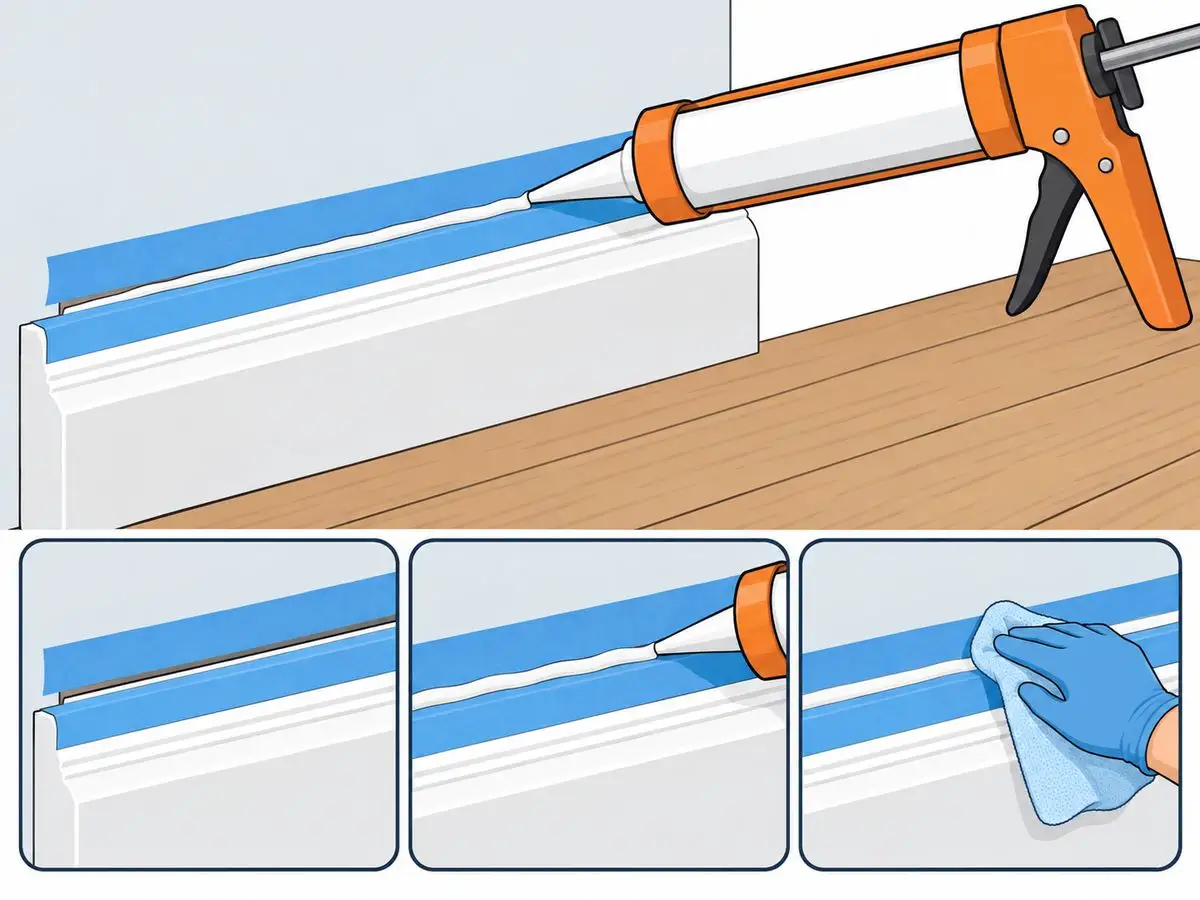
- Difficulty
- Easy
- Time
- 30 to 60 minutes plus drying
- Tools
- Caulk gun, paintable acrylic latex caulk, utility knife, putty knife, painter's tape, damp rag, small paintbrush, matching paint
- Call a pro if
- gaps are wider than about a quarter inch along many walls, the trim has pulled off the wall, or you see cracks across drywall that point to settling
In this guide
- Gas safety
- Chemical safety
A thin gap between a baseboard and the wall catches dust and makes a clean room look sloppy. This guide shows how to fix a gap in caulk or baseboards in under an hour, with a tube of paintable caulk and a steady hand.
This guide is part of our wider guide to bathroom fixtures, tile and grout.
Why gaps open up
Wood and drywall shrink and swell with the seasons, and old caulk dries out. Small gaps are normal. Wide, growing gaps can mean moisture or movement.
Step by step
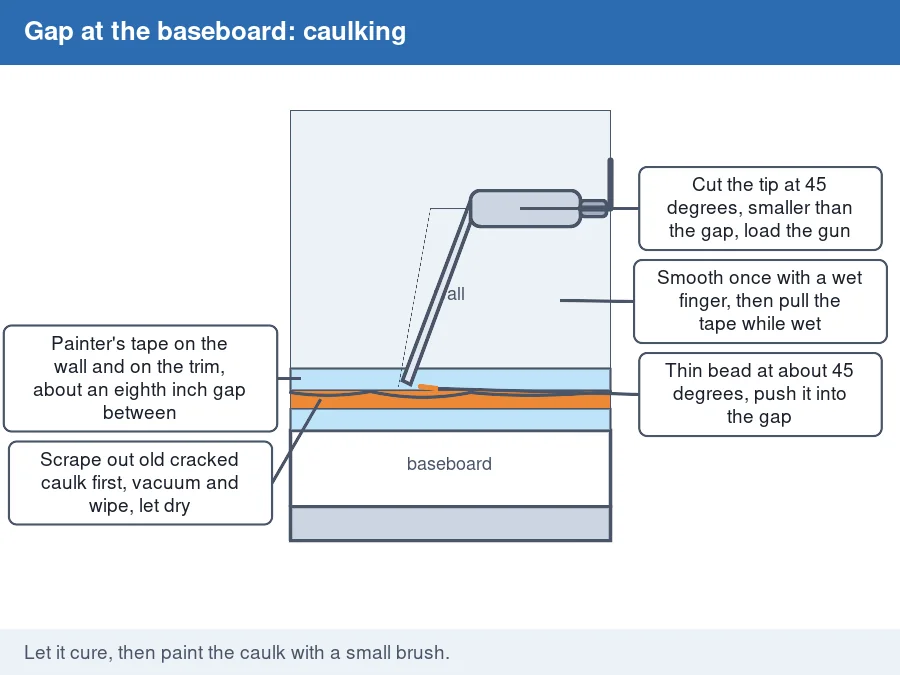
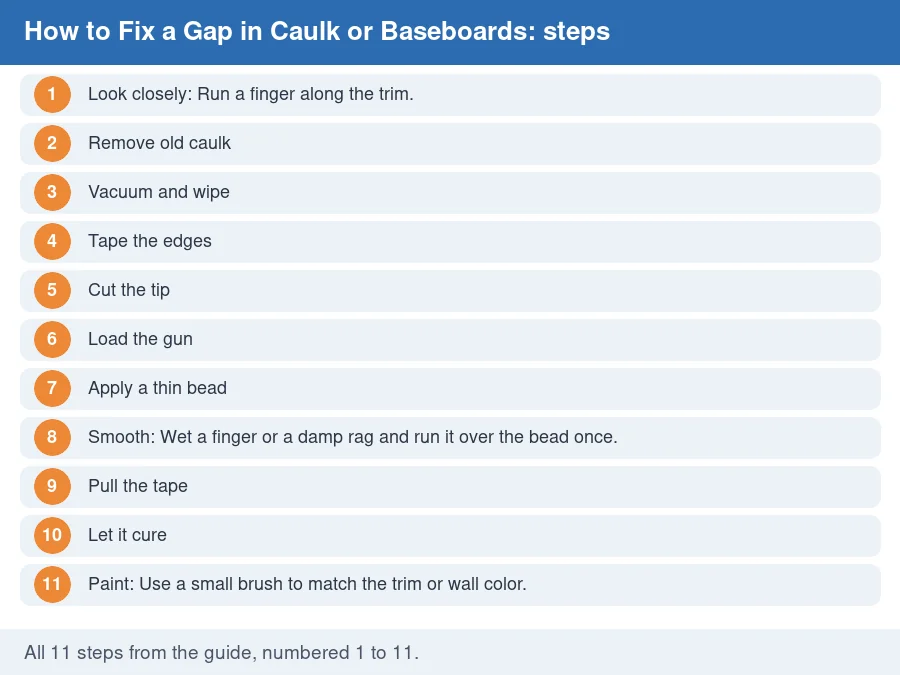
1. Look closely. Run a finger along the trim. Mark places where the caulk has cracked or shrunk, or where the baseboard stands away from the wall.
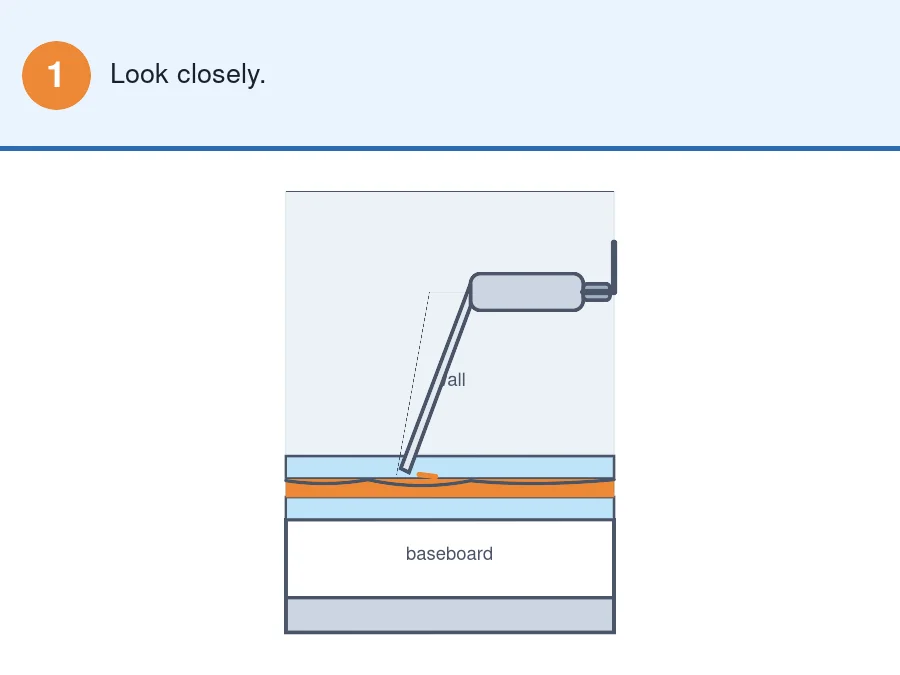
2. Remove old caulk. Use a utility knife or putty knife to scrape out loose, cracked or peeling caulk. New caulk will not stick to it.
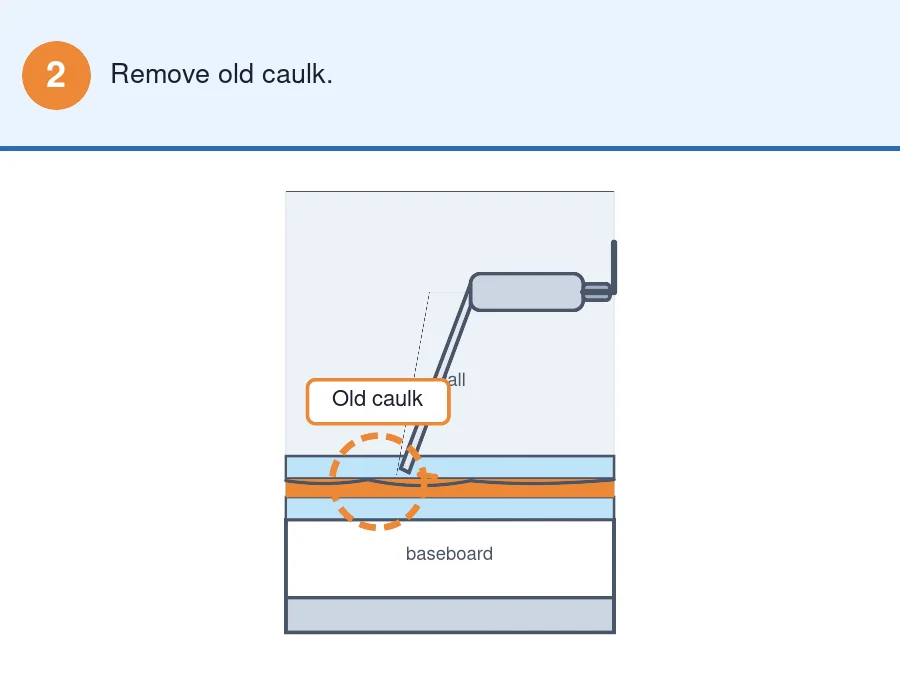
3. Vacuum and wipe. Remove dust and let the surface dry.
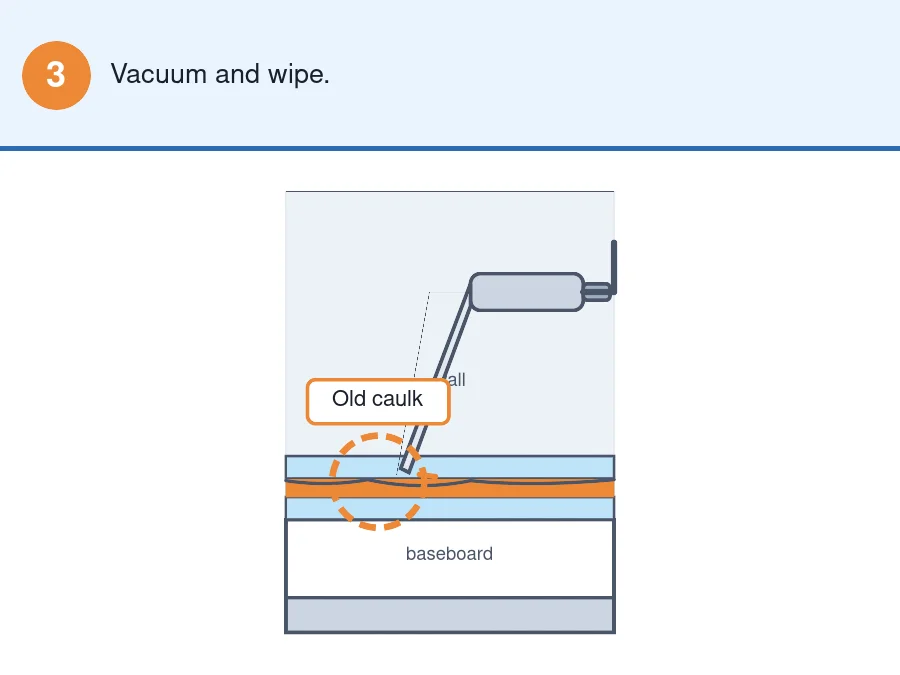
4. Tape the edges. Put painter's tape on the wall and on the trim, leaving a gap of about an eighth inch where the caulk goes. Press the tape down.
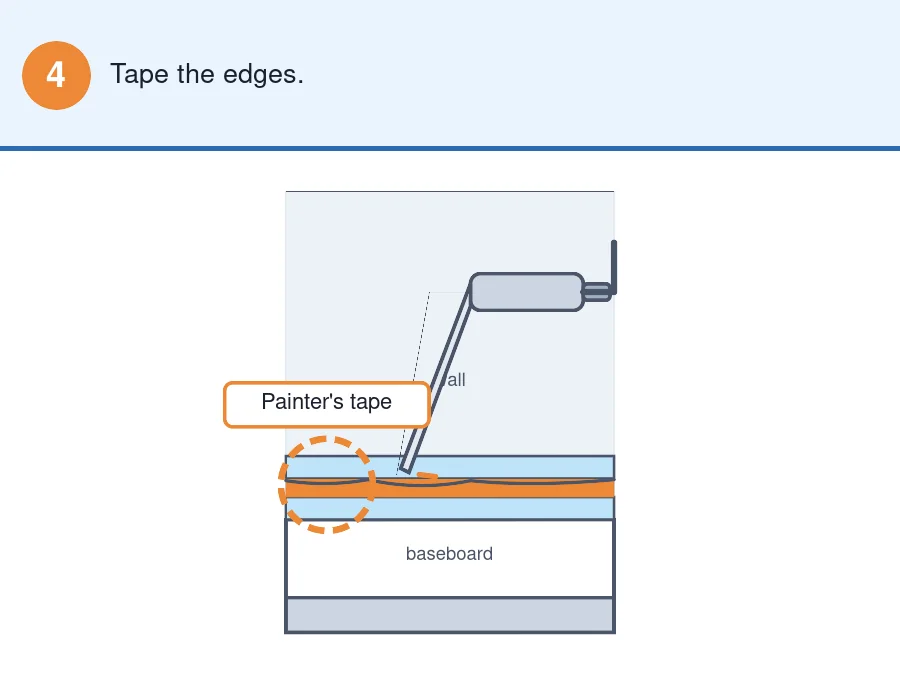
5. Cut the tip. Cut the caulk tube at a 45-degree angle to make a small opening, smaller than the gap. Pierce the inner seal.
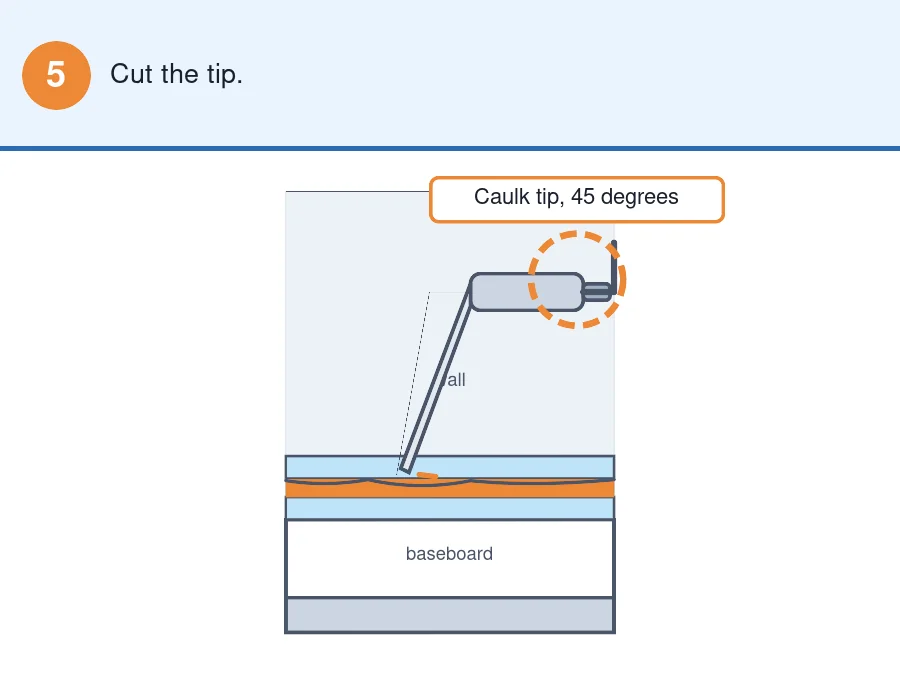
6. Load the gun. Squeeze the trigger until caulk starts to flow.
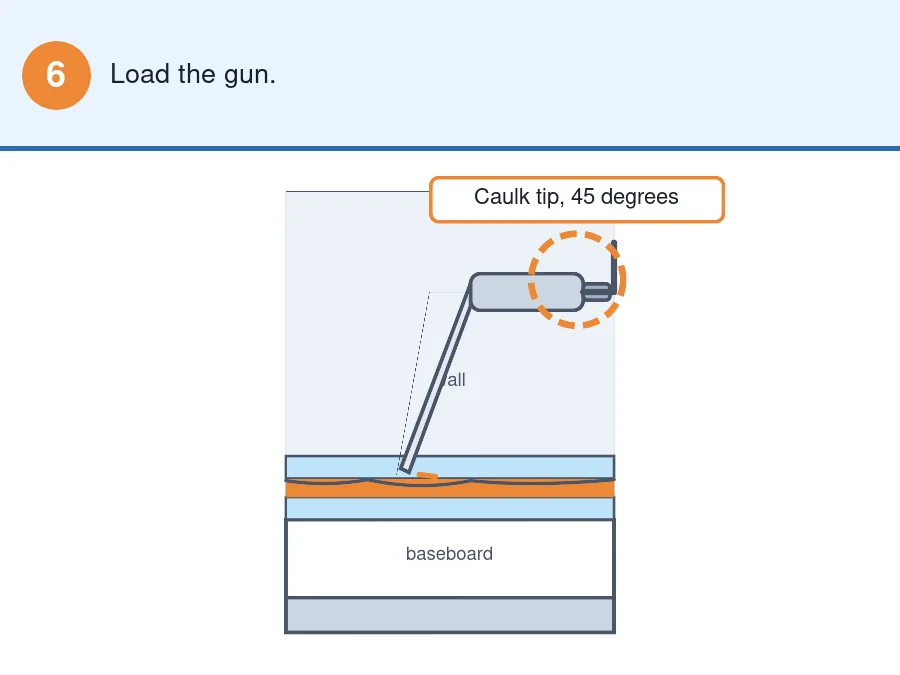
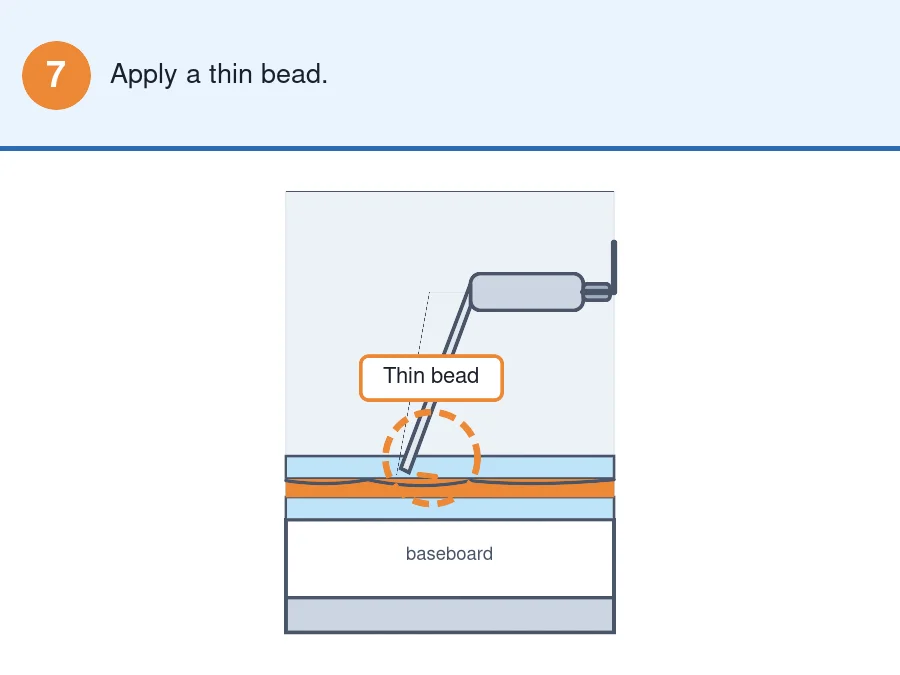
7. Apply a thin bead. Hold the gun at about a 45-degree angle and move steadily along the gap. Push the caulk into the gap instead of dragging it over.
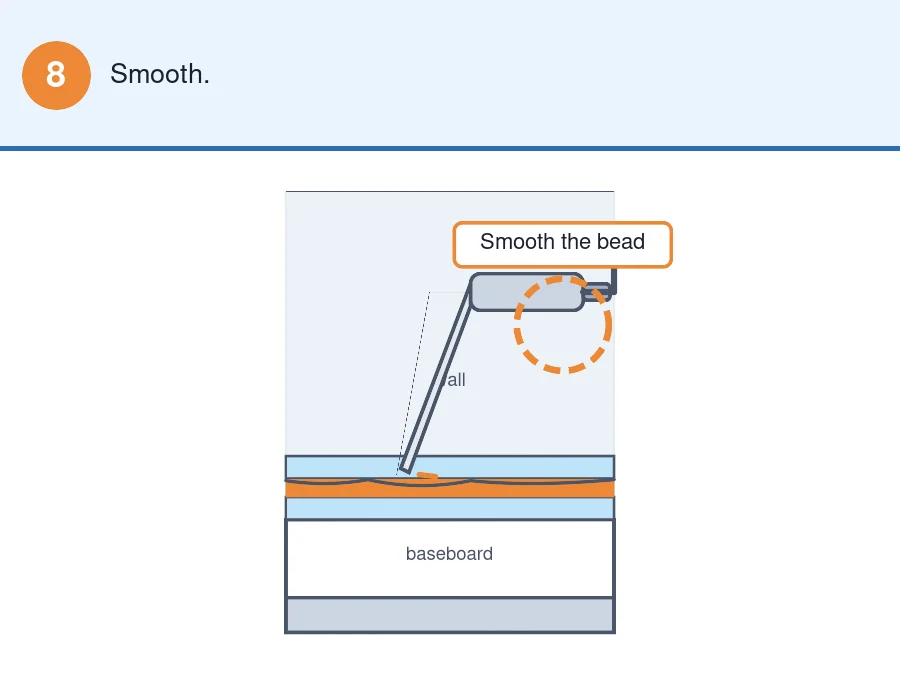
8. Smooth. Wet a finger or a damp rag and run it over the bead once. Press to fill the gap and wipe excess.
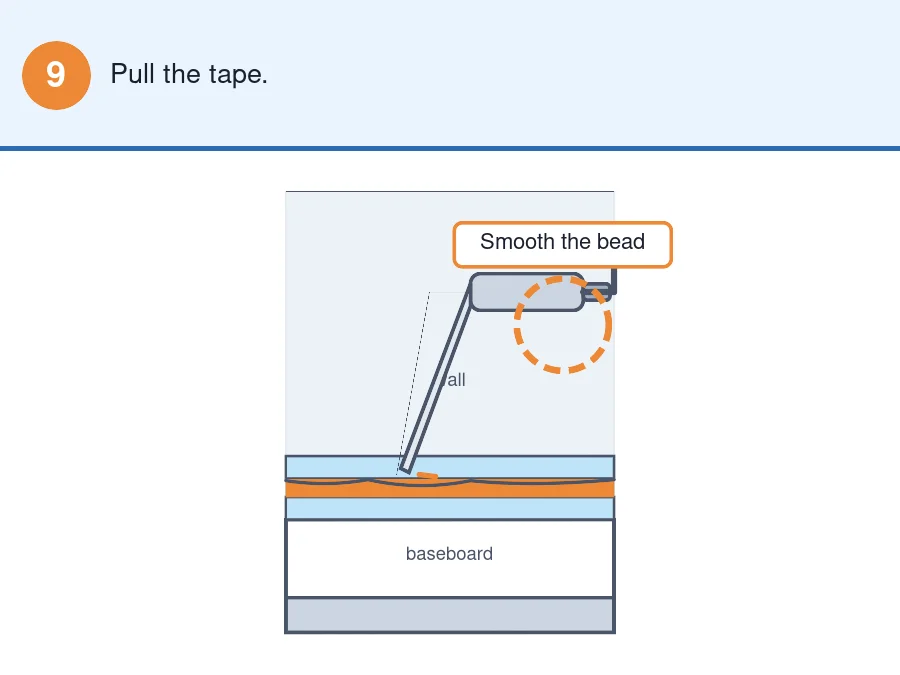
9. Pull the tape. Peel the tape off while the caulk is wet, drawing it away from the caulk line.
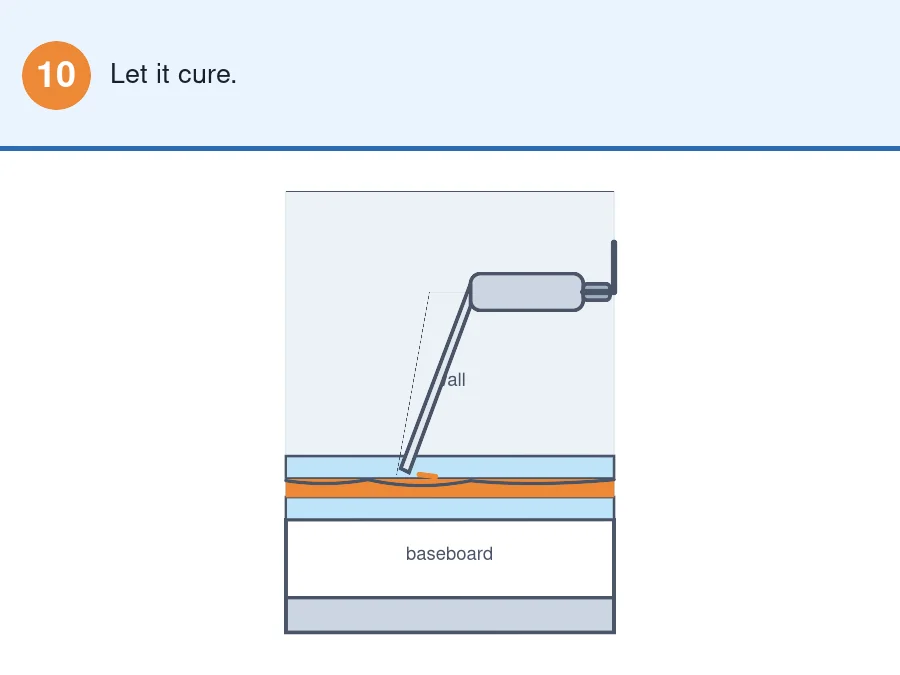
10. Let it cure. Follow the tube for drying time. Many acrylic caulks can be painted after a few hours.
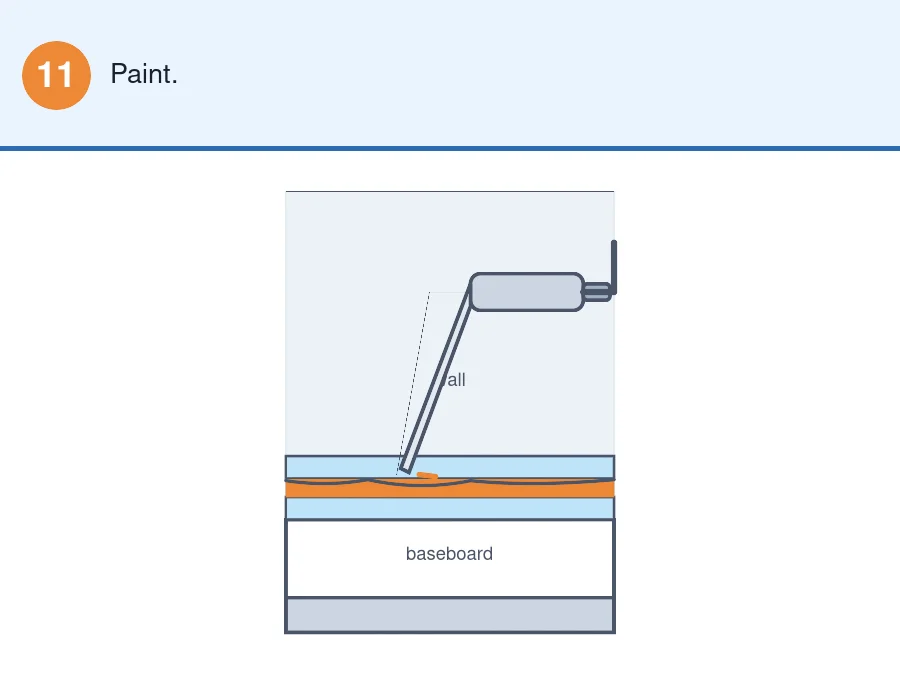
11. Paint. Use a small brush to match the trim or wall color.
When the baseboard itself is loose
1. Find a stud. Use a stud finder or knock to find solid spots.
2. Nail it back. Use a finishing nail through the baseboard into the stud, angled slightly. Set the nail head below the surface with a nail set.
3. Fill the hole. Press wood filler or spackle over the nail head, sand it and paint it.
4. Caulk the top seam as above.
Tips for a clean line
- Use less caulk than you think. You can add more later.
- Work in short sections, tape and smooth before the skin forms.
- Keep a damp rag near you to wipe off mistakes right away.
- Use a silicone-based caulk in kitchens and baths where water splashes. See How to caulk a bathtub for wet areas. Silicone cannot be painted, so use it only where paint is not needed.
Choosing the right caulk and tools
Siliconized acrylic caulk is paintable and flexible, and suits most trim. Pure silicone is more flexible and water-resistant, but cannot be painted. A smooth-cut tip and a gun with a smooth trigger help. A cheap gun drips and leaves a mess, so a small upgrade can pay off. Keep paper towels and a small cup of water near you.
Fixing a gap along the floor
A gap between the baseboard and the floor is often covered by quarter-round or shoe molding. If you have a gap there, a thin strip of trim nailed to the baseboard, not the floor, hides it and lets the floor expand. Caulk only the top edge of the baseboard, and leave the bottom free so the floor can move.
Trim gaps at corners
Gaps at inside corners, where two pieces of trim meet, can be filled with caulk. Gaps at outside corners may mean the miter joint has opened. Fill small gaps with wood filler, or tap the joint closed with a small nail and glue. Sand lightly and paint.
Related guides
- How to Clean Baseboards Fast Without Bending Over for Hours
- How to Remove Water Rings From Wood Furniture (White or Dark)
- Caulk Gun Comparison: Red Devil 3985, Newborn 10:1, Red Devil 3935 and 3989
- How to Caulk Around a Window to Stop Drafts and Water
- How to Caulk a Kitchen Sink for a Clean Seal
FAQ
Which caulk should I use for baseboards?
Paintable acrylic latex caulk. It is easy to smooth and takes paint.
Can I fill a wide gap with caulk?
Gaps larger than about a quarter inch need a backer or a trim fix first. Foam backer rod or a piece of trim works better.
How long before I can paint?
Check the tube. Many say one to two hours, but longer is safer.
Why does the caulk crack again?
The gap may be moving, or the caulk was applied too thin. Use a flexible caulk and fill the gap well.
More from this topic
- How to Fill a Gap Between a Baseboard and a Floor: Learn how to fill a gap between a baseboard and a floor with caulk, foam or shoe molding, and which gap needs...
- How to Replace Baseboards (Remove and Install): Replace baseboards by scoring the caulk, prying the old trim off carefully, then measuring, cutting and...
- How to Cope Inside Corners in Trim: How to cope inside corners in trim: cut the profile with a coping saw, back cut for a tight fit, and get a...
- How to Install a Plinth Block: How to install a plinth block: size it to the casing and baseboard, cut the joints square, and set it plumb...
- How to Install a Tile Baseboard: How to install a tile baseboard that sits flat, cuts clean around casings, and holds a straight top line from...
 Walls and PaintHow to Fill a Gap Between a Baseboard and a FloorLearn how to fill a gap between a baseboard and a floor with caulk, foam or shoe molding, and which gap needs a filler instead.
 Walls and PaintHow to Replace Baseboards (Remove and Install)Replace baseboards by scoring the caulk, prying the old trim off carefully, then measuring, cutting and nailing new baseboard with coped inside corners.
 Walls and PaintHow to Cope Inside Corners in TrimHow to cope inside corners in trim: cut the profile with a coping saw, back cut for a tight fit, and get a joint that stays closed as the house moves.
 Walls and PaintHow to Install a Plinth BlockHow to install a plinth block: size it to the casing and baseboard, cut the joints square, and set it plumb so the trim lines meet cleanly.
 Walls and PaintHow to Install a Tile BaseboardHow to install a tile baseboard that sits flat, cuts clean around casings, and holds a straight top line from corner to corner.