
How to Repair a Cracked Concrete Step Nosing
Part of: Outdoors and garage

- Difficulty
- Moderate
- Time
- 2 to 4 hours plus curing
- Tools
- Cold chisel, lump hammer, wire brush, trowel, straight edge, patching compound, form board, clamps, gloves, safety glasses, dust mask
- Call a pro if
- The step has dropped away from the house, the crack runs through the whole tread, or the steps are shared with a neighbor.
In this guide
- Wear protection
The nosing is the front lip of a step, and it takes every foot that lands on it. When it cracks, water gets in and the edge crumbles fast. A patch done properly lasts years. How to repair a cracked concrete step nosing starts by tapping the loose piece, since a hollow sound means it is already detached.
1. Judge the damage
1. Tap the loose piece with a hammer.
2. If it sounds hollow, it is already detached.
3. Check whether the crack runs into the tread.
2. Remove the loose material
1. Break out anything that moves.
2. Work back to sound concrete.
3. Cut a square shoulder rather than a feather edge.
3. Clean the surface
1. Brush the exposed concrete with a wire brush.
2. Remove all dust and grit.
3. Dampen the surface before patching.
4. Build a form
1. Cut a straight board to the step width.
2. Clamp it to the riser so it sits level with the tread.
3. Check the form is straight along the front.
5. Choose the patch mix
1. Use a polymer modified patching compound for thin repairs.
2. Use a sand and cement mix for a deep rebuild.
3. Mix to a stiff, spreadable consistency.
6. Apply a bonding coat
1. Brush a bonding agent or a cement slurry onto the damp concrete.
2. Work it into the pores.
3. Patch while it is still tacky.
4. Do not let it dry out.
7. Pack the patch
1. Press the mix into the corner firmly.
2. Build it up in layers for a deep repair.
3. Overfill slightly against the form.
8. Shape the nosing
1. Strike off level with the tread using a straight edge.
2. Round the front edge slightly.
3. Keep the tread sloping a touch away from the house.
9. Cure it slowly
1. Cover the patch with plastic for a day.
2. Keep it damp, especially in hot weather.
3. Leave the form on for at least a day.
4. Keep traffic off for several days.
10. Finish and protect
1. Remove the form and tidy the edges.
2. Paint or seal the step once cured.
3. Check for a hollow sound after a month.
Common mistakes
- Patching over loose, hollow concrete.
- Feather edging the patch, which breaks away.
- Skipping the bonding coat.
- Letting the patch dry too fast.
- Walking on it the same day.
FAQ
Can I repair just the nosing or do I need a new step?
If the tread is sound, a nosing repair works. A step that moves or has dropped needs rebuilding.
What mix is best for a step edge?
A polymer modified patching compound bonds best on a thin repair.
How long before I can use the step?
Keep weight off for at least a few days, longer in cold weather.
Why did the nosing crack in the first place?
Usually water getting behind the edge, or a step cast too thin at the lip.
Related guides
- How to Repair a Cracked Concrete Step: Cracks and Chips: Learn how to repair a cracked concrete step. Clean the damage, fill cracks with a patch compound, rebuild...
- How to Repair a Loose Brick on a Step: Learn how to repair a loose brick on a step: chip out the old mortar, reset the brick level with fresh mortar...
- How to Repair a Sagging Patio Step: Learn how to repair a sagging patio step: find the cause, reset the tread on a firm base and stop water from...
- How to Drill Into Concrete Without Cracking It: Learn how to drill into concrete: use a hammer drill with a masonry bit, clear the dust, and set anchors that...
- How to Repair a Cracked Sidewalk Panel: Learn how to repair a cracked sidewalk panel: judge whether it is cosmetic or structural, clean and fill the...
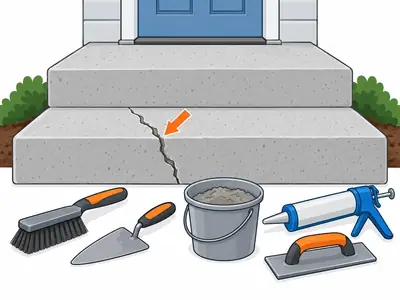 Garage and OutdoorsHow to Repair a Cracked Concrete Step: Cracks and ChipsLearn how to repair a cracked concrete step. Clean the damage, fill cracks with a patch compound, rebuild chipped edges and seal the step against water and ice.
 Garage and OutdoorsHow to Repair a Loose Brick on a StepLearn how to repair a loose brick on a step: chip out the old mortar, reset the brick level with fresh mortar and repoint the joint so it stays put.
 Garage and OutdoorsHow to Repair a Sagging Patio StepLearn how to repair a sagging patio step: find the cause, reset the tread on a firm base and stop water from undermining it again.
 Garage and OutdoorsHow to Drill Into Concrete Without Cracking ItLearn how to drill into concrete: use a hammer drill with a masonry bit, clear the dust, and set anchors that actually hold.
 Garage and OutdoorsHow to Repair a Cracked Sidewalk PanelLearn how to repair a cracked sidewalk panel: judge whether it is cosmetic or structural, clean and fill the crack, or replace the panel when needed.