
How to Repair a Cracked Patio Slab
Part of: Outdoors and garage
- Difficulty
- Moderate
- Time
- 3 to 6 hours plus cure
- Tools
- Stiff brush, hammer and chisel, crack filler, patching mix, trowel, bonding agent, hose, bucket, safety glasses
- Call a pro if
- One side of the slab has dropped more than an inch or the crack runs through the whole slab, since the base has failed.
In this guide
- Wear protection
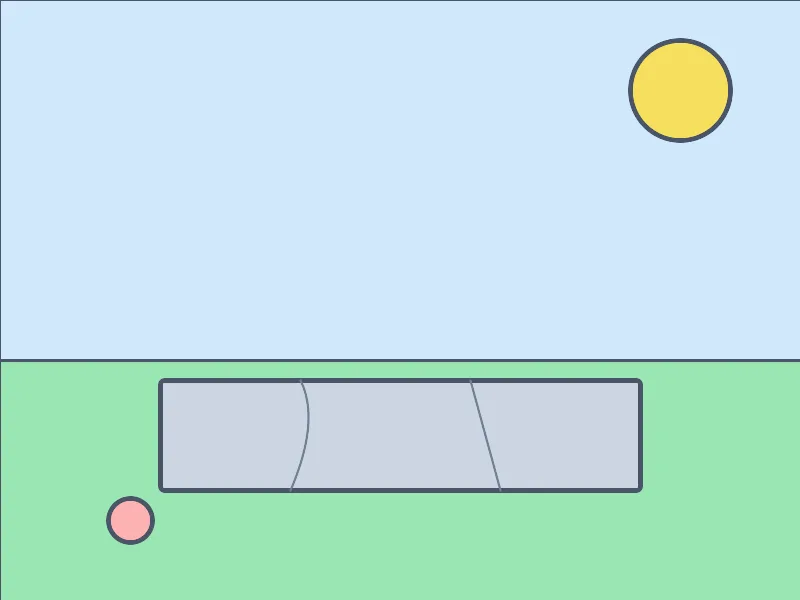
A crack in a patio is a message, not a fault in itself. It tells you the slab has moved, and the useful work is finding out which way it moved and why. Filler applied to a moving slab comes out within a season, which is why so many patched patios have the same crack in the same place two winters later. The sequence for how to repair a cracked patio slab starts with finding out why it cracked.
The three things a crack can mean
Shrinkage, settlement, or heave. Shrinkage cracks appear in the first year, usually as a network of fine lines or a single line that follows no particular pattern, and they stop moving once the slab has dried out. Settlement means the ground under the slab has gone: water washed the base away, or the fill was never compacted. Heave means something pushed up, and in a garden that is usually a tree root or frost. Each has a different repair, and only the first is a pure sealing job.
Test whether the slab is still moving
Lay a straightedge across the crack and look for daylight under it, on both sides. Stand on one side of the crack and then the other and feel for rocking. Knock along the slab with a hammer handle: a hollow note means a void underneath. Look at the crack ends and see whether they line up or whether one side has shifted. Then mark the crack with a pencil line across it and look again in a month. A crack that has widened in a month is not ready for filler.
What the pattern tells you
- A single line running from an inside corner, or continuing a control joint, is a shrinkage or stress crack.
- A crack that follows the edge of the slab and drops toward the lawn is settlement at the unsupported edge.
- A crack with one side lifted, often near a tree or a shrub, is root heave.
- Cracks in a grid across a small slab suggest the slab was poured thin or without a base.
- A crack that keeps reopening after patching points to water still getting under the slab.
Fix the water first
Nearly every patio crack has water behind it. Check that the surface falls away from the house rather than toward it. Look at the downspouts, because a downspout discharging at the patio edge is a crack factory. Check that soil and mulch are not piled above the slab edge, since that holds water against the concrete. If the patio has a low corner where water stands after rain, that corner will keep cracking until the fall is corrected or a drain is added.
Sealing, patching, lifting or replacing
A hairline crack in a slab that has stopped moving gets a flexible sealant, applied to a clean dry crack that has been brushed and blown out. A wider crack in a sound slab gets a patching mix, pressed in and feathered at the edges, kept damp while it cures. A slab that has dropped but is otherwise whole can be lifted, either by pumping a grout or a foam under it, which is work for a specialist. A slab that is cracked through in several directions, or that rocks underfoot, is cheaper to break out and replace, and the base under it needs attention before a new slab goes down.
After the repair
Keep traffic off the patch for at least a day and vehicles off longer. Do not let it freeze in the first two days. Then watch the repair over a full year: a patch that holds through a freeze and a thaw has probably worked, and one that fails in the same place is telling you the base is the problem, not the mix.
Related guides
- How to Repair a Concrete Driveway Crack: How to repair a concrete driveway crack with a wire brush, backer rod and flexible filler. Steps, tools, and...
- How to Repair a Cracked Sidewalk Panel: Learn how to repair a cracked sidewalk panel: judge whether it is cosmetic or structural, clean and fill the...
- How to Replace a Gutter Hanger: Learn how to replace a gutter hanger: support the gutter, remove the old spike or bracket, fit a hidden...
- Patio Door Screen Repair: Patio door screen repair made simple. Patch small holes, replace torn mesh and spline, and fix a sliding...
- How to Fix a Cracked Toilet Tank: How to fix a cracked toilet tank: judge the crack, seal hairlines with epoxy and know when the tank needs...
 Garage and OutdoorsHow to Repair a Concrete Driveway CrackHow to repair a concrete driveway crack with a wire brush, backer rod and flexible filler. Steps, tools, and when a crack needs a pro.
 Garage and OutdoorsHow to Repair a Cracked Sidewalk PanelLearn how to repair a cracked sidewalk panel: judge whether it is cosmetic or structural, clean and fill the crack, or replace the panel when needed.
 Garage and OutdoorsHow to Replace a Gutter HangerLearn how to replace a gutter hanger: support the gutter, remove the old spike or bracket, fit a hidden hanger into sound wood and restore the slope.
 Garage and OutdoorsPatio Door Screen RepairPatio door screen repair made simple. Patch small holes, replace torn mesh and spline, and fix a sliding screen door that jumps off its track.
 ToiletsHow to Fix a Cracked Toilet TankHow to fix a cracked toilet tank: judge the crack, seal hairlines with epoxy and know when the tank needs replacing.