
How to Test Smoke Detectors
Part of: Electrical safety
- Difficulty
- Easy
- Time
- 10 to 20 minutes
- Tools
- step stool or ladder, vacuum with brush attachment, smoke alarm test spray, marker and tape, replacement batteries
- Call a pro if
- A detector will not sound, keeps chirping after a new battery, or the units are more than ten years old and need replacing on a hardwired system.
In this guide
- Count your detectors and note their locations
- Check the age of each unit
- Press the test button
- Listen to what the sound tells you
- Vacuum the unit
- Test with a smoke alarm test spray
- Change the battery on schedule
- Test interconnected systems together
- Record the dates
- Replace units on schedule
- Common mistakes
- FAQ
- When to call a pro
Knowing how to test smoke detectors is a ten minute job that most households skip for years. A detector with a dead sensor still beeps when you press the button, which is why the button test alone is not enough.
1. Count your detectors and note their locations
Walk the house and list every unit: each bedroom, outside each sleeping area, each level, the basement, and the garage if it is attached. A house should have one on every level and in or near every sleeping area.
2. Check the age of each unit
Look at the date on the back of each detector. Most have a manufactured date and a ten year life. If a unit is ten years old or older, replace it, because the sensor degrades and the unit will not warn you.
3. Press the test button
Press and hold the test button for a few seconds until the alarm sounds. Have someone stand across the house to confirm that interconnected units all sound. If one does not, it needs a battery, a wire check, or replacement.
4. Listen to what the sound tells you
A short chirp every minute means a low battery. A chirp with a different pattern can mean a dirty sensor or an end of life signal. Check the manufacturer's chart for the pattern your unit uses, since the codes differ.
5. Vacuum the unit
Dust and cobwebs in the sensing chamber cause false alarms and can block smoke. Vacuum the face and the slots with a brush attachment once a month, and blow out the chamber with canned air if the manufacturer allows it.
6. Test with a smoke alarm test spray
Use a spray made for testing smoke alarms and follow the directions on the can and in your alarm maker's manual. The alarm should sound within a few seconds. Do this twice a year. Do not use a lit candle, incense or any open flame near a detector. Ventilate afterward and let the unit reset.
7. Change the battery on schedule
Change the battery at least once a year, and immediately when a unit chirps. Write the date on the battery with a marker. Many people change batteries when the clocks change, which makes the habit easy to remember.
8. Test interconnected systems together
If one detector sounds and the others do not, the interconnect wire or the wireless link is not working. That matters most at night, when a detector in a basement needs to wake someone in a bedroom.
9. Record the dates
Write the test date and the battery date on a piece of tape inside the cover, or keep a note on the fridge. A written record turns a good intention into a habit, and it tells the next person in the house when the unit was last checked.
10. Replace units on schedule
Replace every unit at ten years, and sooner if it fails a test or chirps after a new battery. When you replace one, replace the set if they were installed together, so you are not testing a mix of old and new sensors.
Pick one day a month and make it the day. The first of the month, or the day the trash goes out, works because it is already a habit. Write the test on a calendar for the year and keep the note with the detector dates, so a skipped month is obvious. If a detector is in a hard to reach spot, a broom handle with a rubber band around the button works, but check it with your own eyes at least once a year.
Replace batteries in every unit at the same time, even the ones that still test fine. Mixing a new battery into a set of older ones just means the next chirp arrives in the middle of the night. If a detector has a sealed ten year battery, the whole unit gets replaced on that schedule, and the date on the back tells you when.
Common mistakes
- Pressing the test button and assuming the detector works.
- Never testing with a smoke alarm test spray.
- Painting over a detector or covering it with a plastic bag.
- Removing the battery because of cooking smoke instead of fixing the cause.
- Keeping a unit past ten years because it still beeps.
- Testing only the detector in the hallway and not the ones in bedrooms.
FAQ
How often should I test smoke detectors?
Press the test button monthly and test with a smoke alarm test spray twice a year.
Does the test button prove the detector will sense smoke?
No. It tests the electronics and battery, not the sensing chamber.
How long do smoke detectors last?
About ten years from the manufactured date, regardless of battery changes.
Why does my detector chirp after a new battery?
It may be dirty, at the end of its life, or have a battery that is not seated or is the wrong type.
Should detectors be interconnected?
Yes, where the system allows it, so one alarm sounds them all.
How do I test a carbon monoxide alarm?
Press and hold its test button until it sounds, once a month. Do not use smoke or car exhaust to test it. Replace it when the end-of-life signal sounds or at the age printed on the back, often 5 to 10 years.
Related guides
- How to Install a Smoke Alarm: Learn how to install a smoke alarm: pick battery or wired, mount the bracket, fit the unit, link it if it...
- How to Replace a Smoke Detector Battery: Learn how to replace a smoke detector battery, why alarms chirp, how to reset them and when the whole unit...
- How to Maintain a Fire Extinguisher: Learn how to maintain a fire extinguisher: monthly checks, pressure readings, placement, and when to service...
- How to Replace a Hardwired Smoke Detector Safely: Learn how to replace a hardwired smoke detector. Turn off power, match the connector, mount the new alarm and...
- Smoke and Carbon Monoxide Detector Placement: Smoke and carbon monoxide detector placement made simple: inside every bedroom, outside sleeping areas and on...
 SafetyHow to Install a Smoke AlarmLearn how to install a smoke alarm: pick battery or wired, mount the bracket, fit the unit, link it if it can, and test it. Placement has its own guide.
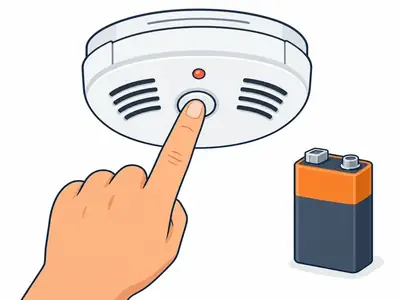 SafetyHow to Replace a Smoke Detector BatteryLearn how to replace a smoke detector battery, why alarms chirp, how to reset them and when the whole unit needs replacing. Steps and safety tips included.
 SafetyHow to Maintain a Fire ExtinguisherLearn how to maintain a fire extinguisher: monthly checks, pressure readings, placement, and when to service or replace it.
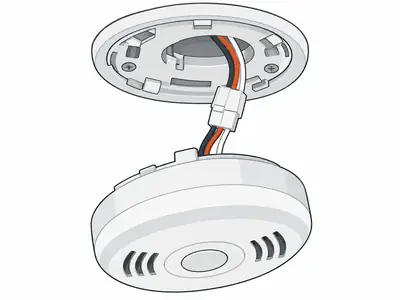 SafetyHow to Replace a Hardwired Smoke Detector SafelyLearn how to replace a hardwired smoke detector. Turn off power, match the connector, mount the new alarm and test it. Safety tips and when to call a pro.SafetySmoke and Carbon Monoxide Detector PlacementSmoke and carbon monoxide detector placement made simple: inside every bedroom, outside sleeping areas and on every level, at the right height.