
Kitchen Faucet Low Flow: Fix a Clogged Aerator or Cartridge
Part of: Kitchen
- Difficulty
- Easy to medium
- Time
- 15 to 60 minutes
- Tools
- Pliers with a rag, small brush, vinegar, bowl, screwdrivers, towel, flashlight
- Call a pro if
- every faucet in the house has weak flow, the supply valves will not open, or pipes are corroded or leaking
In this guide
- Water off first
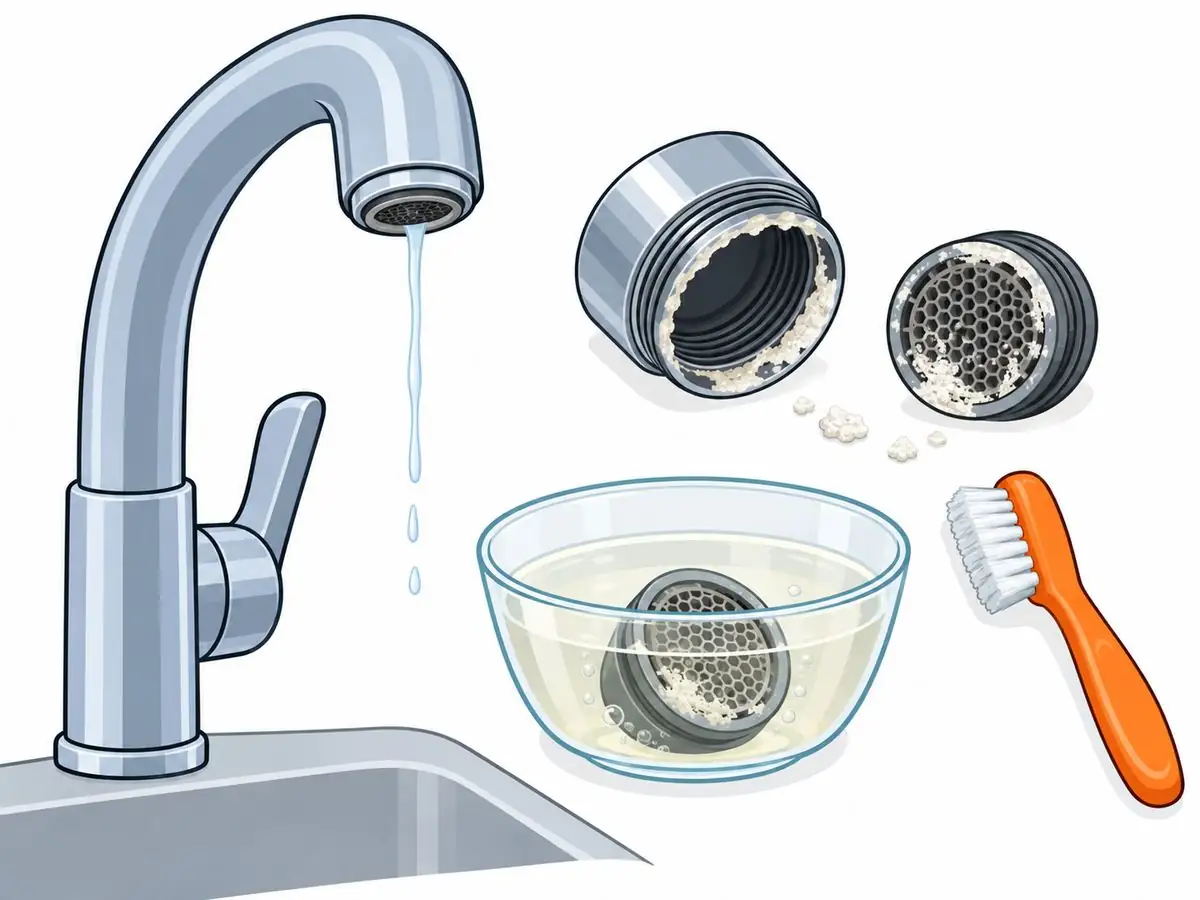
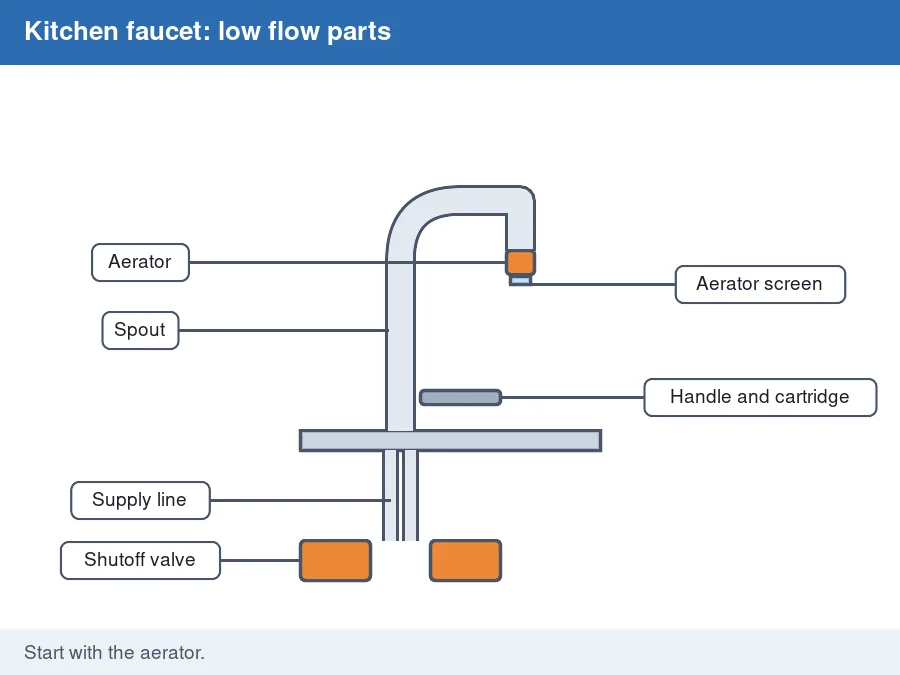
With kitchen faucet low flow, the usual causes are a clogged aerator or a worn cartridge. A kitchen faucet with low flow is annoying, since it takes forever to fill a pot. In most homes the cause is small bits of mineral scale or debris in the aerator, the little screen at the tip of the spout. A few other parts can also slow the stream, and you can check them in order, from the easiest to the hardest.
This guide is part of our wider guide to kitchen cabinets, countertops and storage.
First, find out how wide the problem is
Run the cold and hot water at the kitchen faucet one at a time. Then check another faucet in the house. If only one side, hot or cold, is weak, the cause is likely in the faucet or its supply line. If both sides are weak at this faucet only, suspect the aerator or the spout. If every fixture is weak, the problem is the house supply or the main valve, and a plumber or your water utility can help. See How to shut off the water main to check that the main valve is fully open.
Step by step
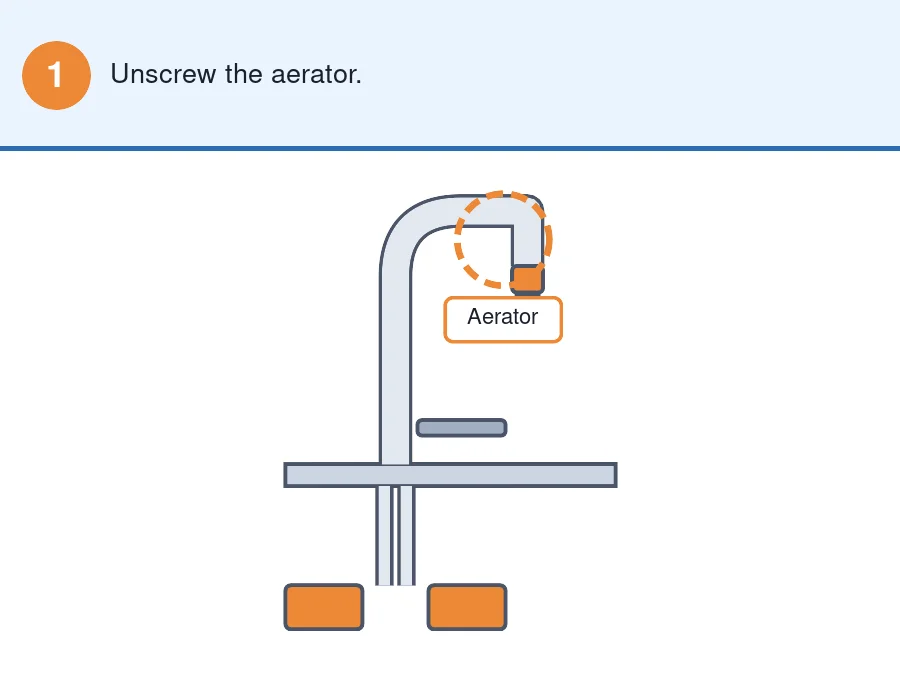
1. Unscrew the aerator. Wrap the spout tip with a cloth so the finish does not scratch, then turn the aerator counterclockwise with pliers. Many unscrew by hand. A pull-down sprayer has an aerator or screen at the end of the spray head.
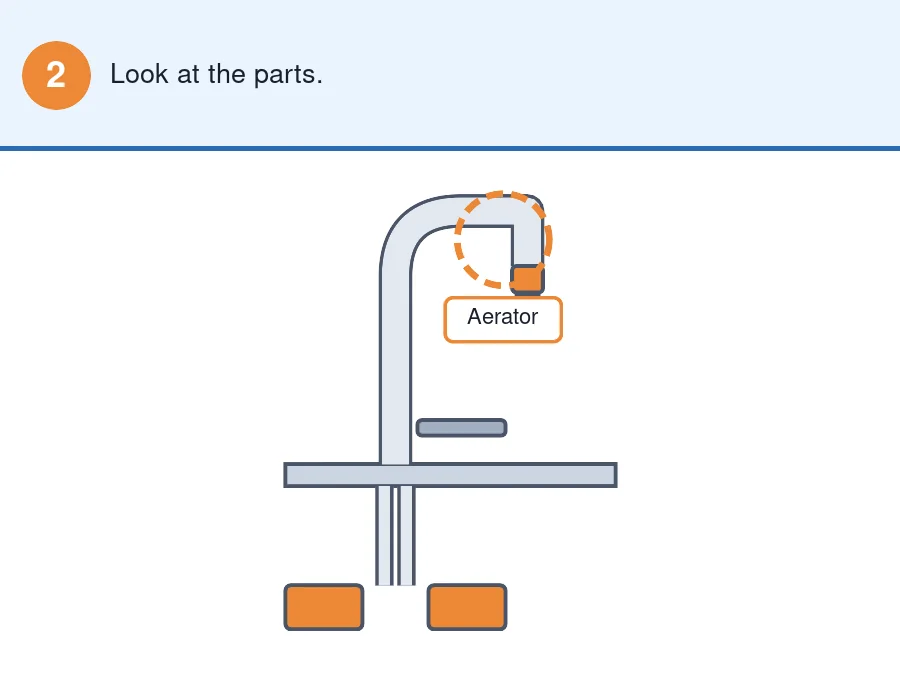
2. Look at the parts. Lay them out in order on a towel so you can reassemble them. You will usually see a screen, a washer and a plastic or metal housing.
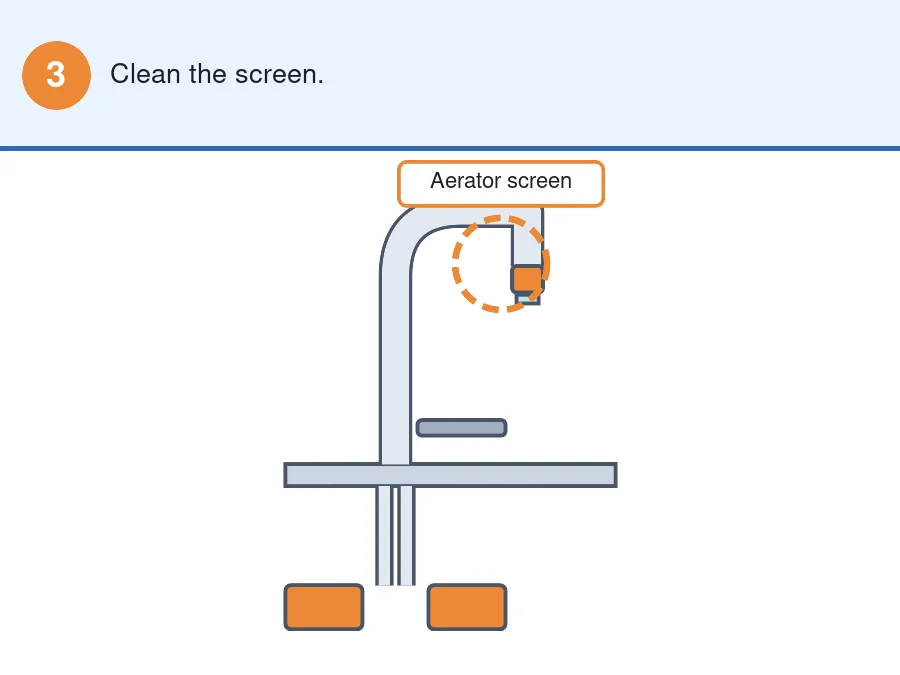
3. Clean the screen. Tap out loose grit, then soak the parts in vinegar for 30 minutes to an hour to dissolve scale. Scrub with a small brush.
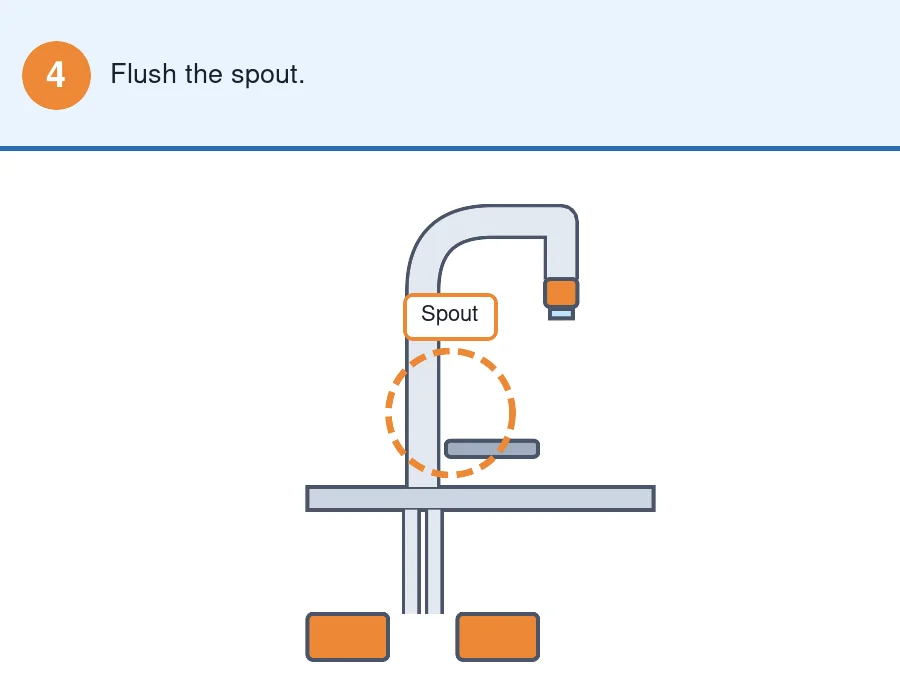
4. Flush the spout. Before you put the aerator back, turn the water on for a few seconds to flush out any debris. Hold a cup under the spout or run it into the sink.
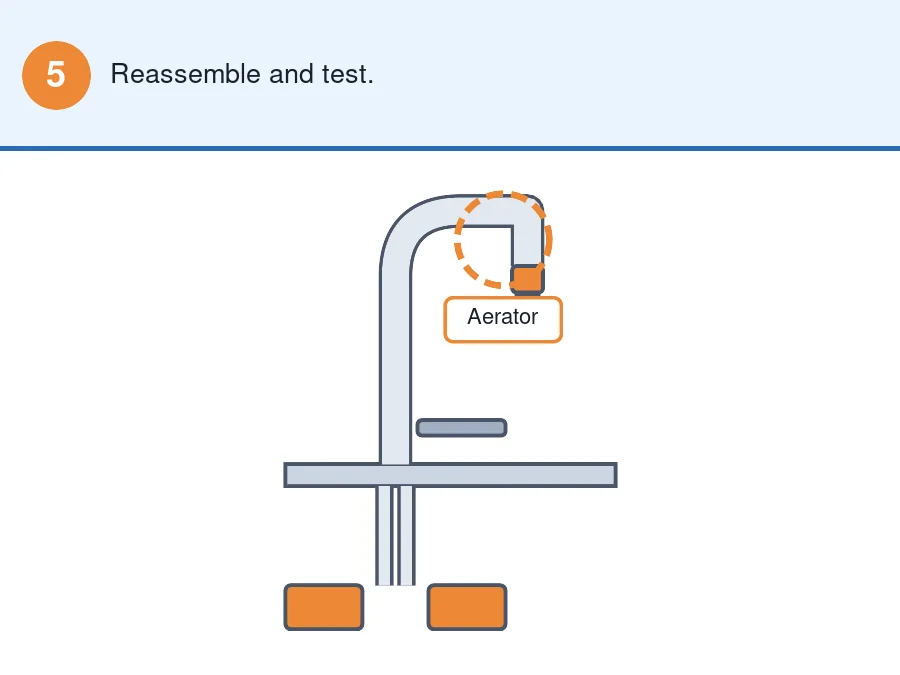
5. Reassemble and test. Put the parts back in order and hand tighten the aerator.
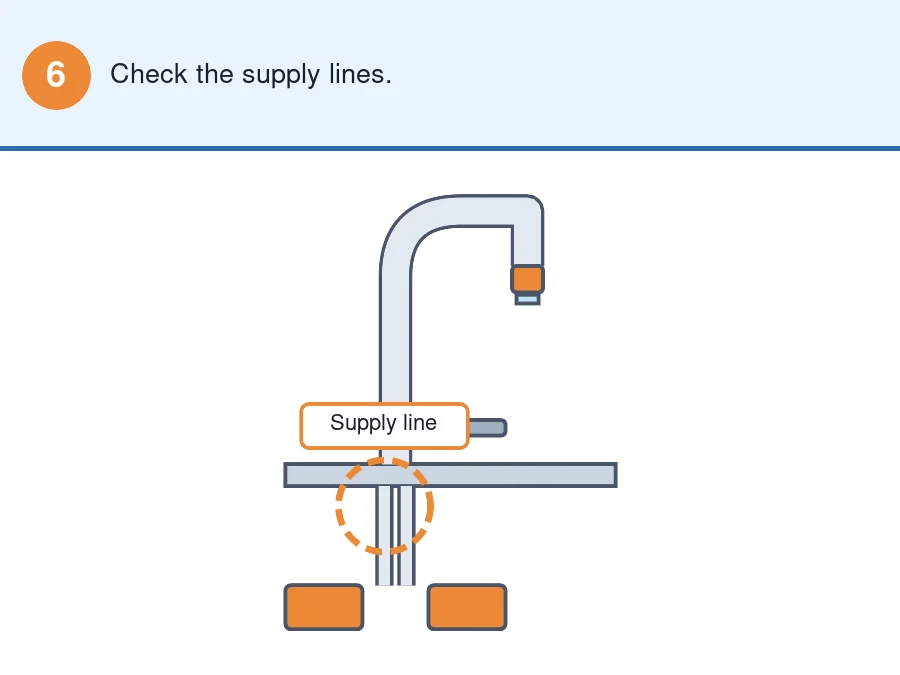
6. Check the supply lines. Open the cabinet and look at the two flexible lines going from the shutoff valves to the faucet. Make sure they are not kinked or pinched by things stored in the cabinet.
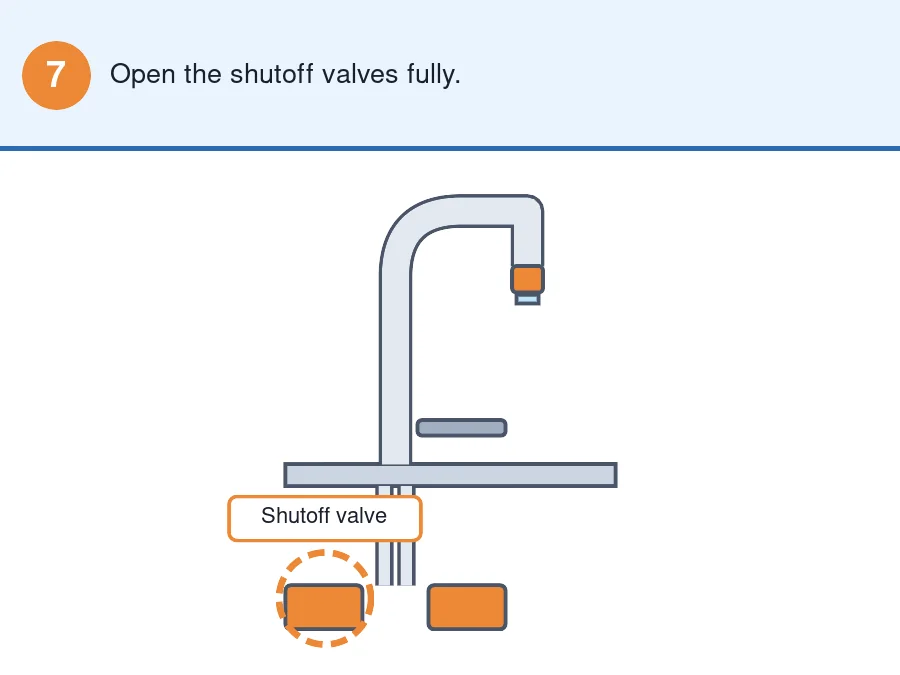
7. Open the shutoff valves fully. Turn each handle counterclockwise until it stops. A valve that is only partly open will cut flow.
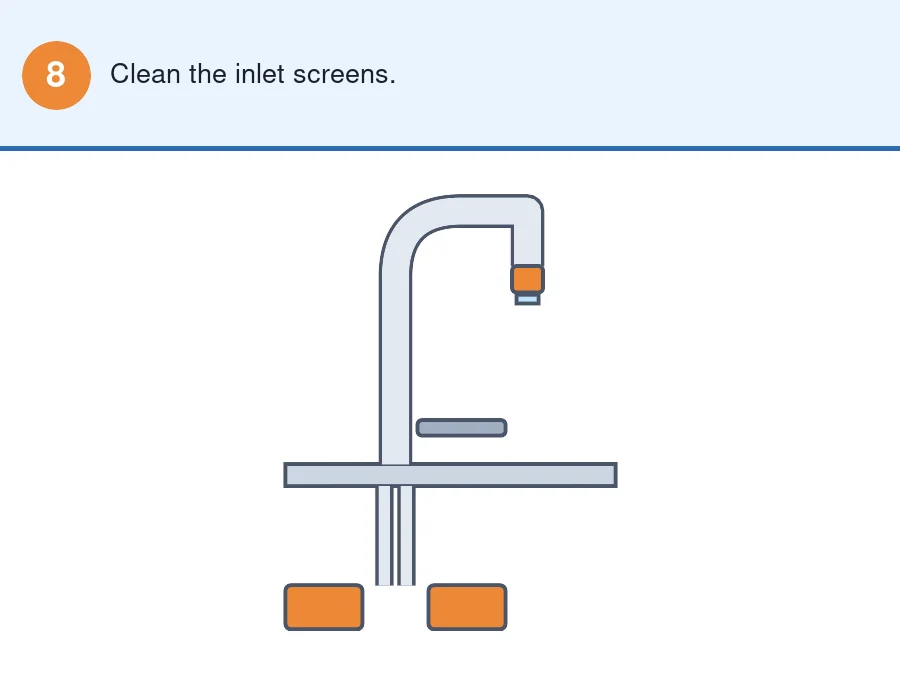
8. Clean the inlet screens. Some faucets have small screens at the supply connections. With the water off, disconnect the line and rinse the screen.
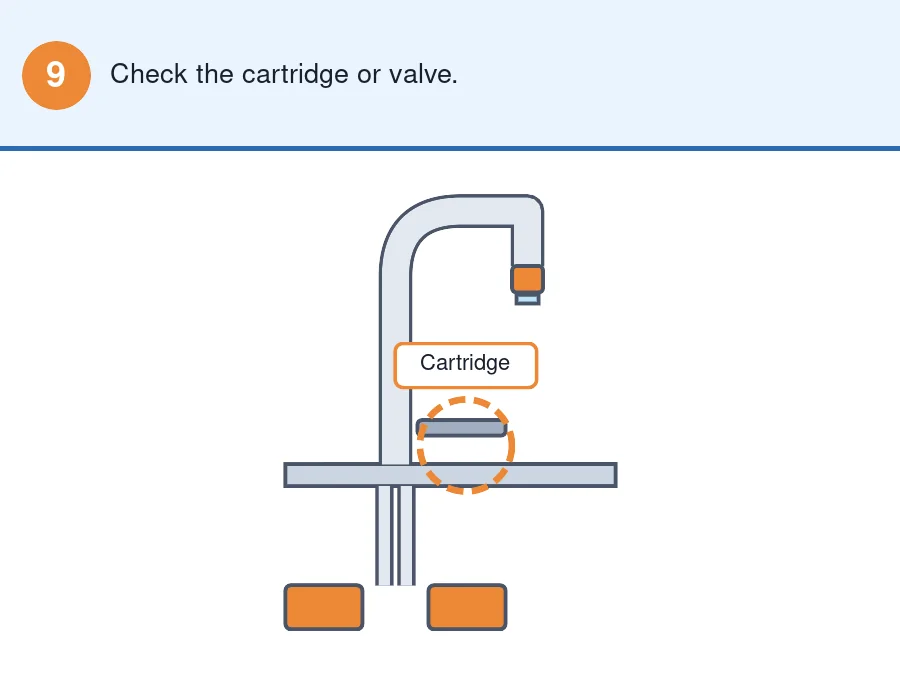
9. Check the cartridge or valve. If only one handle is weak, mineral deposits may be blocking the cartridge. With the water off, remove the handle and cartridge and rinse them. Replace the cartridge if it is worn. See How to fix a leaky faucet for how cartridges come out.
Pull-out and pull-down sprayers
These faucets have a hose that runs under the sink. A kink or a stuck weight can restrict flow. Check that the hose moves freely. Some models have a small check valve in the hose connection that can clog. Look at the instruction sheet for your model. If the spray head has a spray and stream setting, check that the diverter button is not stuck halfway.
If only the hot side is weak
Check the hot shutoff valve and the hot supply line. If other hot faucets are weak as well, look at the water heater valves. A partly closed valve at the water heater, or sediment in an older tank, can cut hot flow. See How to flush a water heater.
Prevent the problem
Clean the aerator every few months if you have hard water. Do not wait until the stream is weak. If you have a water softener, check that it is working. If a plumbing repair was done recently, debris can loosen from the pipes and clog the screen, so clean the aerator after any work on the lines.
Related guides
- Kitchen Faucet Base Leak: How to Fix It
- How to Replace a Kitchen Faucet
- How to Replace a Kitchen Sink (Drop-In Swap)
- How to Install a Kitchen Faucet Step by Step
- How to Fix a Wobbly Kitchen Faucet (Loose at the Base)
FAQ
Why did my faucet flow get weak overnight?
A bit of debris or scale probably broke loose and blocked the aerator. Cleaning it usually fixes it.
Can I remove the aerator for more flow?
You can, but the stream will splash and the faucet will use more water. It is better to clean it.
How often should I clean the aerator?
Every three to six months for hard water, less often for soft water.
Does low flow mean a leak?
Not usually. If you also see a wet cabinet or a spinning water meter, check for a leak.
More from this topic
- How to Fix Low Water Pressure in One Faucet: How to fix low water pressure in one faucet by cleaning the aerator, checking the valve and flushing the...
- How to Stop a Kitchen Faucet From Spitting and Splashing: Learn how to stop a kitchen faucet from spitting: clean or replace the aerator, clear trapped air, check the...
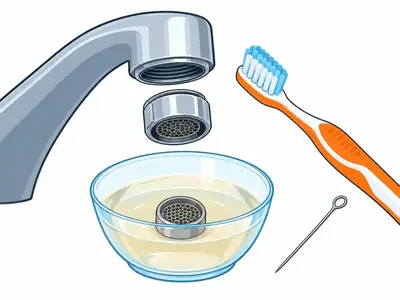
- How to Clean a Faucet Aerator: Learn how to clean a faucet aerator to restore weak flow, with the vinegar soak, the screen order and the...
- How to Replace a Faucet Aerator to Fix Low Flow: Learn how to replace a faucet aerator. Find the size, unscrew the old one, clean the threads and install a...
- Tighten Loose Kitchen Faucet From Under the Sink: Kitchen faucet wobbling or shifting? Tighten loose kitchen faucet mounts from under the sink with the right...
 PlumbingHow to Fix Low Water Pressure in One FaucetHow to fix low water pressure in one faucet by cleaning the aerator, checking the valve and flushing the line. Easy steps, tools and when to call a plumber.
 KitchenHow to Stop a Kitchen Faucet From Spitting and SplashingLearn how to stop a kitchen faucet from spitting: clean or replace the aerator, clear trapped air, check the pressure and fix a worn washer or cartridge.
 PlumbingHow to Clean a Faucet AeratorLearn how to clean a faucet aerator to restore weak flow, with the vinegar soak, the screen order and the grit that blocks the flow.
 BathroomHow to Replace a Faucet Aerator to Fix Low FlowLearn how to replace a faucet aerator. Find the size, unscrew the old one, clean the threads and install a new aerator to restore a smooth, even stream.
 KitchenTighten Loose Kitchen Faucet From Under the SinkKitchen faucet wobbling or shifting? Tighten loose kitchen faucet mounts from under the sink with the right tools. Steps, tools and safety notes included.