
How to Clean a Furnace Without Breaking It
Part of: Heating and cooling
- Difficulty
- Easy to moderate
- Time
- Varies by job
- Tools
- sandpaper, vacuum, brush, flashlight
- Call a pro if
- Call a technician for anything involving the burners, the gas valve, the orifices, the heat exchanger or the flue interior, and for any gas smell, which means leaving the house first.
In this guide
- Identify what you have
- Kill the power and the fuel
- Change or clean the filter
- Clean the blower compartment and wheel
- Vacuum the burner area without taking it apart
- Clean the flame sensor, if your manual allows it
- Clear the condensate trap and drain
- Check the vent pipe and the outdoor terminations
- Look at the heat exchanger, do not touch it
- Clean the registers, returns and the furnace room
- Put it back together and watch the startup
- Test the alarms and watch the first cycle
- Book the annual tune-up
- When to call a pro
- Related guides
- FAQ
- Sources
- Power off first
- Gas safety
Knowing how to clean a furnace is mostly about knowing where to stop. The parts a homeowner can safely clean are the filter, the blower compartment, the condensate trap and the vents. The parts that decide whether the thing runs safely, the burners, the gas valve and the heat exchanger, belong to a technician with a combustion analyzer. This guide covers the cleaning you can do, in order.
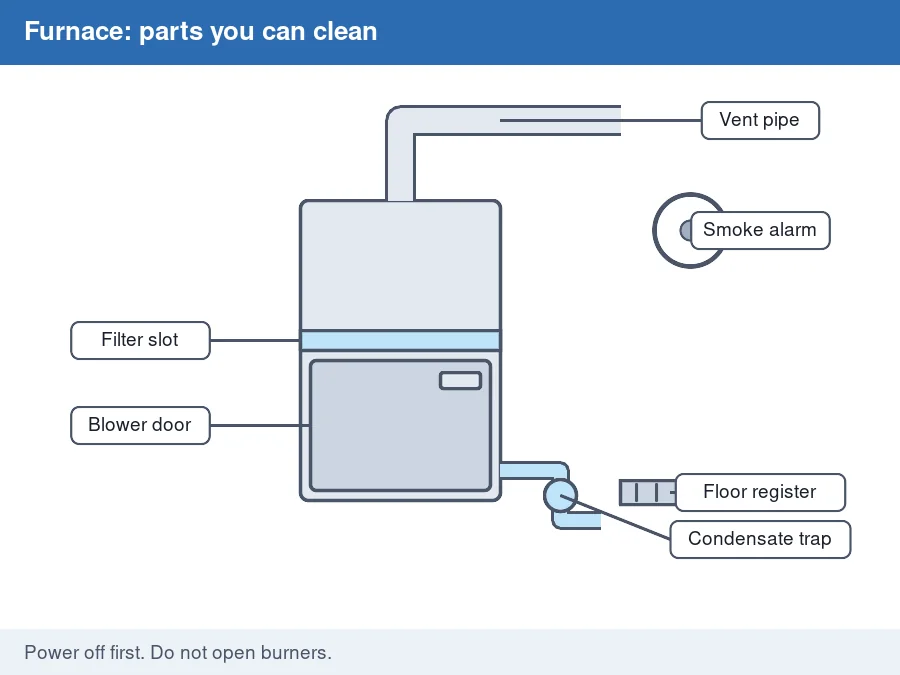
1. Identify what you have
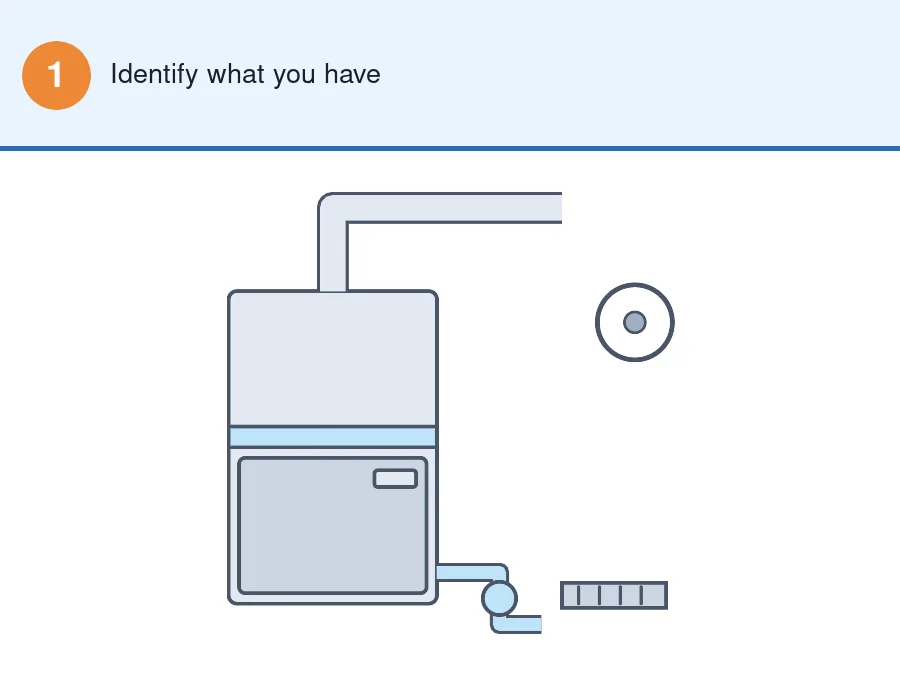
Read the rating plate inside the door. Note whether it is gas, oil or electric, the input rating in BTUs, and whether it is a condensing model. A condensing furnace usually has two PVC pipes to the outside plus a condensate trap that clogs; an 80 percent furnace has a metal flue.
2. Kill the power and the fuel
Turn the furnace off at the wall switch, then at the breaker, and confirm the blower will not start. For gas, the shutoff valve is on the pipe just before the furnace; close it only if the manual says to, and never force a valve that will not turn. For oil, shut off the fuel at the tank valve. Label the breaker while it is off so nobody restores it while your hands are inside.
3. Change or clean the filter
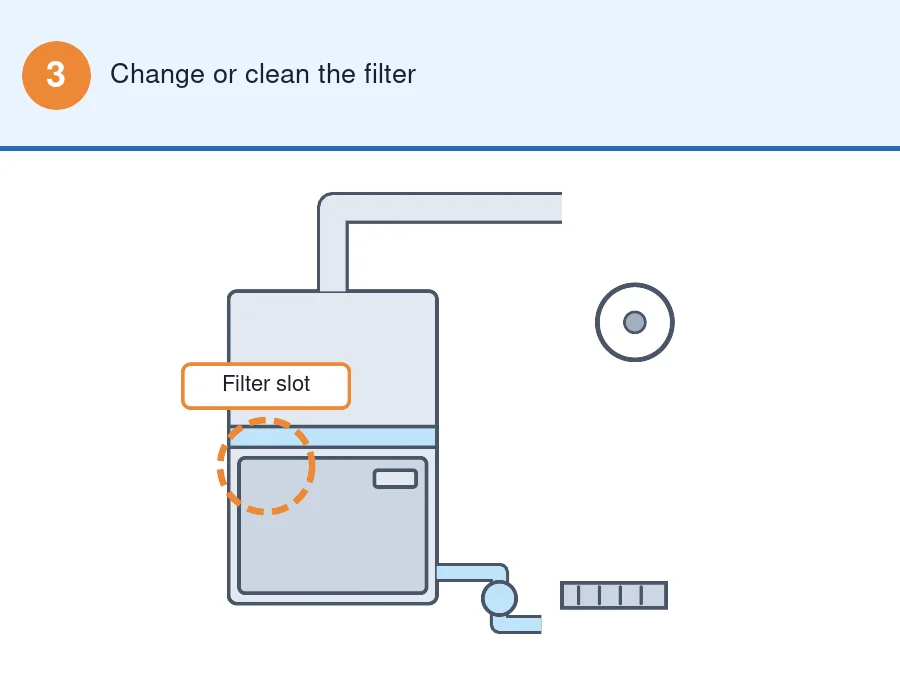
A dirty filter is the most common cause of an overheating furnace. Slide it out and hold it up to a light: if you cannot see light through it, it is done. Note the size and the airflow arrow, and fit the new one with the arrow pointing toward the blower. A washable filter gets rinsed from the clean side and must be bone dry before it goes back. Check it monthly through the season.
4. Clean the blower compartment and wheel
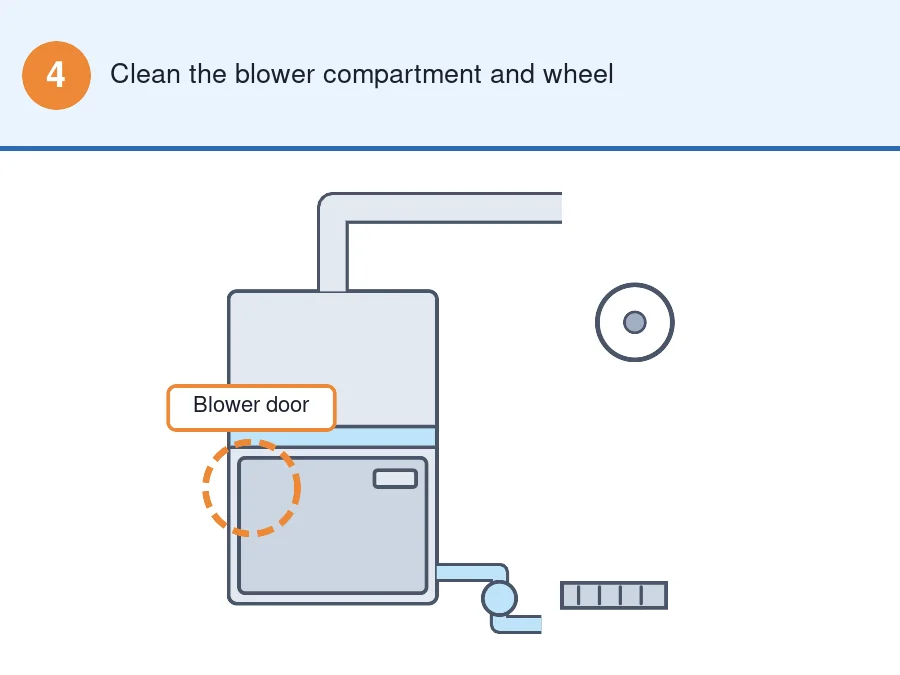
With the power off, vacuum the compartment with a brush attachment, working around the motor and the wiring rather than pulling on either. The blower wheel collects a mat of dust that throws it out of balance and cuts airflow. If the wheel is removable without disconnecting wiring, the manual will say so; if not, clean what you can reach. Do not spray cleaner into the motor.
5. Vacuum the burner area without taking it apart
Look at the burner compartment with a flashlight. Dust, pet hair and rust flakes collect on the shelf and around the burners. Vacuum what is loose, staying clear of the gas manifold, the orifices and the wiring. Do not unscrew the burners, do not poke anything into the orifices and do not scrub the burner faces. A burner that is out of position or partly clogged changes the flame and can produce carbon monoxide.
6. Clean the flame sensor, if your manual allows it
The flame sensor is a thin metal rod in the burner path. When it coats with oxide, the furnace lights, runs for a few seconds and shuts down. If the manual shows its location and calls it a user-serviceable item, clean it gently with steel wool, wipe it, and refit it exactly as it came out. If the manual does not cover it, leave it for the technician. Never use sandpaper and never bend the rod.
7. Clear the condensate trap and drain
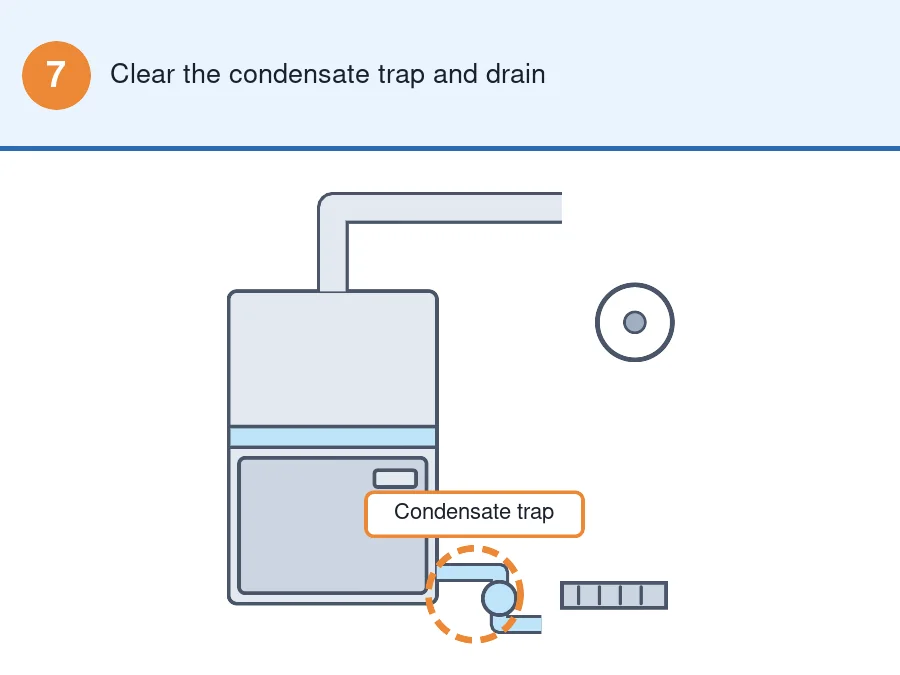
On a condensing furnace, the trap and the drain line carry acidic water away, and a clog shuts the unit down on a pressure switch fault. Pull the trap if the manual shows how, rinse it under warm water, and clear the line. A wet vacuum on the end of the drain line clears many clogs. Refit the trap fully seated, since a leaking trap rusts the cabinet.
8. Check the vent pipe and the outdoor terminations
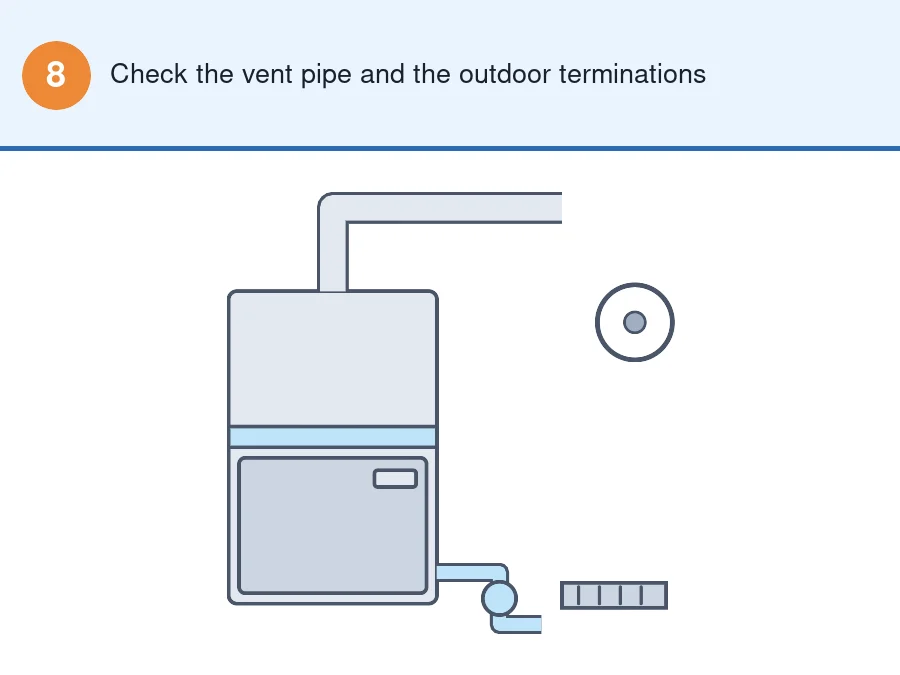
Walk the flue or the PVC vent run and look for sagging, separated joints, crushed sections or a bird nest at the termination. On a high-efficiency unit, check the intake as well, and clear snow, leaves or a bush grown over the end. A blocked vent is a carbon monoxide event, not a performance issue.
9. Look at the heat exchanger, do not touch it
Shine a light along the visible sections and look for rust streaks, cracks, soot or a white powder. You are looking, not cleaning. A cracked heat exchanger can put flue gas into the supply air, and it cannot be repaired from the outside. If you see anything suspicious, leave the furnace off and call a technician.
10. Clean the registers, returns and the furnace room
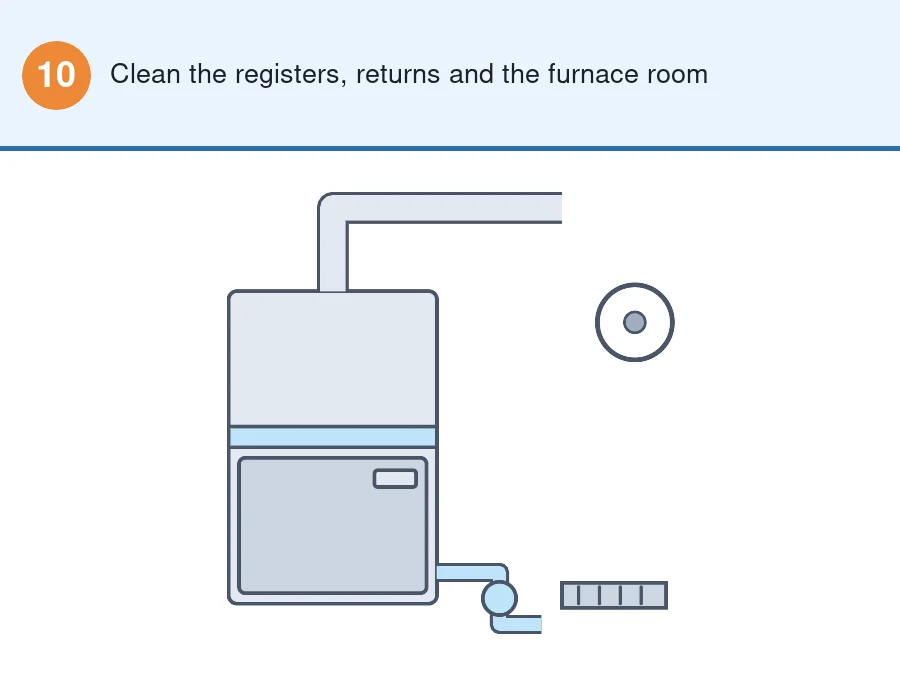
Vacuum the supply registers and the return grilles. A blocked return starves the blower and a blocked supply overheats the limit switch. Then clear the furnace room itself: no paint cans, no boxes, nothing within the clearance the rating plate specifies. A furnace needs air.
11. Put it back together and watch the startup
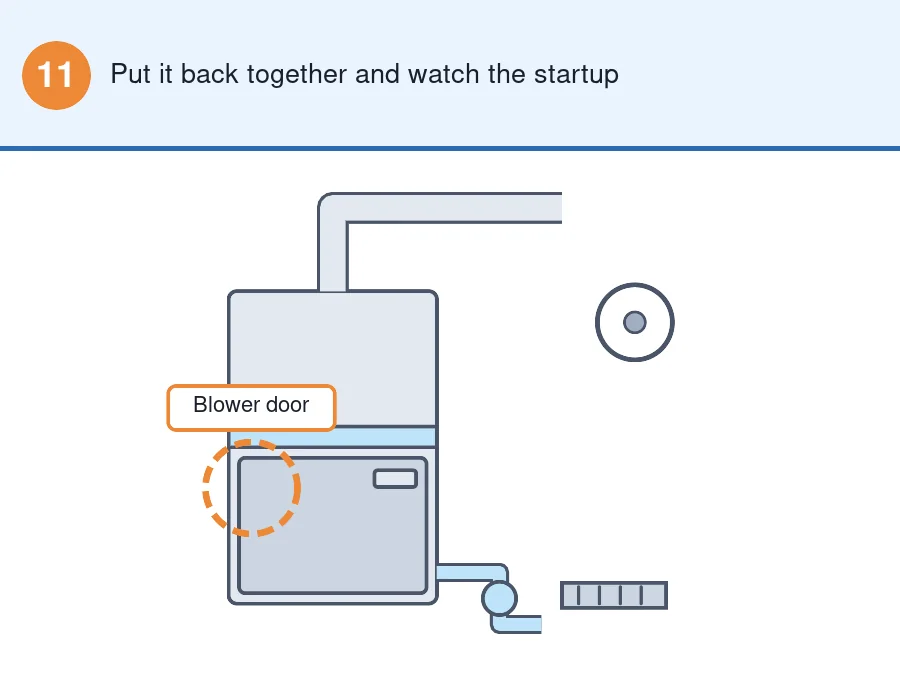
Refit the doors and panels, restore the breaker and the wall switch, and turn the thermostat up. Watch the whole sequence: the draft inducer starts, the igniter glows, the burners light, the blower comes on after a delay. A steady blue flame with a crisp inner cone is normal. A yellow, floating or lifting flame, a rumbling sound or repeated ignition attempts mean shut it down and call.
12. Test the alarms and watch the first cycle
Press the test button on every carbon monoxide alarm and confirm they all sound. Leave the furnace running for a full cycle with the house closed up, then check the alarms again. If an alarm sounds, get everyone outside and call 911 or the fire department from outside. Do not open windows and wait to see if it clears.
13. Book the annual tune-up
The cleaning you just did does not replace the yearly service visit. A technician checks gas pressure and connections, does a combustion analysis, inspects the heat exchanger with a camera where needed, and checks the flue. ENERGY STAR recommends an annual pre-season check-up. Book it before the first cold snap.
When to call a pro
Call a technician for anything involving the burners, the gas valve, the orifices, the heat exchanger or the flue interior, and for any gas smell, which means leaving the house first. Call immediately if you see a cracked heat exchanger, a flame that rolls out of the cabinet, soot on the burners or a CO alarm. A furnace that short cycles, locks out, blows cold air or will not ignite needs diagnosis, not more cleaning. Oil furnaces need a technician for the nozzle, the filter at the tank and the electrodes.
Related guides
- How to Test Home Humidity With or Without a Hygrometer
- How to Prepare Your Furnace for Winter
- How to Keep Your House Cool in Summer Without Constant AC
- How to Fix a Furnace That Blows Cold Air
FAQ
How often should a furnace be cleaned?
The filter monthly through the season, the blower and the cabinet once a year, and a professional service every year. Pets or a dusty house mean checking the filter more often.
Can I clean the burners myself?
No. The burners, the orifices and the gas manifold are technician work. Cleaning or reassembling them wrong changes the flame and can produce carbon monoxide. Vacuum loose dust around them and stop there.
Why does my furnace smell when it first runs in fall?
Dust burning off the heat exchanger is normal for the first run of the season and clears in a few minutes. A persistent smell, a gas smell or a smell like exhaust is not normal, and it means shut it down and call.
How do I know if the heat exchanger is cracked?
You usually cannot see it from the outside; a technician uses a camera and a combustion test. Signs that point to it are a CO alarm, soot, a yellow flame, or a furnace that trips its limit switch.
Sources
- US Department of Energy, ENERGY STAR, Maintenance Checklist (monthly filter checks, annual pre-season contractor check-up, blower, burner combustion and heat exchanger inspection): https://www.energystar.gov/saveathome/heating-cooling/maintenance-checklist
- US Consumer Product Safety Commission, Carbon Monoxide Information Center (alarm placement and symptoms): https://www.cpsc.gov/Safety-Education/Safety-Education-Centers/Carbon-Monoxide-Information-Center
- National Fire Protection Association, NFPA 54 (National Fuel Gas Code) for gas appliance venting and combustion air.
More from this topic
- How to Change a Furnace Filter (and How Often to Do It): Learn how to change a furnace filter in five minutes: find the size, check the airflow arrow, swap it and...
- How to Clean a Ceiling Fan Without Spreading Dust Everywhere: Learn how to clean a ceiling fan: trap dust with a pillowcase or brush, wash the blades, clean the motor...
- How to Clean a Window Air Conditioner for Better Cooling: Learn how to clean a window air conditioner: wash the filter, clean the coils and fins, clear the drain and...
- How to Clean an Air Conditioner Filter for Better Cooling: Learn how to clean an air conditioner filter for window, wall, and portable units: remove, vacuum, wash, dry,...
- How to Fix a Furnace That Blows Cold Air: Learn how to fix a furnace that blows cold air: check the thermostat, filter and pilot, and know when the...
 Heating and CoolingHow to Change a Furnace Filter (and How Often to Do It)Learn how to change a furnace filter in five minutes: find the size, check the airflow arrow, swap it and decide how often to replace it.
 Heating and CoolingHow to Clean a Ceiling Fan Without Spreading Dust EverywhereLearn how to clean a ceiling fan: trap dust with a pillowcase or brush, wash the blades, clean the motor housing and stop wobble-causing buildup.
 Heating and CoolingHow to Clean a Window Air Conditioner for Better CoolingLearn how to clean a window air conditioner: wash the filter, clean the coils and fins, clear the drain and get full cooling power back.
 Heating and CoolingHow to Clean an Air Conditioner Filter for Better CoolingLearn how to clean an air conditioner filter for window, wall, and portable units: remove, vacuum, wash, dry, and reinstall to boost cooling and save energy.Heating and CoolingHow to Fix a Furnace That Blows Cold AirLearn how to fix a furnace that blows cold air: check the thermostat, filter and pilot, and know when the problem needs a technician.