
How to Clean Granite Countertops
Part of: Kitchen · Also in: The Complete Guide to Kitchen and Appliance Care at Home
- Difficulty
- Easy
- Time
- 10 minutes daily, plus occasional deep cleaning
- Tools
- Microfiber cloths, mild dish soap, warm water, baking soda for stains and a granite-safe sealer
- Call a pro if
- The granite is cracked or chipped, deep stains resist poultice treatment, or the surface needs professional repolishing.
In this guide
- Chemical safety
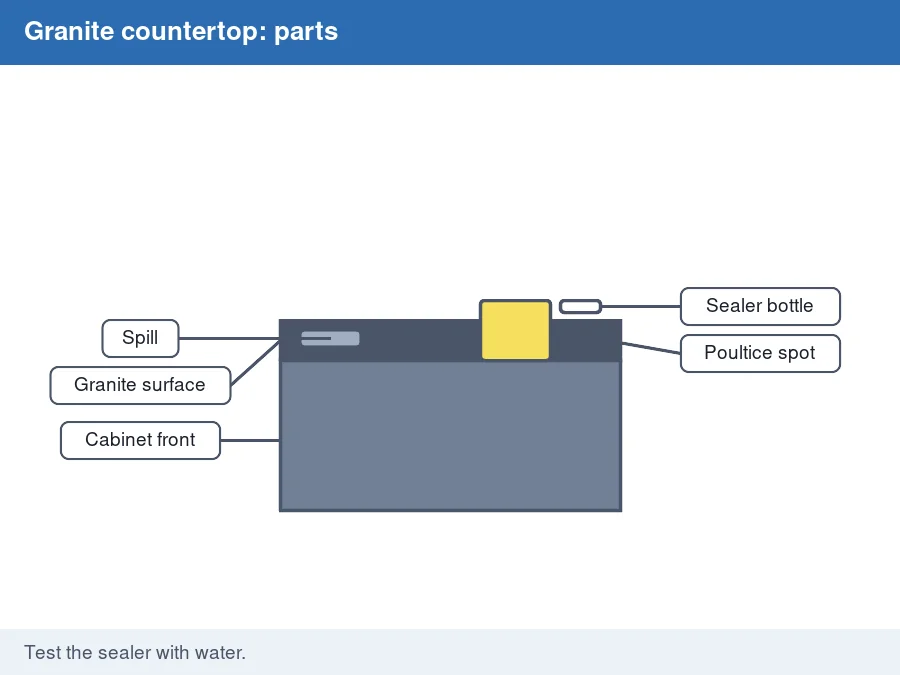
Granite looks indestructible, but the wrong cleaner slowly strips its sealer and leaves it dull and stain-prone. Daily care is simple once you know what granite likes. Here is how to clean granite countertops the right way.
1. Wipe up spills fast
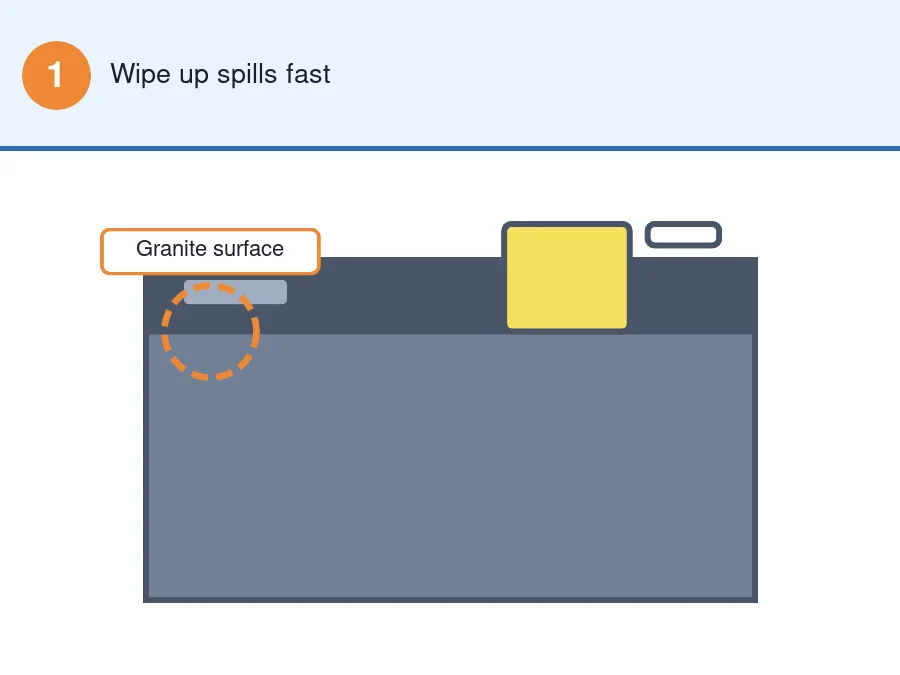
1. Blot spills as they happen, especially oil, wine and juice.
2. Blot, do not wipe, so you do not spread the spill.
3. Acidic liquids can etch the sealer within minutes.
4. Fast cleanup prevents most stains before they start.
2. Clean daily with mild soap
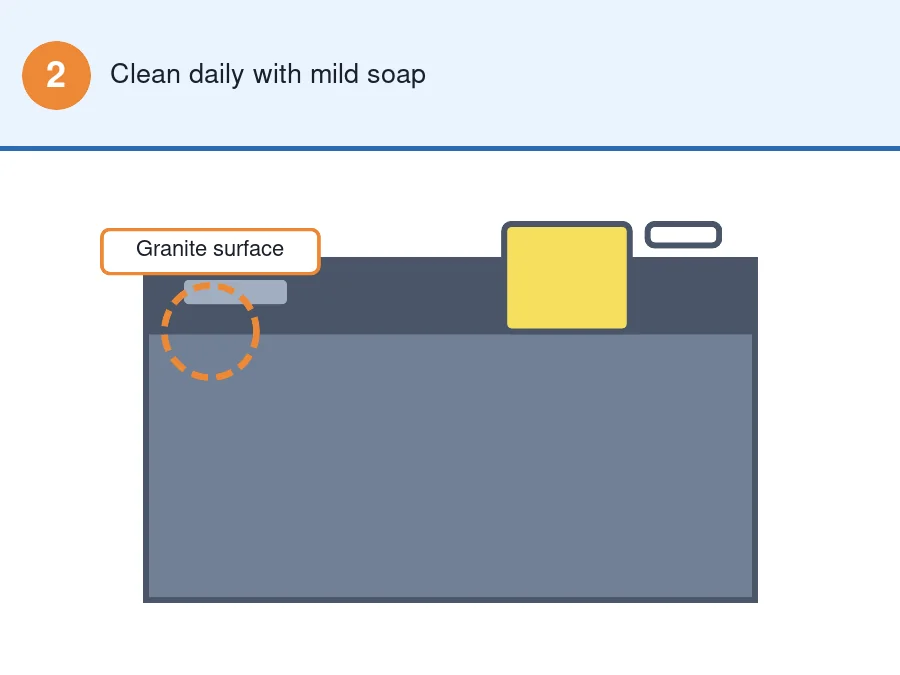
1. Mix a few drops of dish soap into warm water.
2. Wipe with a soft microfiber cloth.
3. Rinse with a clean damp cloth to remove soap film.
4. Harsh cleaners are never needed for daily mess.
3. Dry and buff the surface
1. Dry the counter with a clean microfiber cloth.
2. Buff lightly to bring up the shine.
3. Standing water leaves spots, especially with hard water.
4. Drying is what keeps granite looking polished.
4. Disinfect the safe way
1. Use a 50-50 mix of water and rubbing alcohol in a spray bottle.
2. Mist, wait a few minutes, then wipe dry.
3. Skip bleach and ammonia, which damage the sealer.
4. Alcohol disinfects without harming the stone.
5. Remove stains with a poultice
1. Make a paste of baking soda and water for oil stains, or baking soda and hydrogen peroxide for organic stains.
2. Spread it over the stain and cover with plastic wrap.
3. Leave it overnight, then wipe clean and rinse.
4. Deep stains may need two or three rounds.
6. Know what to avoid
1. Never use vinegar, lemon or other acidic cleaners.
2. Skip abrasive pads and powdered cleansers.
3. Avoid generic bathroom or grout cleaners on granite.
4. Each of these strips sealer or scratches the polish.
7. Test the sealer
1. Sprinkle a few drops of water on the counter.
2. If they bead up, the sealer is working.
3. If the water darkens the stone within minutes, it is time to reseal.
4. Test a few times a year, especially near the sink.
8. Reseal when needed
1. Clean and dry the counter fully first.
2. Apply a granite-safe sealer per the label.
3. Buff off the excess after the dwell time.
4. Most counters need resealing every one to three years.
Common mistakes
- Using vinegar or citrus cleaners that strip the sealer and dull the stone.
- Letting oil and wine sit, which soaks in once the sealer weakens.
- Scrubbing with abrasive pads that scratch the polish.
- Skipping the water-drop test and missing when the sealer has worn away.
FAQ
Can I use vinegar on granite?
No. Vinegar is acidic and breaks down the sealer, eventually dulling the stone and making it stain-prone. Mild dish soap and water is the safe daily cleaner.
How often should granite countertops be sealed?
Typically every one to three years, depending on use and the stone's porosity. The water-drop test tells you: when water stops beading and starts soaking in, reseal.
What disinfectant is safe for granite?
A 50-50 mix of rubbing alcohol and water disinfects safely. Avoid bleach, ammonia and acidic antibacterial cleaners, which all degrade the sealer over time.
How do I get water marks off granite?
Buff dry marks with a microfiber cloth; most disappear with drying. Stubborn mineral deposits respond to a granite-safe stone cleaner. Prevent them by drying the counter after every cleaning.
Related guides
- How to Seal a Granite Countertop and Know When It Needs It: Learn how to seal a granite countertop: test whether it needs sealing, clean and dry it, apply a penetrating...
- How to Remove Stains From Laminate Countertops: Remove stains from laminate countertops with dish soap, a baking soda paste for food and drink marks, and...
- How to Remove Oil Stains From a Concrete Driveway: Learn how to remove oil stains from a concrete driveway: lift the fresh oil, draw out the old stain with an...
- How to Caulk a Kitchen Sink for a Clean Seal: Learn how to caulk a kitchen sink: remove old caulk, clean and dry the gap, tape the edges, apply a neat bead...
- How to Clean a Microwave With Steam: Fast, Easy Method: Learn how to clean a microwave with steam: loosen splatters with vinegar or lemon water, wipe the cavity, fix...
 KitchenHow to Seal a Granite Countertop and Know When It Needs ItLearn how to seal a granite countertop: test whether it needs sealing, clean and dry it, apply a penetrating sealer evenly and cure it before use.
 KitchenHow to Remove Stains From Laminate CountertopsRemove stains from laminate countertops with dish soap, a baking soda paste for food and drink marks, and gentle methods that will not dull the surface.
 Garage and OutdoorsHow to Remove Oil Stains From a Concrete DrivewayLearn how to remove oil stains from a concrete driveway: lift the fresh oil, draw out the old stain with an absorbent and rinse clean.
 KitchenHow to Caulk a Kitchen Sink for a Clean SealLearn how to caulk a kitchen sink: remove old caulk, clean and dry the gap, tape the edges, apply a neat bead and let it cure to stop leaks.
 KitchenHow to Clean a Microwave With Steam: Fast, Easy MethodLearn how to clean a microwave with steam: loosen splatters with vinegar or lemon water, wipe the cavity, fix smells, and care for the turntable and vent.