
How to Remove Stains From Laminate Countertops
Part of: Kitchen
- Difficulty
- Easy
- Time
- 10 to 30 minutes per stain, plus soaking time
- Tools
- Dish soap, warm water, soft cloths, baking soda, a plastic scraper or old credit card, dry towel
- Call a pro if
- The laminate is burned, bubbled or lifting at the seams, since cleaning will not fix heat or water damage to the material itself.
In this guide
- Wear protection
- Chemical safety
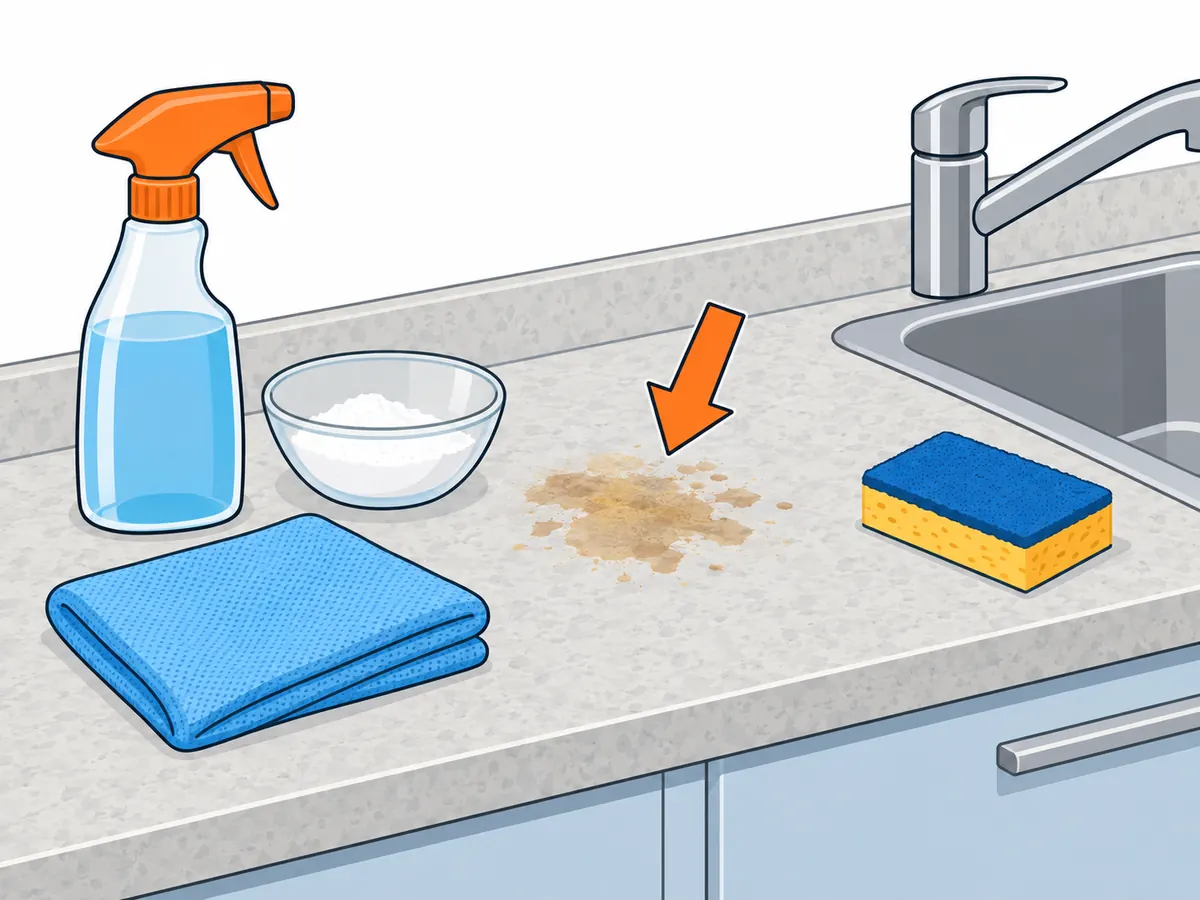
Laminate countertops are tough, but their top layer is a thin sheet, and it does not like harsh scrubbing. Most countertop stains sit on the surface, not in it, so they come out with patience and mild products. How to remove stains from laminate countertops starts mild: a cloth dampened in warm water with a drop of dish soap, rubbed with light pressure.
This guide is part of our wider guide to kitchen cabinets, countertops and storage.
Step 1: Start with dish soap and warm water
Many fresh stains wipe away with a cloth dampened in warm water and a drop of dish soap. Rub with light pressure and rinse. If the mark is fresh coffee, juice or sauce, this may be all you need. Dry the counter afterward, since standing water can seep into seams and swell the particleboard underneath.
Step 2: Lift set stains with a baking soda paste
Stir baking soda with a little water until it forms a thick paste. Spread it over the stain and let it sit for 10 to 15 minutes. For an older mark, lay a damp cloth over the paste and leave it for an hour. Wipe away with a soft cloth and rinse.
Baking soda is a very mild abrasive and a natural deodorizer, so it pulls the stain up without scratching. Coffee, tea, juice and most food stains respond well to this method.
Step 3: Scrape stuck-on residue safely
For dried food, candle wax or anything with a raised edge, hold a plastic scraper or an old credit card at a low angle and push gently under the residue. Never use a metal knife or razor flat on the counter. Once the lump is gone, treat any remaining mark with the paste.
Step 4: Treat specific problem stains
- Rust: Make a paste of baking soda and a little lemon juice, apply it for a few minutes, and wipe. Do not leave acidic pastes sitting for hours.
- Ink or marker: Dab with a cloth barely dampened with rubbing alcohol, then rinse at once. Test a hidden spot first.
- Turmeric, mustard or tomato: These dyes set fast. Use the baking soda paste with longer soaking time, and repeat rather than scrubbing harder.
- Water rings and light haze: A wipe with a cloth dampened in diluted white vinegar, followed by a rinse, usually clears them. Do not let vinegar pool on the surface.
Step 5: Rinse, dry and check your work
Whatever method you used, finish with a clean damp cloth to remove every trace of cleaner, then dry with a towel. Look at the area from a low angle in good light. A faint shadow often means the stain needs one more soak, not more pressure.
What not to do
- No abrasive scouring powders or rough pads. They dull the finish permanently.
- No undiluted bleach left to sit. It can yellow or discolor laminate.
- No hot pans on the counter afterward. Heat blisters laminate, and no cleaner fixes that.
- Do not flood the seams. Water in a seam swells the board below and makes the laminate lift.
Keep stains from setting
Wipe spills when they happen, especially coffee, wine and anything with strong dye. Use cutting boards, since knife scratches hold stains. Trivets protect against heat, which causes damage that looks like a stain but is really a burn.
Related guides
- How to Clean an Oven Naturally With Baking Soda and Vinegar
- How to Fix a Chip in a Laminate Countertop
- How to Fix Peeling Laminate on Cabinets and Doors
- How to Install a Kitchen Island: Freestanding, Secured and With Power
- How to Install Peel and Stick Backsplash in a Kitchen
FAQ
Will baking soda scratch my laminate?
Used as a paste with a soft cloth and light pressure, no. Scrubbing dry baking soda hard with a rough sponge can, so keep it wet and gentle.
What if the stain will not come out after several tries?
The mark may not be a stain at all. Faded or bleached spots, heat damage and worn-through areas look like stains but are changes to the material. A seam repair specialist can assess whether a section can be repaired.
Can I use a magic eraser on laminate?
It is a mild abrasive, so it can dull the finish. Test in a hidden corner and use very light pressure if you try it.
More from this topic
- How to Remove a Burn Mark From a Countertop: Learn how to remove a burn mark from a countertop by material: laminate, solid surface, butcher block and...
- How to Clean Granite Countertops: Learn how to clean granite countertops: the safe daily routine, what to avoid, stain removal, and when to...
- How to Clean Oven Door Glass, Inside and Between the Panes: Learn how to clean oven door glass: use baking soda paste on the inside, wipe streaks away, and safely reach...
- How to Fix a Chip in a Laminate Countertop: Fix a chip in a laminate countertop with a color-matched repair paste or filler, leveled flush and sealed, so...
- How to Remove a Stuck Pot From a Glass Top Stove: Learn how to remove a stuck pot from a glass top stove without cracking the surface: cool it fully, soften...
 KitchenHow to Remove a Burn Mark From a CountertopLearn how to remove a burn mark from a countertop by material: laminate, solid surface, butcher block and quartz each need a different method.
 KitchenHow to Clean Granite CountertopsLearn how to clean granite countertops: the safe daily routine, what to avoid, stain removal, and when to reseal.
 KitchenHow to Clean Oven Door Glass, Inside and Between the PanesLearn how to clean oven door glass: use baking soda paste on the inside, wipe streaks away, and safely reach grime between the panes if your door allows it.
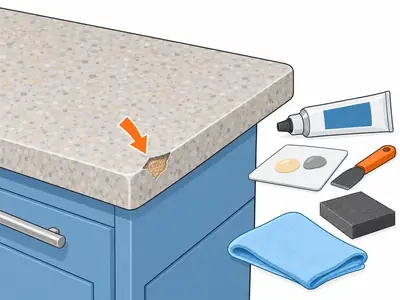 KitchenHow to Fix a Chip in a Laminate CountertopFix a chip in a laminate countertop with a color-matched repair paste or filler, leveled flush and sealed, so the damage disappears into the pattern.
 KitchenHow to Remove a Stuck Pot From a Glass Top StoveLearn how to remove a stuck pot from a glass top stove without cracking the surface: cool it fully, soften what fused it, and lift it straight up.