
How to Get Rid of Moss in a Lawn
Part of: Outdoors and garage
- Difficulty
- Moderate
- Time
- 2 to 4 hours plus follow-up
- Tools
- Stiff rake or dethatching rake, garden fork or core aerator, soil test kit, grass seed for shade or your climate, compost, spreader, hose, wheelbarrow, gloves
- Call a pro if
- Moss covers most of the lawn, water pools after every rain, or the soil stays soggy and a drainage fix may be needed.
In this guide
- Wear protection
If you want to get rid of moss in a lawn, start by asking why it is there. Moss is not a weed that attacks grass. It moves into spots where grass is already struggling. Killing the moss without changing the conditions only gives you a short break, because it comes back. This guide covers both the cleanup and the fix.
Why moss grows in a lawn
Moss likes places that grass dislikes. The usual causes are:
- Too much shade. Under trees and along the north side of a house, grass gets too little light.
- Soil stays wet. Poor drainage and heavy clay hold water at the surface.
- Compacted ground. Packed soil keeps roots short and weak.
- Acidic or poor soil. Low fertility makes thin grass.
- Mowing too short. Scalped grass has little strength to hold its ground.
Look at where the moss is thickest. The pattern points to the cause.
Step by step
1. Confirm it is moss. Moss is low, soft, and green, with no blades like grass. It does not have a root system like grass. It pulls up in a mat.
2. Test the soil. Use a kit from a garden center or ask a local extension office. A test shows pH and what the soil lacks. Add lime only if the test says the soil is too acidic.
3. Rake it out. Use a stiff rake or a dethatching rake and pull up the moss when the soil is damp. Work in rows. Bag it or compost it.
4. Loosen compacted soil. Use a garden fork or a core aerator. See how to aerate a lawn.
5. Let in light and air. Prune low branches and thin dense shrubs. See how to prune overgrown shrubs.
6. Improve drainage. Fill low spots with a mix of topsoil and compost. Make sure downspouts and slopes send water away from the lawn.
7. Reseed bare spots. Choose a seed blend made for shade or for your climate. Spread it, rake lightly, and keep the soil damp. See how to overseed a lawn.
8. Feed the new grass. Use a fertilizer made for your lawn and follow the label.
Should you use a moss killer?
A moss killer can turn moss black and make it easier to rake. It does not fix the cause. If you use one, follow the label for timing, rain, and safety, and still do the steps above. Many people skip chemicals and rely on raking and better growing conditions. Whatever you choose, do not pour household chemicals on the lawn.
Keep moss from returning
- Mow at a higher setting in shade. Taller grass makes more food from weak light. See how to mow a lawn correctly.
- Water deeply and less often, in the morning. See how to water a lawn properly.
- Aerate once a year if the soil is hard.
- Rake leaves in fall so they do not smother grass and hold moisture. See how to clean up fall leaves.
- Think about a different plan for deep shade, like ground cover, mulch, or a patio.
When moss wins
In deep shade or a soggy yard, grass may not be the right plant. Moss can look nice and needs no mowing. If you decide to keep it, simply remove it from the areas where you want grass, and edge those areas.
FAQ
Does moss mean my soil is acidic?
Sometimes, but not always. Shade, wetness, and compaction are just as common. Test the soil before adding lime.
Will moss kill my grass?
Moss does not attack grass. It takes over where grass is already thin.
Can I just rake it and leave?
You can, but it will likely return if the cause stays.
How long until grass fills in?
New grass can take several weeks to a full season, depending on weather and seed.
Related guides
- How to Aerate a Lawn: When, Why, and How to Do It Yourself: Learn how to aerate a lawn to loosen compacted soil: pick the best time, choose a core aerator, make the...
- How to Fix Bare Patches in a Lawn: Find the Cause, Reseed: Learn how to fix bare patches in a lawn by finding the cause, loosening the soil, adding seed and cover, and...
- How to Level a Bumpy Lawn With Topdressing and Simple Tools: Learn how to level a bumpy lawn: find the low and high spots, topdress with a sand and compost mix, work it...
- How to Overseed a Lawn for Thicker Grass and Fewer Weeds: Learn how to overseed a lawn: pick the best time, prepare the soil, spread the right seed, keep it damp, and...
- Sprinkler Head Not Popping Up: How to Fix It: Sprinkler head not popping up? Clean the head, clear the filter and check the pressure. Steps, tools, and...
 Garage and OutdoorsHow to Aerate a Lawn: When, Why, and How to Do It YourselfLearn how to aerate a lawn to loosen compacted soil: pick the best time, choose a core aerator, make the passes, and follow up with seed and water.
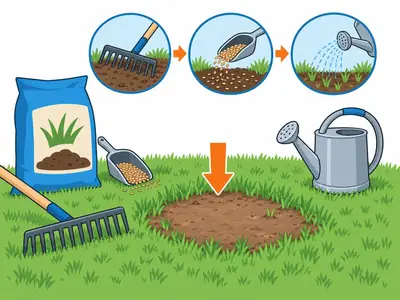 Garage and OutdoorsHow to Fix Bare Patches in a Lawn: Find the Cause, ReseedLearn how to fix bare patches in a lawn by finding the cause, loosening the soil, adding seed and cover, and watering so the grass fills in evenly.
 Garage and OutdoorsHow to Level a Bumpy Lawn With Topdressing and Simple ToolsLearn how to level a bumpy lawn: find the low and high spots, topdress with a sand and compost mix, work it in, and reseed so the surface mows smooth.
 Garage and OutdoorsHow to Overseed a Lawn for Thicker Grass and Fewer WeedsLearn how to overseed a lawn: pick the best time, prepare the soil, spread the right seed, keep it damp, and mow gently so thin grass fills in.
 Garage and OutdoorsSprinkler Head Not Popping Up: How to Fix ItSprinkler head not popping up? Clean the head, clear the filter and check the pressure. Steps, tools, and safety tips before you dig near lines.