
How to Fix Bare Patches in a Lawn: Find the Cause, Reseed
Part of: Outdoors and garage
- Difficulty
- Easy
- Time
- 1 to 2 hours plus follow up watering
- Tools
- Garden rake, hand trowel, grass seed, compost or topsoil, straw or seed cover, hose with spray nozzle, gloves, kneeling pad
- Call a pro if
- Large areas of the lawn are dying, you see signs of disease or heavy grub damage, or the soil stays swampy or full of buried debris.
In this guide
- Wear protection
- Chemical safety
A bare patch in an otherwise green lawn bugs everybody. It also invites weeds to move in. The good news is that small bare spots are among the easiest lawn problems to repair. Here is how to fix bare patches in a lawn so they stay filled in.
Find the cause first
If you reseed without fixing what killed the grass, the patch will come back. Look at the spot and ask what happened.
- Pet urine. Dead spots with a green ring around them are common.
- Shade. Grass thins under trees or near a fence.
- Compaction. Foot traffic packs the soil so roots cannot grow.
- Dull mower blades or scalping. The grass is cut too short on high spots.
- Poor drainage. Puddles and wet soil drown the roots.
- Pests or disease. Pull gently at the grass. If it lifts like a mat, grubs may be eating the roots. Check with a local garden center or extension office.
- Spills. Fuel, salt, or too much fertilizer can burn the lawn.
Pick the right time
Early fall is the best time in many regions, because soil is warm and the air is cool. Spring is the second choice. Avoid the middle of summer heat and any time the ground is frozen.
Step by step
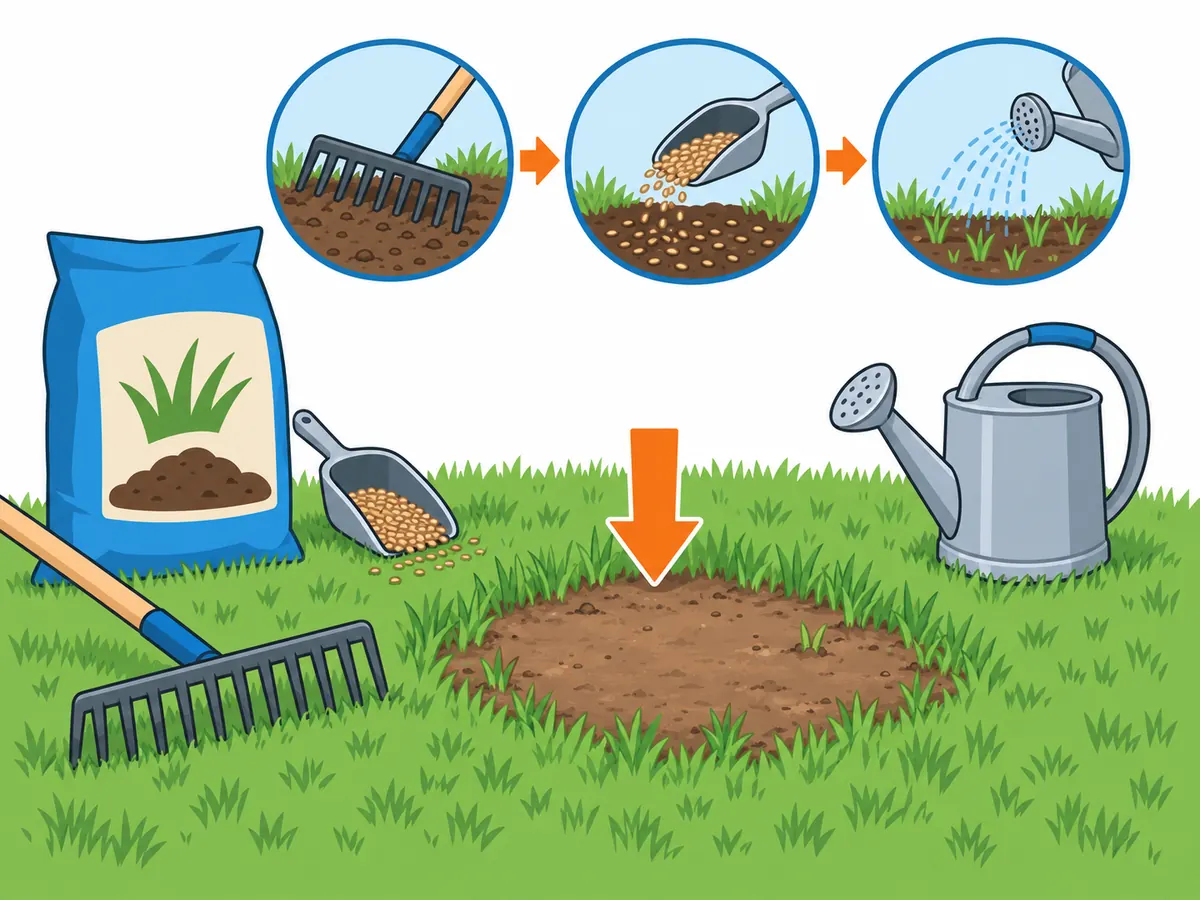
1. Remove the dead grass. Rake out the dead material and loosen the top inch or two of soil with a rake or trowel.
2. Fix the soil. Mix in a little compost or topsoil. If the area is compacted, work the soil deeper. Level the spot so water does not pool.
3. Choose seed. Pick seed that matches your grass type and the amount of sun. A shade mix works for shady spots.
4. Spread the seed. Follow the rate on the package. More is not better. Press the seed lightly into the soil with the back of the rake.
5. Cover it. Add a thin layer of straw or a seed cover so birds and wind do not take the seed and the soil does not dry out. Do not bury the seed deeply.
6. Water gently. Keep the surface damp, not soaked. Water a couple of times a day for a few weeks, with a light spray so the seed does not wash away.
7. Stay off the area until the new grass is tall enough to mow. Mark it with stakes or string.
8. Mow at a higher setting for the first cuts and make sure the blade is sharp.
Fix common problems
- Urine spots: water the area well after your pet goes. Rinse and reseed.
- Shade: use shade tolerant seed or switch to a ground cover or mulch.
- Puddles: improve grading or add a drain. See our guide on downspout drainage.
- Compaction: use a garden fork or a rental aerator on larger areas.
Keep it filled in
Water deeply but not often once the grass is up. Feed it in fall. Keep mower blades sharp. Do not mow the grass too short. For more fall steps, read how to prepare your lawn for winter. If weeds in cracks are your main concern, see how to remove weeds from driveway cracks.
FAQ
How long does grass seed take to sprout?
Often one to three weeks, depending on seed type and temperature. Be patient and keep it damp.
Can I just throw seed on the bare spot?
It rarely works. Seed needs contact with loose soil and steady moisture.
Should I use a seed and fertilizer mix?
It can help, but check the label, since some products can burn new seedlings.
Why did my new grass die?
Common reasons are too little water, too much heat, or birds eating the seed.
Related guides
- How to Fix Dog Urine Spots on a Lawn and Prevent New Ones: Learn how to fix dog urine spots on a lawn: flush the area, rake out dead grass, reseed, and use simple...
- How to Grow Grass in Shade Under Trees and Along Fences: Learn how to grow grass in shade: choose shade tolerant seed, cut tree competition, mow high, water smartly,...
- How to Overseed a Lawn for Thicker Grass and Fewer Weeds: Learn how to overseed a lawn: pick the best time, prepare the soil, spread the right seed, keep it damp, and...
- How to Fix a Sprinkler Head That Won't Spray Evenly: Learn how to fix a sprinkler head that won't spray evenly: clear the filter and nozzle, check the pressure...
- How to Get Rid of Lawn Grubs: Signs, Checking, and Treatment: Learn how to get rid of lawn grubs: confirm they are the cause, count them in a soil check, time treatment,...
 Garage and OutdoorsHow to Fix Dog Urine Spots on a Lawn and Prevent New OnesLearn how to fix dog urine spots on a lawn: flush the area, rake out dead grass, reseed, and use simple habits to prevent yellow patches from coming back.
 Garage and OutdoorsHow to Grow Grass in Shade Under Trees and Along FencesLearn how to grow grass in shade: choose shade tolerant seed, cut tree competition, mow high, water smartly, and know when ground cover is the better plan.
 Garage and OutdoorsHow to Overseed a Lawn for Thicker Grass and Fewer WeedsLearn how to overseed a lawn: pick the best time, prepare the soil, spread the right seed, keep it damp, and mow gently so thin grass fills in.
 Garage and OutdoorsHow to Fix a Sprinkler Head That Won't Spray EvenlyLearn how to fix a sprinkler head that won't spray evenly: clear the filter and nozzle, check the pressure and replace a damaged head.
 Garage and OutdoorsHow to Get Rid of Lawn Grubs: Signs, Checking, and TreatmentLearn how to get rid of lawn grubs: confirm they are the cause, count them in a soil check, time treatment, repair damaged turf, and lower the risk next year.