
How to Level a Shed
Part of: Outdoors and garage

- Difficulty
- Medium
- Time
- Half a day to a full day
- Tools
- A long level, a car jack or bottle jack, shims, pavers or pressure-treated blocks, a shovel and a helper
- Call a pro if
- The shed is large or heavily loaded, the base has rotted through, or the structure has twisted enough to damage walls or roof.
In this guide
A shed that sits out of level gets doors that stick, a floor that pools water and a frame that slowly twists itself apart. Leveling it is very doable with a jack and patience. How to level a shed starts by finding how far it is off, laying a long level across the floor in both directions.
1. Find out how far it is off
1. Lay a long level across the floor in both directions.
2. Check the door opening for square by opening and closing the door.
3. Note which corners sit low.
4. A sketch with measurements guides every later move.
2. Empty the shed
1. Remove everything inside, or at least the heavy items.
2. Every pound out makes lifting safer and easier.
3. Take out shelving that could shift or rack.
4. An empty shed also reveals floor damage the stuff was hiding.
3. Inspect the base
1. Check skids, blocks or pavers for rot and sinking.
2. Look for soil washout under the low corners.
3. Decide whether to shim, replace blocks or rebuild sections.
4. Leveling over a rotted base just postpones the real fix.
4. Jack up the low side
1. Dig small access holes at the low corners if needed.
2. Lift slowly with a car jack or bottle jack under the frame.
3. Raise only a little at a time, working corner to corner.
4. Lifting too far at once racks the frame.
5. Support before you work
1. Slide solid blocks under the frame once it is near level.
2. Never rely on the jack alone.
3. Lower the shed gently onto the supports.
4. Blocks carry the load while you build the permanent fix.
6. Shim or rebuild the base
1. Add pressure-treated shims or pavers under the low points.
2. Pack gravel under sunken areas and compact it.
3. Replace any rotted skids or blocks entirely.
4. Build each support point until the level reads true.
7. Check level both ways
1. Set the long level front to back, then side to side.
2. Recheck the door swing and any windows.
3. Adjust shims a little at a time until everything sits right.
4. Small corrections are normal; keep at it.
8. Settle and recheck
1. Load the shed back in over a day or two.
2. Recheck level after a week and after the next heavy rain.
3. Add shims anywhere the soil settles.
4. Re-anchor the shed if you moved or lifted it significantly.
Common mistakes
- Jacking one corner too far at once and racking the whole frame.
- Working under a shed supported only by a jack.
- Shimming with soft or rot-prone wood that fails within a season.
- Ignoring the drainage that let the soil wash out in the first place.
Related guides
- How to Level a Bumpy Lawn With Topdressing and Simple Tools
- How to Install a Gutter on a Shed
- How to Build a Concrete Pad for a Shed
- How to Install a Gravel Pad Under a Shed
- How to Paint a Shed
- How to Organize a Shed
FAQ
Why does a shed go out of level?
Usually the ground: soil settles, washes out in rain, or freezes and heaves. Rot in wood skids or blocks is the other common cause, especially where the base sits in damp soil.
Can I level a shed without emptying it?
You can lift with contents inside if they are light and secured, but it is harder and riskier. Removing heavy items makes jacking safer and keeps stored things from shifting mid-lift.
What should I use to shim a shed?
Pressure-treated wood shims, concrete pavers or composite shims hold up best. Avoid soft wood scraps, which rot quickly in ground contact and drop the corner again.
How often should I check a shed's level?
Once a year, ideally in spring after freeze-thaw season, and after any unusually wet period. Catching a small dip early is a ten-minute shim job instead of a full re-level.
More from this topic
- How to Level a Bumpy Lawn With Topdressing and Simple Tools: Learn how to level a bumpy lawn: find the low and high spots, topdress with a sand and compost mix, work it...
- Fix Uneven Patio Pavers: Lift and Reset Sunken Stones: Patio pavers sunken, tilted or tripping you? Fix uneven patio pavers by lifting and resetting them with fresh...
- How to Anchor a Shed to the Ground: Learn how to anchor a shed: choose the right anchors for your base, tie the frame down, and protect it from...
- Fix Sagging Gutter: Hangers, Supports and Slope: Gutter pulling away or holding water? Fix sagging gutter problems by resetting hangers, adding supports and...
- How to Fix a Sinking Patio: Learn how to fix a sinking patio: find why the slabs dropped, choose lifting or rebuilding, correct the base...
 Garage and OutdoorsHow to Level a Bumpy Lawn With Topdressing and Simple ToolsLearn how to level a bumpy lawn: find the low and high spots, topdress with a sand and compost mix, work it in, and reseed so the surface mows smooth.
 Garage and OutdoorsFix Uneven Patio Pavers: Lift and Reset Sunken StonesPatio pavers sunken, tilted or tripping you? Fix uneven patio pavers by lifting and resetting them with fresh sand and a level base.
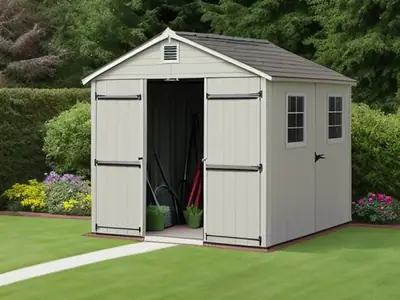 Garage and OutdoorsHow to Anchor a Shed to the GroundLearn how to anchor a shed: choose the right anchors for your base, tie the frame down, and protect it from wind.
 Garage and OutdoorsFix Sagging Gutter: Hangers, Supports and SlopeGutter pulling away or holding water? Fix sagging gutter problems by resetting hangers, adding supports and restoring the slope to the downspout.
 Garage and OutdoorsHow to Fix a Sinking PatioLearn how to fix a sinking patio: find why the slabs dropped, choose lifting or rebuilding, correct the base and keep water from washing it out again.