
How to Repair a Cracked Driveway Apron
Part of: Outdoors and garage
- Difficulty
- Moderate
- Time
- 3 to 6 hours plus cure time
- Tools
- Stiff brush, hammer and chisel, crack filler, concrete patch, trowel, bonding agent, hose, bucket, safety glasses
- Call a pro if
- The apron has dropped away from the street or the crack runs through the whole slab, since the apron may need replacing.
In this guide
- Wear protection
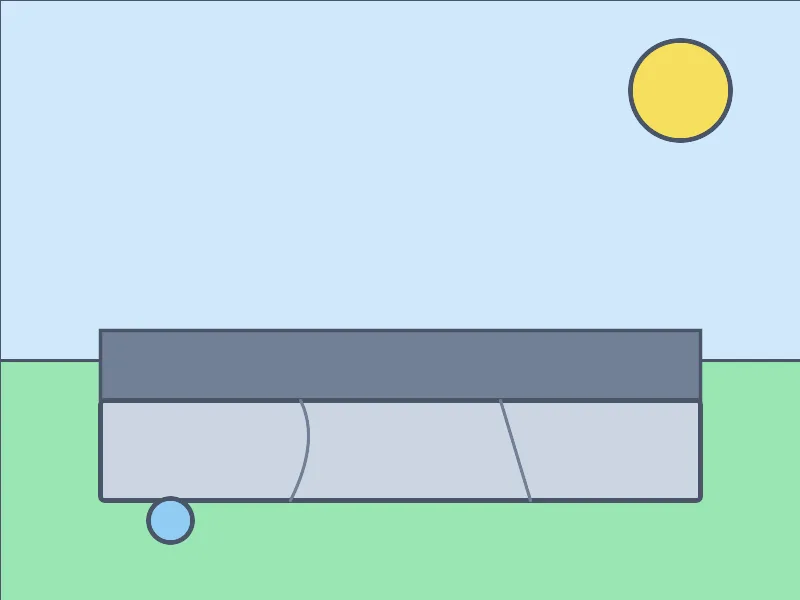
The apron is the short sloped slab where the driveway meets the street, and it takes a harder life than the rest of the drive. It is the first thing a plow blade reaches, the last place street water sits, and the slab that everything turning into the driveway loads. That is why an apron cracks years before the drive behind it does. Before you fill anything, work out how to repair a cracked driveway apron, or whether to repair it at all.
What the apron does that the driveway does not
It changes level, it meets a public road, and it usually sits at the low point of the property. Three things follow. The joint at the street is a permanent seam where water gets in. The slope sends street runoff across the surface instead of off it. And the slab is often thinner than the driveway because it was poured as an afterthought when the curb went in. Most apron failures trace back to one of those.
Read the damage before buying filler
Map the crack before you touch it. Note whether it is a hairline that has never moved or an open split, whether one side sits lower than the other, whether the crack runs along the joint at the street, and whether the edges have scaled or crumbled. Take a photograph with something for scale. A hairline that has not moved is a sealing job. A split with a step in it is a support problem, and no filler fixes support.
The street joint is usually the cause
Water runs down the face of the joint, the soil under the apron edge washes out, and the slab loses the support that was holding it level. Then it cracks, or drops, or both. Look into the joint with a flashlight after rain. If you can see a void under the edge, filling the surface crack only hides the problem for a season. The void has to be packed before the surface is sealed, and a void that keeps reopening means water is still getting in from somewhere you have not found.
Repair or replace
Patching makes sense when the slab is sound, the crack is narrow to moderate, and both sides are still at the same level. Replacement is the honest answer when the apron has dropped away from the street, when the crack runs the full width, when a corner is broken through, or when the slab was poured thin and is breaking up in several places. A patch on a failing apron is money spent twice.
Who is responsible
The apron often sits in the strip between the sidewalk and the curb, which may be public right of way. Responsibility varies by city, and work in the right of way usually needs a permit even when the homeowner pays. Ask the city before you order concrete, because the answer changes both the cost and who is allowed to do the work.
Keep the water out
Whatever repair you make, the water that caused it is still there. Clear the gutter and the storm inlet near the apron so street runoff has somewhere to go. Check that the driveway behind the apron falls away from the garage. Use sand for winter grip and keep deicing salt off the apron edge, since salt scales the surface and speeds up the next crack. Fill new cracks in fall, before the first freeze drives water into them.
Related guides
- How to Seal a Concrete Driveway: Learn how to seal a concrete driveway: test for cure and moisture, clean and patch first, apply sealer in...
- How to Fix a Pothole in a Driveway: Learn how to fix a pothole in a driveway with a clean square edge, proper base and the right patch material...
- How to Fix a Heaved Sidewalk Slab: Learn how to fix a heaved sidewalk slab: find what pushed it up, grind or mudjack the lift, reset the panel...
- How to Repair a Concrete Driveway Crack: How to repair a concrete driveway crack with a wire brush, backer rod and flexible filler. Steps, tools, and...
- How to Repair a Cracked Paver: Learn how to repair a cracked paver: lift the broken block, fix the base under it and set a matching...
 Garage and OutdoorsHow to Seal a Concrete DrivewayLearn how to seal a concrete driveway: test for cure and moisture, clean and patch first, apply sealer in even coats and know how often to reseal.
 ExteriorHow to Fix a Pothole in a DrivewayLearn how to fix a pothole in a driveway with a clean square edge, proper base and the right patch material for asphalt or concrete.
 Garage and OutdoorsHow to Fix a Heaved Sidewalk SlabLearn how to fix a heaved sidewalk slab: find what pushed it up, grind or mudjack the lift, reset the panel and stop the water and roots that caused it.
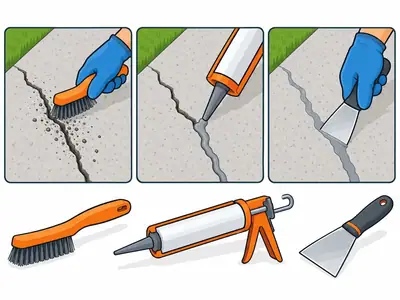 Garage and OutdoorsHow to Repair a Concrete Driveway CrackHow to repair a concrete driveway crack with a wire brush, backer rod and flexible filler. Steps, tools, and when a crack needs a pro.
 Garage and OutdoorsHow to Repair a Cracked PaverLearn how to repair a cracked paver: lift the broken block, fix the base under it and set a matching replacement.