
How to Replace a Garbage Disposal Splash Guard
Part of: Appliances
- Difficulty
- Easy
- Time
- 10 to 20 minutes
- Tools
- Flashlight, tongs or pliers, new splash guard, scrub brush, dish soap
- Call a pro if
- the sink flange is loose or leaks, or the disposal is not mounted firmly
In this guide
- Power off first
- Wear protection
A garbage disposal splash guard wears out and sheds rubber, and replacing it is quick. The rubber splash guard sits in the sink opening above the garbage disposal. It keeps food bits and water from flying back up at you and helps block noise. Over time it tears, hardens or holds odors that cleaning will not remove. Replacing it takes about ten minutes and does not need any plumbing work. This guide shows the safe way to do it.
This guide is part of our wider guide to clogs and slow drains.
Safety first
The disposal has sharp parts and a strong motor. Before you reach into the sink opening, turn off the power at the breaker. Do not rely on the wall switch alone. If the unit plugs in under the sink, unplug it. Keep your hands out of the grinding area. Use tongs if you need to pull something out.
Step by step
1. Turn off the power at the breaker panel, or unplug the disposal.
2. Clear the sink and look into the opening with a flashlight.
3. Remove the old splash guard. Some are a single piece that pulls out. Others have a few tabs. Grip the edge with your fingers and lift it straight up. Fold it in half if it will not come out.
4. Clean the sink flange where the guard sat. Use a brush and dish soap to remove grime.
5. Check the flange for cracks or looseness.
6. Fold the new guard and push it into the opening. Let it unfold and sit in the groove of the flange.
7. Press the edge down all the way around so it sits flat.
8. Turn the power back on.
9. Run cold water and switch on the disposal for a few seconds. Check that the guard stays in place and that water does not splash.
Pick the right size
Splash guards come in different sizes and styles. Measure the opening of the flange or take the old guard with you. Some disposals have a guard that is part of the stopper. Others use a separate baffle with fingers. Choose a style that fits, with a snug edge.
Signs that point to each cause
A guard with a bad smell may only need cleaning. A guard with tears or missing fingers needs replacing. A guard that pops out when the disposal runs may be too small or may have a damaged groove. Splashing food bits can come from overfilling the disposal. A grinding noise unrelated to the guard may be a spoon or a bone in the chamber. See Garbage disposal hums but does not spin and Garbage disposal smells: how to clean.
Cleaning a guard instead
If the guard is in good shape, take it out and scrub the underside with a brush and warm soapy water. Rub the folds well, since food collects there. Soak it in a mix of warm water and a little white vinegar for a few minutes, then rinse. Put it back in and run the disposal with cold water for 15 seconds.
Prevention
Clean the guard weekly. Use cold water when you run the disposal. Grind small amounts at a time. Avoid fibrous items like celery, and avoid grease, bones and large pits. Run the disposal with a few ice cubes now and then to scrape the sides. Rinse the guard after greasy meals.
Other parts that affect splash
If water splashes even with a new guard, check the sink drain stopper and the water flow. Too much water pressure can cause spray. Put the stopper in during heavy grinding. Make sure the disposal is not overloaded. A worn flange can also let water bypass the guard. See How to replace a garbage disposal if the disposal is old or failing, and How to fix a clogged garbage disposal.
Safety reminder
Never put your hand in the disposal, even when it is off, unless the power is off at the breaker or unplugged. Do not use a chemical drain cleaner in the disposal. Keep children away from the sink while you work. Dry your hands before you touch any switch or plug.
Quick fit check
After you set the guard, run your finger around the edge. There should be no gap between the guard and the flange. Fill the sink partway with water, pull the stopper and run the disposal. Watch for any food or water coming up around the edge. If water leaks at the flange from below, see the notes on the sink flange and call a pro if needed.
Related guides
- How to Install a Garbage Disposal Under a Kitchen Sink
- Replace Kitchen Sink Trap: Step by Step
- Garbage Disposal Leaking From the Bottom: What to Do
- Dishwasher Not Draining: How to Find and Fix the Clog
FAQ
How often should I replace the splash guard? When it tears, hardens or smells even after cleaning. Often every few years.
Can I run the disposal without a guard? It is not safe, and it splashes. Use a guard.
Does the guard fit every disposal? No. Match the size and style.
Why does it smell even after I clean it? The rubber may have absorbed odors. Replace it.
More from this topic
- Garbage Disposal Smells: How to Clean It and Keep It Fresh: Garbage disposal smells bad? Clean the grinding chamber, splash guard and drain with ice, salt, baking soda...
- How to Replace a Garbage Disposal: Learn how to replace a garbage disposal safely. Cut power, disconnect the drain and wiring, mount the new...
- Garbage Disposal Hums but Does Not Spin: How to Free a Jam: Garbage disposal hums but does not spin? It is usually jammed. Learn how to cut power, free the blades with a...
- How to Replace a Kitchen Sink Strainer Basket: Learn how to replace a kitchen sink strainer basket when it leaks under the sink. Remove the lock nut, clean...
- Garbage Disposal Backs Up Into the Other Sink: Fixes: When a garbage disposal backs up into the other sink, the clog is past the disposal in the shared drain....
 KitchenGarbage Disposal Smells: How to Clean It and Keep It FreshGarbage disposal smells bad? Clean the grinding chamber, splash guard and drain with ice, salt, baking soda and vinegar. Simple routine to remove odor for good.
 KitchenHow to Replace a Garbage DisposalLearn how to replace a garbage disposal safely. Cut power, disconnect the drain and wiring, mount the new unit and test it for leaks. Tools and tips included.
 KitchenGarbage Disposal Hums but Does Not Spin: How to Free a JamGarbage disposal hums but does not spin? It is usually jammed. Learn how to cut power, free the blades with a hex key and reset the unit safely.
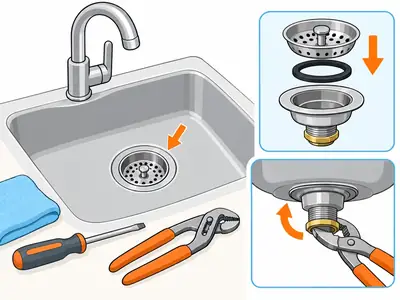 KitchenHow to Replace a Kitchen Sink Strainer BasketLearn how to replace a kitchen sink strainer basket when it leaks under the sink. Remove the lock nut, clean the sink, set the new strainer with putty and test.
 KitchenGarbage Disposal Backs Up Into the Other Sink: FixesWhen a garbage disposal backs up into the other sink, the clog is past the disposal in the shared drain. Clear it in this order, safely.