
Garbage Disposal Smells: How to Clean It and Keep It Fresh
Part of: Appliances · Also in: The Complete Guide to Kitchen and Appliance Care at Home
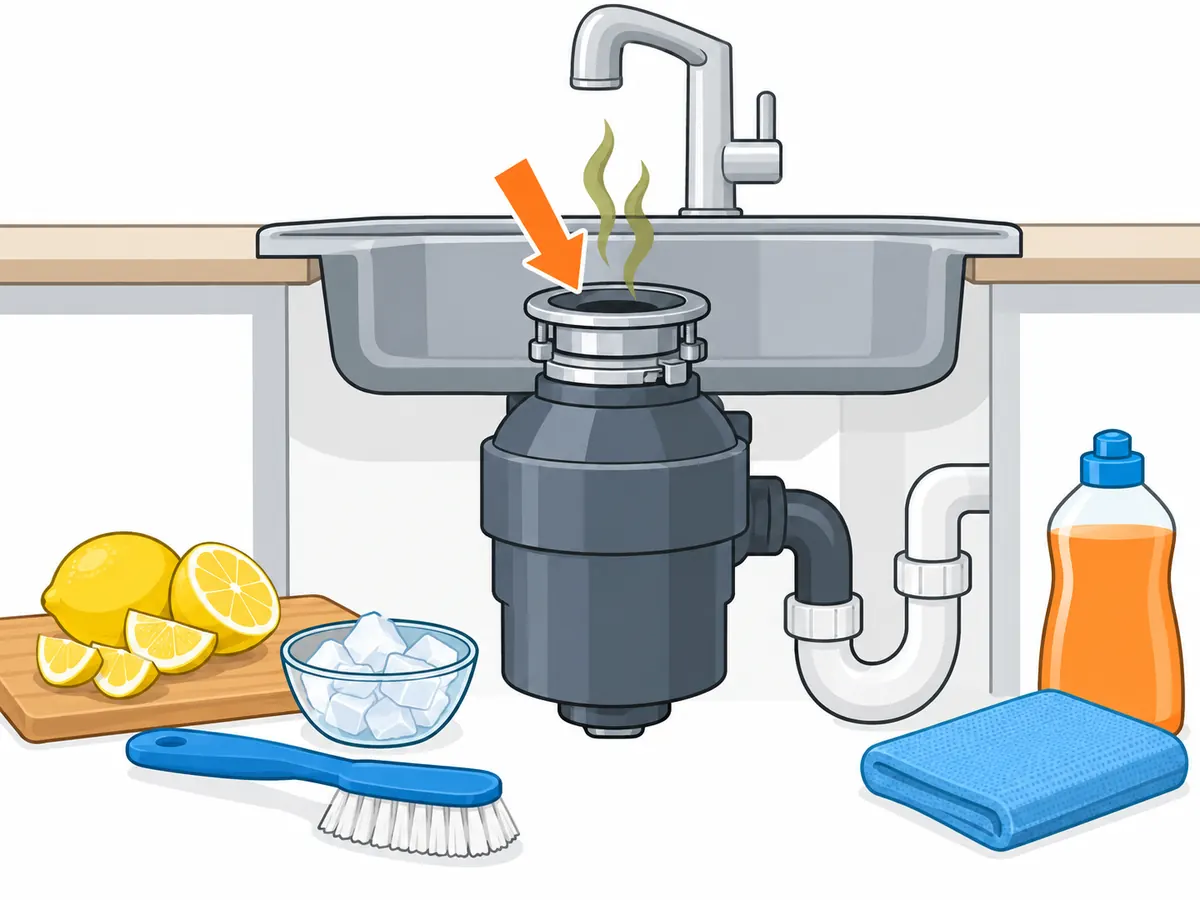
- Difficulty
- Easy
- Time
- 15 to 30 minutes
- Tools
- Dish soap, old brush, ice cubes, coarse salt, baking soda, white vinegar, lemon or orange peel, flashlight, tongs
- Call a pro if
- the smell comes from the drain pipes, the disposal leaks or the sink backs up
In this guide
- Power off first
- Wear protection
- Chemical safety
If your kitchen sink smells like rotten food, the disposal is often the cause. Food bits stick to the walls, the splash guard and the drain pipe and rot. Garbage disposal smells are easy to fix with a few household items and 15 minutes. This guide shows the steps and how to prevent the smell from coming back.
This guide is part of our wider guide to clogs and slow drains.
Step by step: clean the disposal
1. Turn off the disposal at the wall switch. For extra safety, turn off the breaker or unplug the unit if it is plugged in under the sink.
2. Look inside with a flashlight. Never put your hand into the disposal. Use tongs to remove any visible food, bones or other objects.
3. Clean the splash guard. This rubber flap at the drain is where much of the smell hides. Pull it back and scrub the underside with a brush and dish soap.
4. Pour in baking soda. Add about half a cup, then pour in a cup of white vinegar. It will fizz. Let it sit for 10 minutes.
5. Flush with hot water. Run hot water from the faucet for a minute. Hot, not boiling, is best for plastic pipes.
6. Grind ice and salt. Add two cups of ice cubes and a half cup of coarse salt. Turn on the cold water and run the disposal until the ice is gone. This scrubs the chamber walls.
7. Freshen with citrus. Drop in a few lemon or orange peels and run the disposal with cold water.
8. Run cold water for another 30 seconds.
Signs that point to each cause
A rotten smell that appears only when you run the disposal comes from food stuck in the chamber or under the splash guard. A smell that comes even when the disposal is off may come from the drain trap or the pipes. A sewer smell can mean a dry trap or a vent problem. A smell with slow draining means a partial clog. Check the dishwasher too, as its drain connects to the disposal. See Dishwasher smells: how to get rid of the odor.
If the smell stays
1. Clean the drain pipe. Remove the stopper and clean the underside of the sink opening.
2. Check the trap. See How to fix a leaking P-trap under the sink for the parts. Put a bucket under the trap, remove it and clean out the gunk.
3. Check the dishwasher hose. A loop in the hose should rise high before it reaches the disposal, to stop dirty water from flowing back.
4. Check for a clog. See Kitchen sink clogged, double basin: how to fix.
What not to put in the disposal
Skip grease, coffee grounds, eggshells in large amounts, pasta and rice, fibrous vegetables like celery and corn husks, bones and fruit pits. Grease cools and coats the pipes and the chamber. Starchy foods swell and form a paste. Run cold water before, during and for 15 seconds after each use.
Prevention
Clean the disposal once a week with ice, salt and citrus. Scrape plates into the trash first. Run cold water when you use the disposal. Do not let food sit in the sink. Clean the splash guard once a month. If your disposal hums and does not turn, see Garbage disposal hums but does not spin.
A weekly routine that works
Pick a day, for example Sunday evening. Rinse the disposal with cold water after the last use of the day. Once a week, run a handful of ice and salt, then a few citrus peels. Once a month, pull back the splash guard and scrub it. Once every few months, clean under the sink and check the trap for slow leaks and drips. A few minutes each week prevents most smells and keeps the blades sharp.
Why smells come back
The most common reason is food stuck in places a quick rinse does not reach: under the splash guard, on the upper walls of the chamber and in the short pipe above the trap. Another reason is grease that has coated the pipe and holds food. A third is a dry trap in a sink that is rarely used, which lets sewer gas rise. Run some water in rarely used drains each week to refill the trap.
Related guides
- How to Clean a Microwave With Steam: Fast Method for Baked On Splatters
- How to Replace a Garbage Disposal Splash Guard
- How to Replace a Garbage Disposal: A Careful Step by Step Guide
- How to Fix a Clogged Garbage Disposal: Reset and Unjam
- How to Replace a Kitchen Sink Strainer Basket and Stop the Drip
FAQ
Why does my disposal smell even after cleaning?
Check the splash guard, the drain trap and the dishwasher hose.
Can I use bleach?
It is not needed and can damage parts. Never mix it with vinegar.
How often should I clean the disposal?
Once a week keeps smells away.
Do lemons really help?
They freshen the smell but do not clean as well as ice, salt and scrubbing.
More from this topic
- How to Replace a Garbage Disposal Splash Guard: Torn or smelly garbage disposal splash guard? Learn how to replace the rubber splash guard safely, with...
- How to Clean a Blender Quickly and Thoroughly: Learn how to clean a blender in a minute with soap and warm water, then deep clean the blade, gasket and lid...
- How to Clean a Stainless Steel Sink Without Scratching It: Learn how to clean a stainless steel sink: use the right cloth and cleaner, remove water spots and rust...
- How to Clean a Toaster Without Damaging It: Learn how to clean a toaster: empty the crumb tray, shake out the slots, clean the exterior safely and stop...
- Washing Machine Smells: How to Clean It and Stop the Odor: Washing machine smells musty or sour? Clean the drum, gasket, detergent drawer and filter, then keep it dry....
 KitchenHow to Replace a Garbage Disposal Splash GuardTorn or smelly garbage disposal splash guard? Learn how to replace the rubber splash guard safely, with simple steps and tips that keep your sink clean.
 KitchenHow to Clean a Blender Quickly and ThoroughlyLearn how to clean a blender in a minute with soap and warm water, then deep clean the blade, gasket and lid to remove odors, stains and stuck on residue.
 KitchenHow to Clean a Stainless Steel Sink Without Scratching ItLearn how to clean a stainless steel sink: use the right cloth and cleaner, remove water spots and rust marks, polish the grain and keep it looking new.
 KitchenHow to Clean a Toaster Without Damaging ItLearn how to clean a toaster: empty the crumb tray, shake out the slots, clean the exterior safely and stop burning smells for good.
 KitchenWashing Machine Smells: How to Clean It and Stop the OdorWashing machine smells musty or sour? Clean the drum, gasket, detergent drawer and filter, then keep it dry. Steps, tools and prevention tips.