
Replace Stove Drip Pans and Burner Knobs (Electric)
Part of: Appliances
- Difficulty
- Easy
- Time
- 10 to 20 minutes
- Tools
- Oven mitts if the stove was used, a damp cloth, replacement pans, replacement knobs, small screwdriver
- Call a pro if
- a burner receptacle is burned or melted, the burner does not heat or a knob shaft is broken
In this guide
- Power off first
- Gas safety
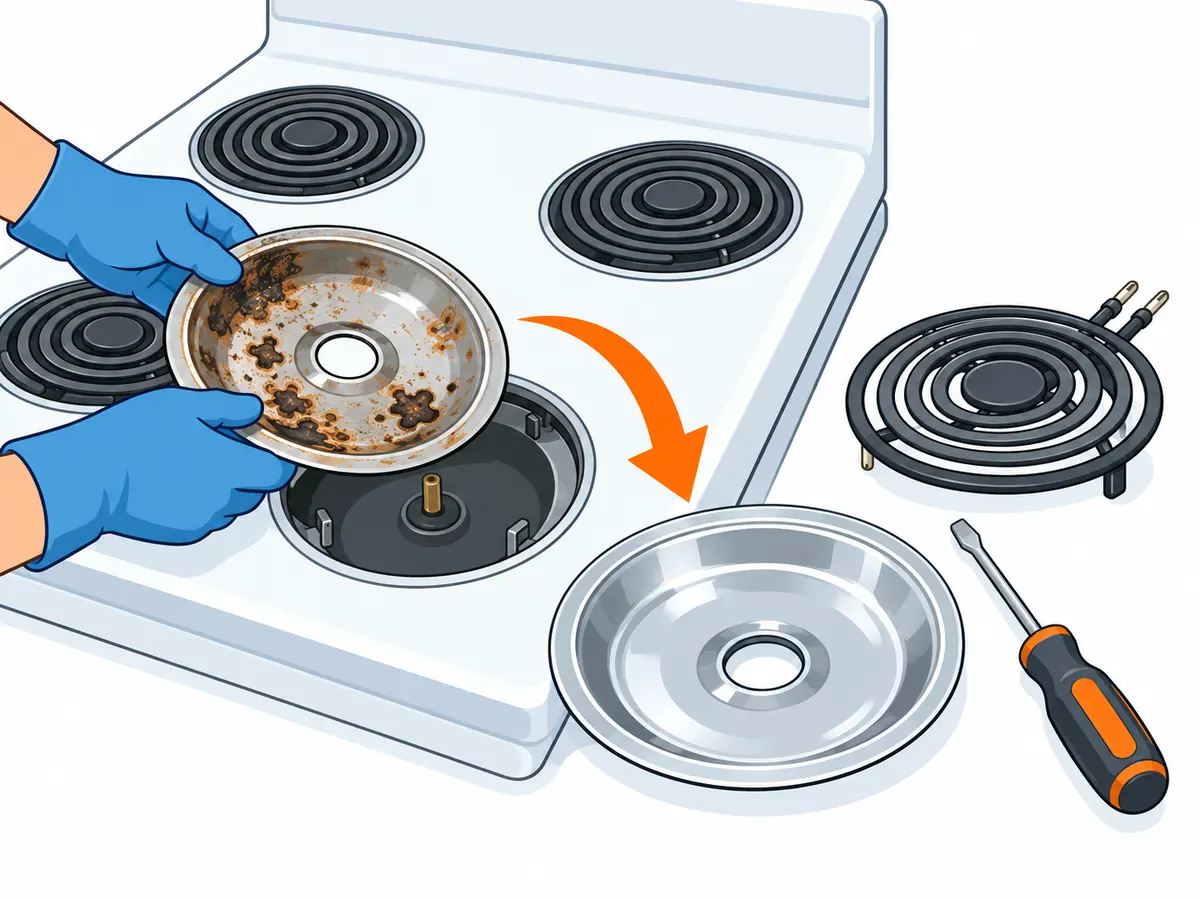
It is simple to replace stove drip pans and burner knobs, as long as you match the model and the burner size. Drip pans sit under the coil burners of an electric stove and catch spills. Over time they rust, warp or burn black. Knobs crack, spin freely or lose their markings. Replacing these parts keeps the stove clean and safe, and the job needs no tools in most cases. This guide shows how to choose the right parts and fit them.
This guide is part of our wider guide to appliance problems.
Check that the stove is off and cool
Turn off all burners, and wait until the stove is cool. Unplug the stove if you plan to lift the cooktop. Many people leave it plugged in for pan swaps, but turning off the breaker is safer if you need to touch the receptacles.
Step by step: replace drip pans
1. Lift the coil burner by tipping it up slightly. Pull it straight out of the receptacle.
2. Lift the drip pan out from under the coil.
3. Wipe the area under the pan with a damp cloth. Remove crumbs.
4. Check the receptacle for burn marks or cracks.
5. Place the new pan in the opening. The hole must line up with the receptacle.
6. Push the coil terminals into the receptacle until they seat fully.
7. Rest the coil on the pan so it sits level.
8. Test the burner for a short time at a low setting. Check that the coil heats evenly.
Do not cover the pans with foil. It can trap heat, damage the receptacle and block the airflow. Use only pans designed for your stove.
Step by step: replace a burner knob
1. Turn the knob to the off position and pull it straight off the shaft.
2. Look at the shaft. It usually has a flat side.
3. Compare the new knob with the old one. The hole must match the shaft.
4. Push the new knob on until it sits against the panel.
5. Check the positions by turning it through the range.
6. Check that the off position lines up.
Some stoves have knobs held by a clip or a screw. If the knob does not pull off, look for a small retaining piece. Check the manual.
Get the right size
Drip pans come in small and large sizes, usually six or eight inches. Measure the coil or check the old pan. Some pans have a different shape for the receptacle. Match the model if you can. Knobs vary by stem shape, so check the shaft. Universal knobs often include adapters.
Signs that point to each cause
A pan with heavy rust or warping holds spills poorly and may spark. A coil that sits crooked may have a bent receptacle. A knob that spins freely has a worn hole. A burner that does not heat may have a bad coil or switch. A burner that smokes may have spills on the pan. See Electric stove burner not heating.
Prevention
Clean spills when the stove is cool. Wipe the pans every week. Do not let food burn onto the pans. Replace pans when they are rusted or deeply stained. Keep pot handles away from the knobs.
Cleaning vs replacing
Light stains can be cleaned with warm soapy water and a soft brush. Burned-on grease may need a gentle cleaner and some soaking. Do not use harsh abrasives that scratch the finish. If the pan is bent, deeply rusted or has holes, replace it. A clean pan also reflects heat better and helps pots heat evenly.
Check the receptacle and the terminals
When the coil is out, look at the receptacle it plugs into. The metal clips should be bright, not black or melted. A burned receptacle can make a burner heat poorly or arc. Wipe off light soot with a dry cloth. If the plastic is cracked or the metal is discolored, replace the receptacle or call a pro. Do not push a coil into a damaged socket.
Keep spares for quick swaps
Pans and knobs are small parts. Keep one spare of each size in the kitchen. When a pan warps or a knob cracks, you can swap it in a minute and keep cooking safely. Label the spare bag with the stove model so you can reorder the same part later.
Related guides
- Replace Range Hood Filter: Mesh and Charcoal Types
- Oven Door Gasket: How to Check and Replace It
- Microwave Not Heating: What to Check
- How to Clean a Gas Stove Burner That Will Not Light Well
- How to Replace a Stove Knob
- How to Remove a Stuck Pot From a Glass Top Stove
FAQ
Can I use any drip pan? No. Size and shape must fit.
Why is my pan turning blue or black? Heat discolors the metal. It is normal unless it is warped.
How often should I replace pans? When they are rusted, warped or hard to clean.
Can I paint a knob? It is not a good idea. Replace it.
More from this topic
- Electric Stove Burner Not Heating: How to Fix It: Electric stove burner not heating? Swap the coil with a working one, check the receptacle and the switch....
- How to Replace a Gas Stove Igniter: Learn how to replace a gas stove igniter: turn off power and gas, lift the burner, disconnect the old...
- Replace Oven Heating Element Safely (Electric): Oven not heating or the bake element burned? Replace oven heating element parts safely, with the power off...
- Gas Burner Clicks but No Flame: What to Do: Gas burner clicks but no flame? Clean the burner ports and cap, dry it and check the igniter. Safe steps, gas...
- How to Clean a Stovetop: Gas, Electric and Glass: Learn how to clean a stovetop the right way for gas, coil and glass tops: degrease, lift burnt-on spills,...
 KitchenElectric Stove Burner Not Heating: How to Fix ItElectric stove burner not heating? Swap the coil with a working one, check the receptacle and the switch. Safe steps, tools and when to call a pro.
 KitchenHow to Replace a Gas Stove IgniterLearn how to replace a gas stove igniter: turn off power and gas, lift the burner, disconnect the old igniter, fit a new one and test for a safe, blue flame.
 KitchenReplace Oven Heating Element Safely (Electric)Oven not heating or the bake element burned? Replace oven heating element parts safely, with the power off and the right part. Steps and safety tips included.
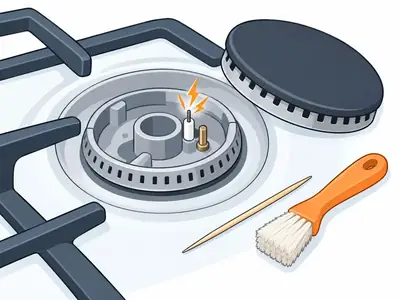 KitchenGas Burner Clicks but No Flame: What to DoGas burner clicks but no flame? Clean the burner ports and cap, dry it and check the igniter. Safe steps, gas safety rules and when to call the gas company.
 KitchenHow to Clean a Stovetop: Gas, Electric and GlassLearn how to clean a stovetop the right way for gas, coil and glass tops: degrease, lift burnt-on spills, clean burners and keep it shining.