
How to Use a Shop Vac
Part of: Tools and everyday fixes

- Difficulty
- Easy
- Time
- 20 minutes to learn
- Tools
- Shop vac, cartridge filter, foam filter, filter bag, hose and nozzles, safety glasses, dust mask, ear protection
- Call a pro if
- You are cleaning up after a renovation with lead paint or asbestos, or vacuuming fine silica dust, since those need a rated extractor and safe disposal.
In this guide
- Power off first
- Wear protection
- Chemical safety
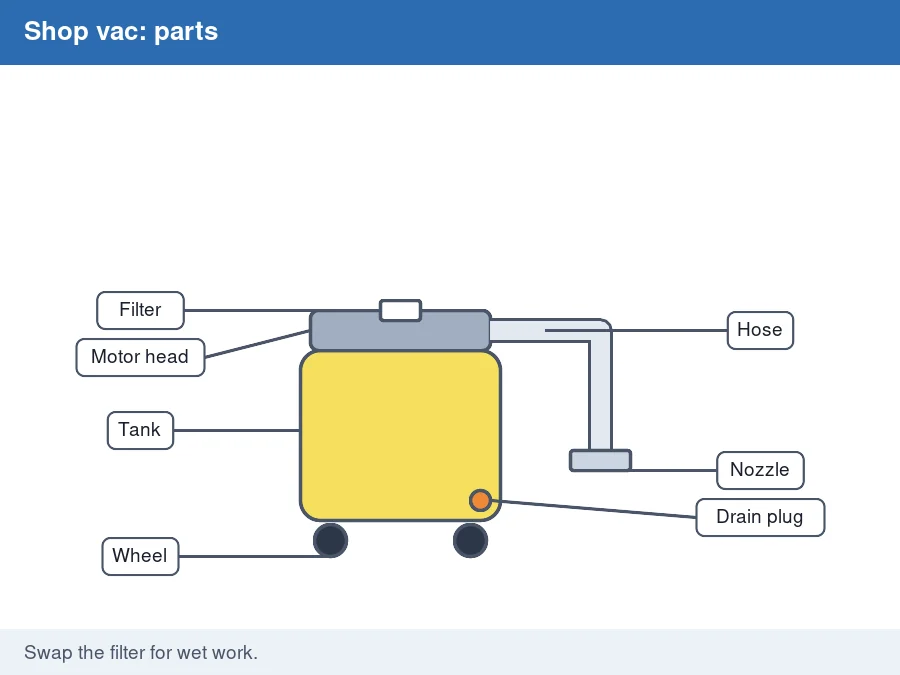
A shop vac handles what a household vacuum cannot: sawdust, gravel, leaves and spills. Used with the wrong filter it spreads dust or ruins the motor. Here is how to use a shop vac.
1. Match the filter to the job
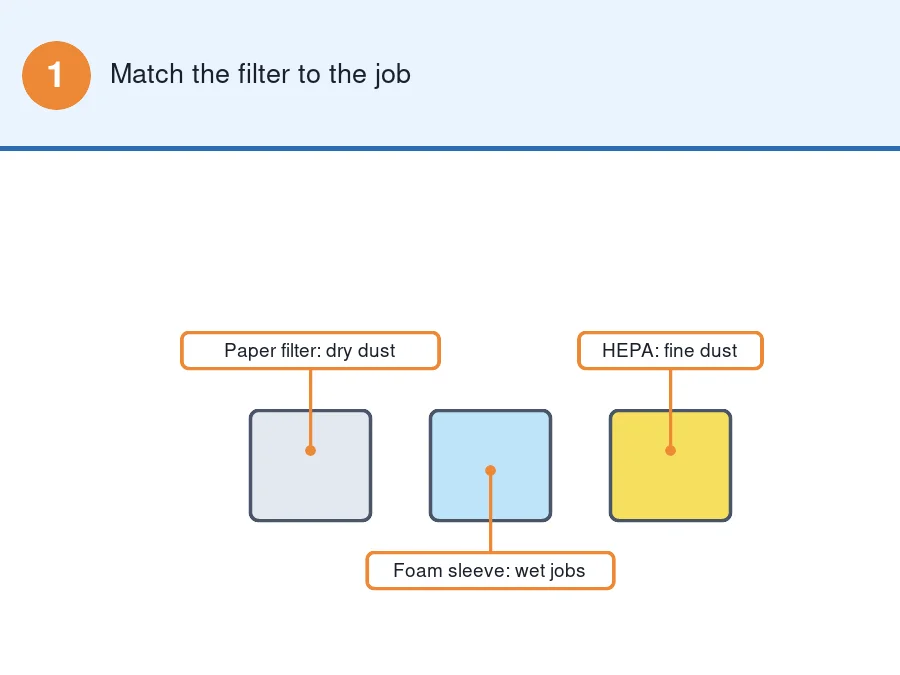
1. Use a cartridge filter for dry dust and debris.
2. Use a foam sleeve for wet pickup.
3. Use a filter bag for fine dust, which keeps the filter cleaner.
4. Never use a paper filter for water, which ruins it.
2. Set up for dry work
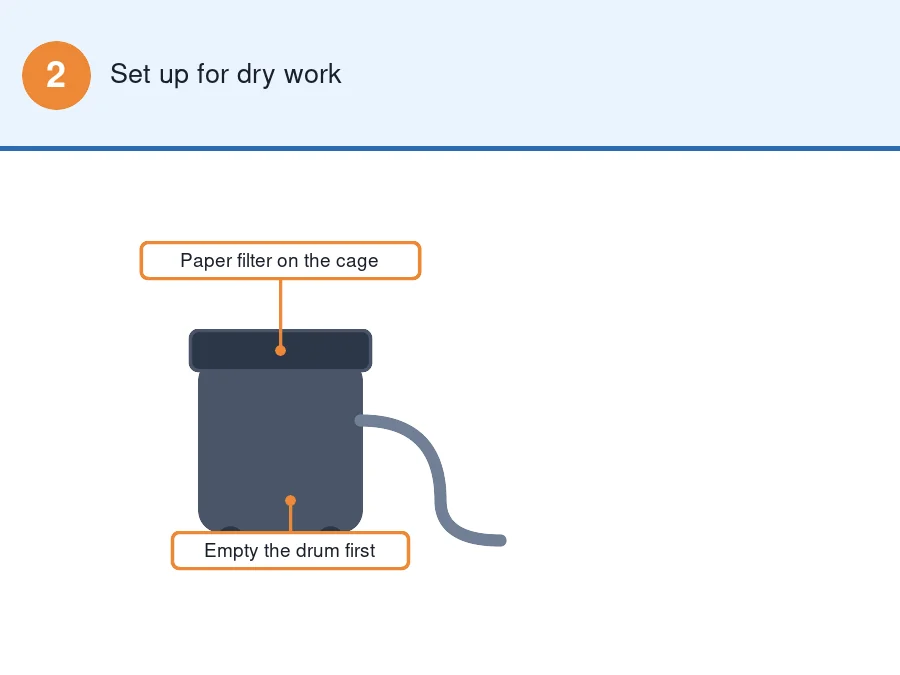
1. Fit the cartridge filter and check the seal.
2. Add a filter bag if the dust is fine.
3. Push the hose into the dry inlet, usually the upper port.
4. Fit the nozzle that suits the surface.
3. Set up for wet work
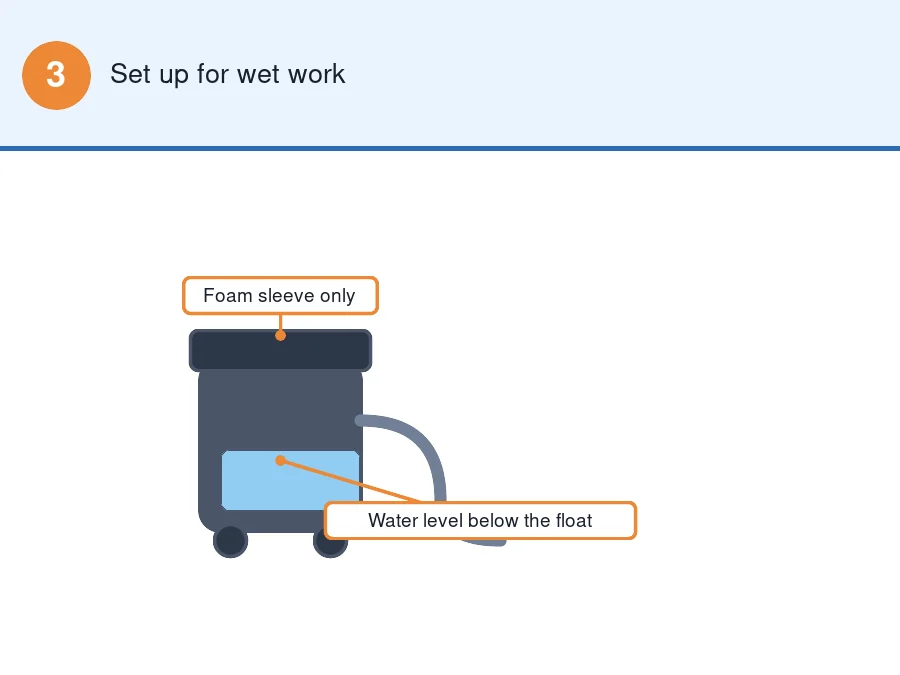
1. Remove the cartridge filter and fit the foam sleeve.
2. Remove any filter bag.
3. Move the hose to the wet inlet if the vac has two ports.
4. Check the float is free and not clogged.
5. Empty the tank before it reaches the full line.
4. Choose the right nozzle
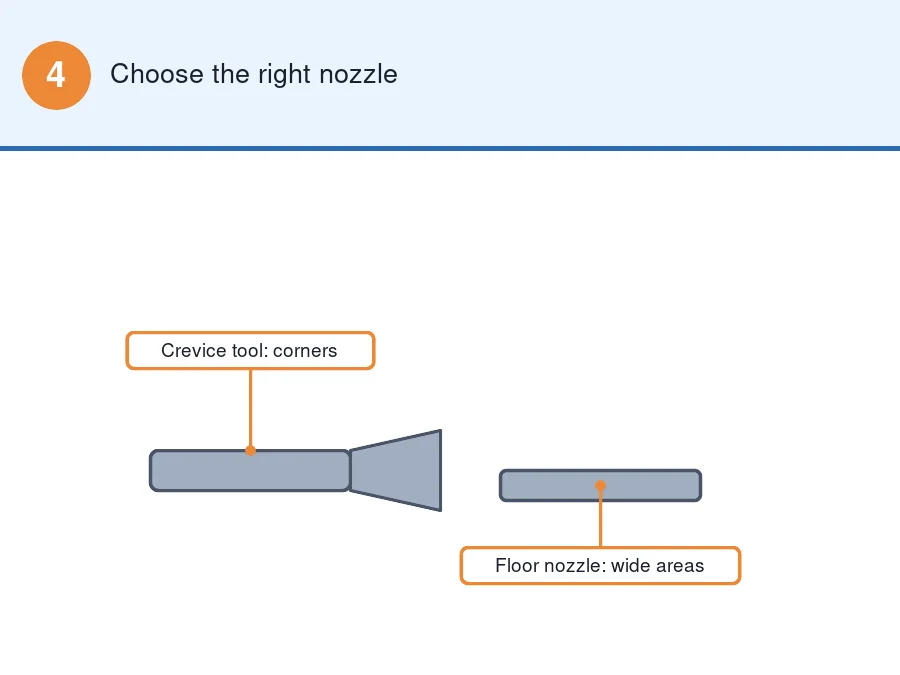
1. Use the wide floor nozzle for large debris.
2. Use the crevice tool for corners and tracks.
3. Use the brush attachment for upholstery and vents.
4. Use a reducer to fit smaller tool ports.
5. Keep a spare nozzle for wet mess, separate from dry.
5. Vacuum without spreading dust
1. Work from the top down.
2. Move slowly so the airflow has time to lift debris.
3. Keep the nozzle flat on the surface, not hovering.
4. Ventilate the room or work outside.
5. Wipe surfaces after vacuuming to catch what settled.
6. Handle water and spills
1. Switch off and unplug before emptying water.
2. Pull the drain plug if the tank has one.
3. Empty into a bucket or a drain, not onto the floor.
4. Dry the tank and the foam filter before dry use.
5. Do not leave water in the tank, which grows mold.
7. Keep suction strong
1. Empty the tank when it is half full of fine dust.
2. Shake or brush the cartridge filter outside.
3. Wash a foam filter and let it dry fully.
4. Check the hose for clogs by dropping a coin through it.
5. Replace a filter that stays clogged after cleaning.
8. Store it properly
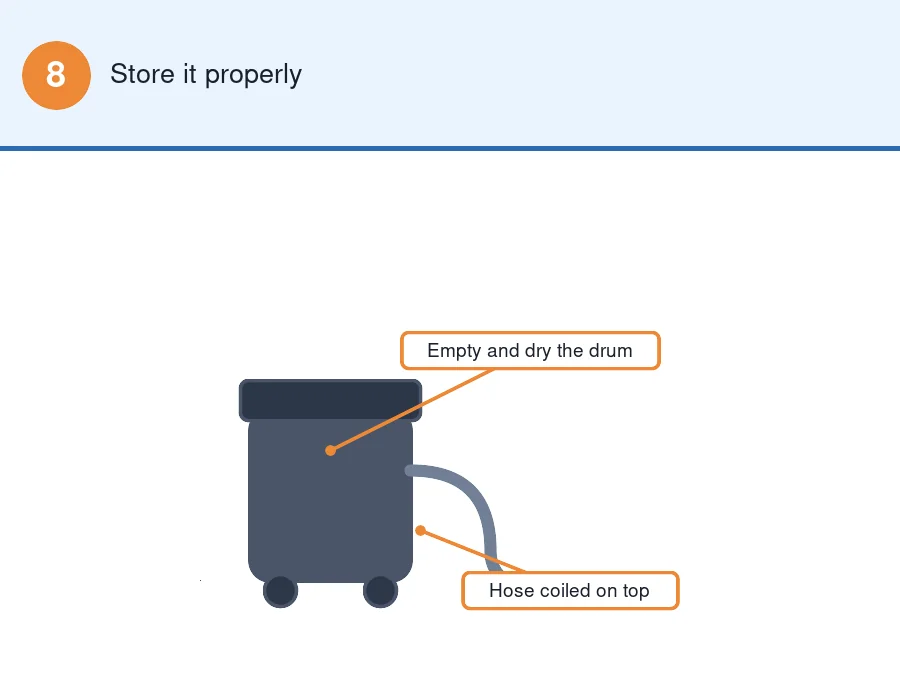
1. Empty and clean the tank after every job.
2. Coil the hose without kinks.
3. Store the nozzles in the caddy or a bag.
4. Keep the power cord off the floor.
5. Store indoors, since cold cracks plastic tanks.
9. Use it as dust extraction
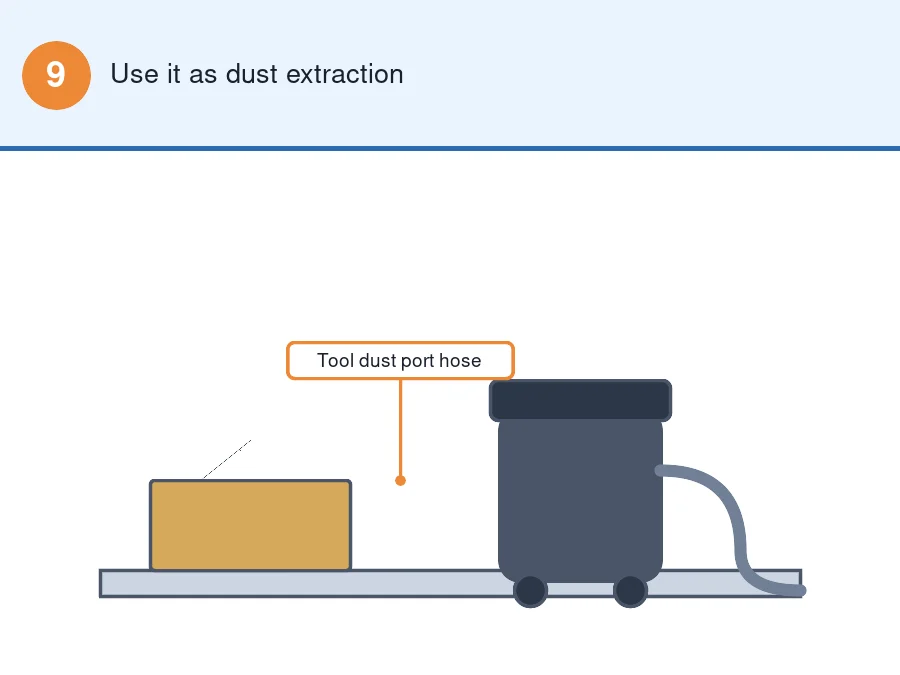
1. Connect the hose to a sander or a miter saw port.
2. Use an adapter if the sizes differ.
3. Keep the hose short for better airflow.
4. Empty the tank before a long session.
Common mistakes
- Using a wet filter for dry dust, which clogs instantly.
- Vacuuming water with a paper cartridge.
- Letting the tank overfill, which pulls dust into the motor.
- Using a shop vac for ash or solvents.
- No dust mask while cleaning fine dust.
Related guides
FAQ
Can a shop vac pick up water?
Yes, with a foam filter and no paper cartridge or bag. The float shuts off suction when the tank is full.
What is the difference between a cartridge filter and a bag?
The cartridge is washable and handles general debris. A bag captures fine dust and keeps the filter cleaner.
Why has my shop vac lost suction?
A clogged filter, a full tank, a blocked hose or an open inlet. Check each in turn.
Can I vacuum drywall dust with a shop vac?
Yes with a fine dust filter or bag, though it clogs fast. A rated extractor is better for large jobs.
More from this topic
- How to Use a Wet Dry Vac for Wet and Dry Messes: Learn how to use a wet dry vac: set it up right for liquids or dust, empty and clean it properly, and avoid...
- Wet-Dry Vac Comparison: A wet-dry vac comparison of the Shop-Vac 5 gallon, Ridgid RT0600 and Craftsman 6 gallon: stated specs, pros...
- How to Use a Speed Square: Learn how to use a speed square: mark square lines, find 45 degree cuts, guide a circular saw and check a...
- How to Wash Pillows: Learn how to wash pillows: which types are machine washable, the right settings, and how to dry them fully...
- Tools, Costs and Your First Home: What to Expect: Your first home: which tools are worth buying, which to rent, what common repairs really cost, and the first...
 Tools and BasicsHow to Use a Wet Dry Vac for Wet and Dry MessesLearn how to use a wet dry vac: set it up right for liquids or dust, empty and clean it properly, and avoid the mistakes that ruin the filter.
 Tools and BasicsWet-Dry Vac ComparisonA wet-dry vac comparison of the Shop-Vac 5 gallon, Ridgid RT0600 and Craftsman 6 gallon: stated specs, pros and cons as of Nov 2026.
 Tools and BasicsHow to Use a Speed SquareLearn how to use a speed square: mark square lines, find 45 degree cuts, guide a circular saw and check a corner, all with one cheap tool.
 Tools and BasicsHow to Wash PillowsLearn how to wash pillows: which types are machine washable, the right settings, and how to dry them fully without clumps.
 Tools and BasicsTools, Costs and Your First Home: What to ExpectYour first home: which tools are worth buying, which to rent, what common repairs really cost, and the first jobs to do when you move into a new home.