
How to Use a Wet Dry Vac for Wet and Dry Messes
Part of: Tools and everyday fixes
- Difficulty
- Easy
- Time
- Minutes to set up, depending on the mess
- Tools
- A wet dry vac, the right filter for the job, and the right hose attachment
- Call a pro if
- You are dealing with sewage backup, flood water with contaminants, or mold-covered debris, which call for professional remediation.
In this guide
- Power off first
- Chemical safety
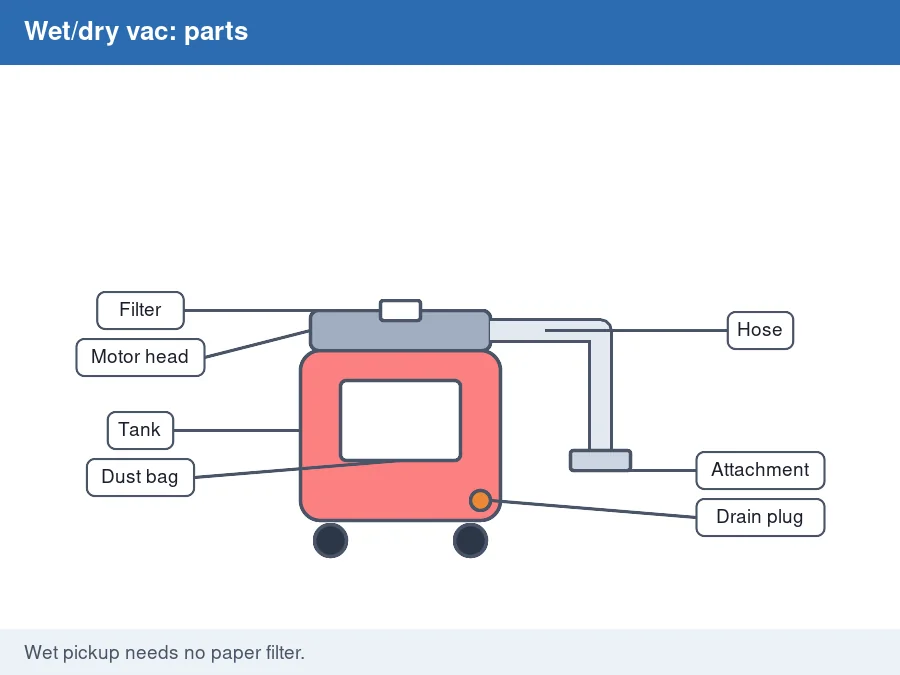
A wet dry vac handles the messes that kill a household vacuum: water, sawdust, gravel and soggy carpet. The only real trick is matching the setup to the mess. Here is how to use a wet dry vac the right way.
1. Match the filter to the mess
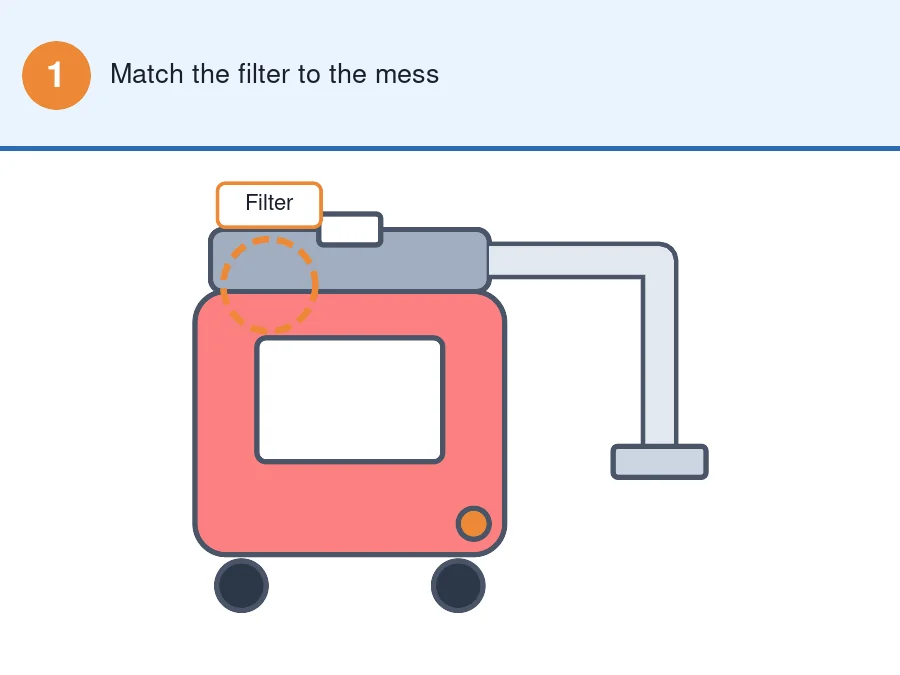
1. Foam sleeves are for wet pickup only.
2. Cartridge or paper filters are for dry debris.
3. Fine dust like drywall powder needs a fine-dust or HEPA filter.
4. Running the wrong filter clogs the machine or kills the motor.
2. Set up for wet pickup
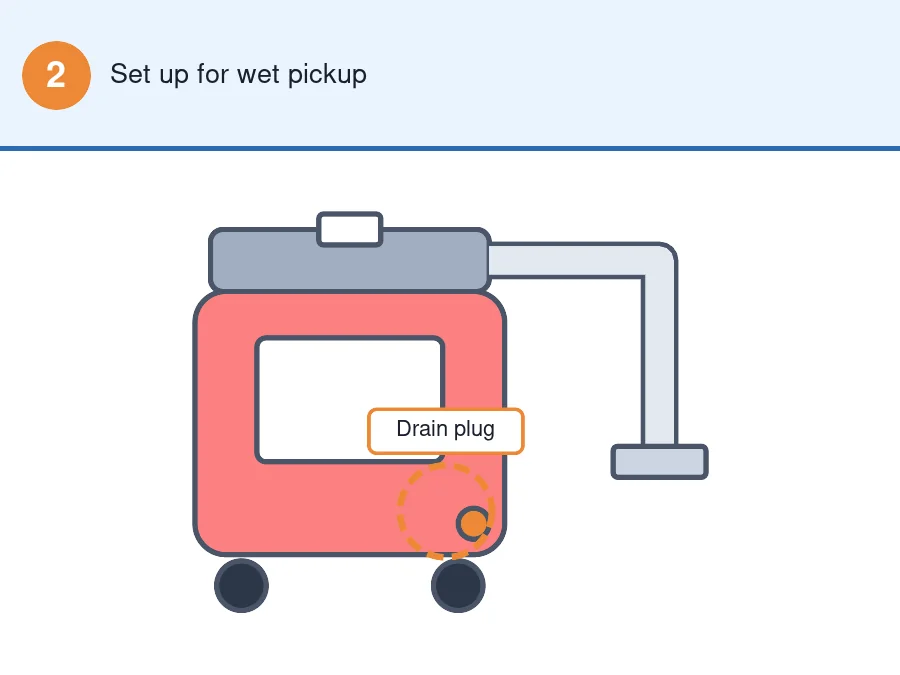
1. Remove the dry filter and fit the foam sleeve.
2. Take out the collection bag; bags are for dry debris only.
3. Check that the float inside the tank moves freely.
4. The float shuts off suction when the tank is full, so do not bypass it.
3. Set up for dry pickup
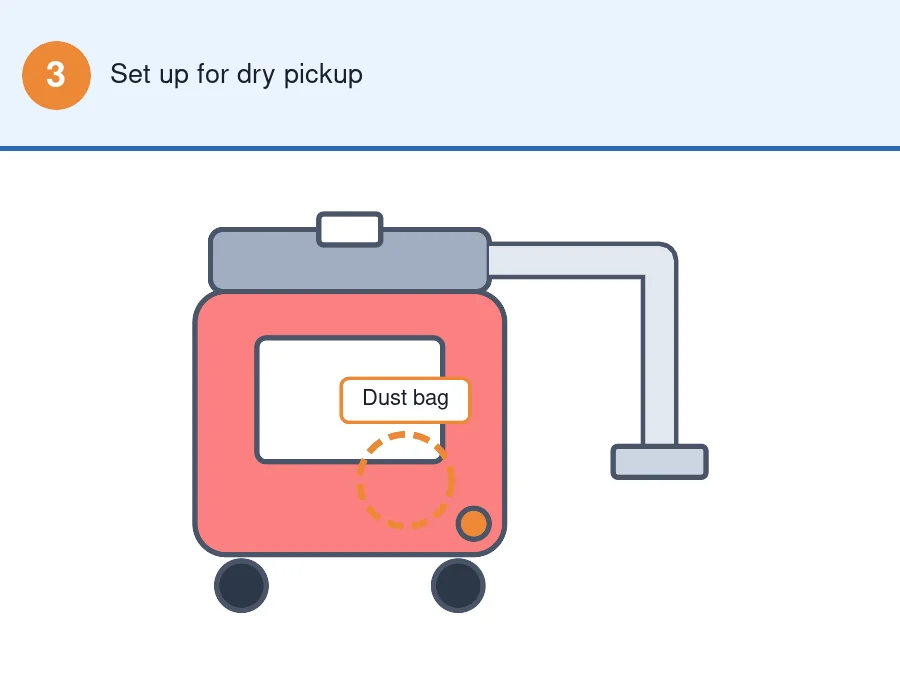
1. Fit the cartridge filter and, for dusty jobs, a collection bag.
2. The bag keeps the filter cleaner and makes emptying easy.
3. Seat the filter fully so dust cannot blow past it into the motor.
4. For sawdust and drywall dust, the bag plus filter combo is worth it.
4. Vacuum with the right attachment
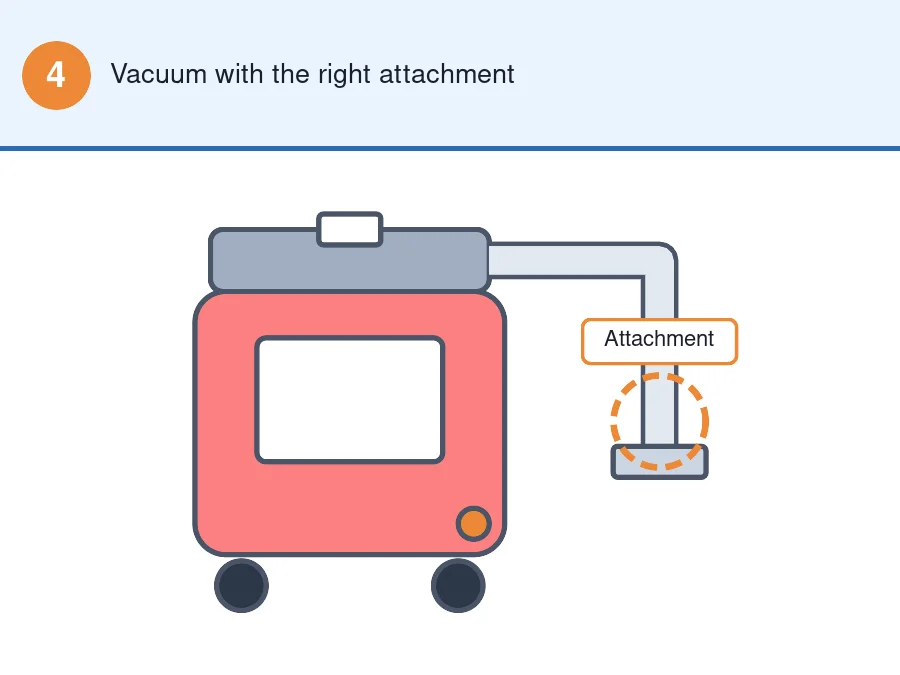
1. Wide nozzles and squeegees cover floors fast.
2. The crevice tool reaches corners, car seats and tight spots.
3. A brush attachment lifts dust from hard surfaces without scattering it.
4. Keep the hose as straight as you can; sharp bends kill suction.
5. Empty before it is full
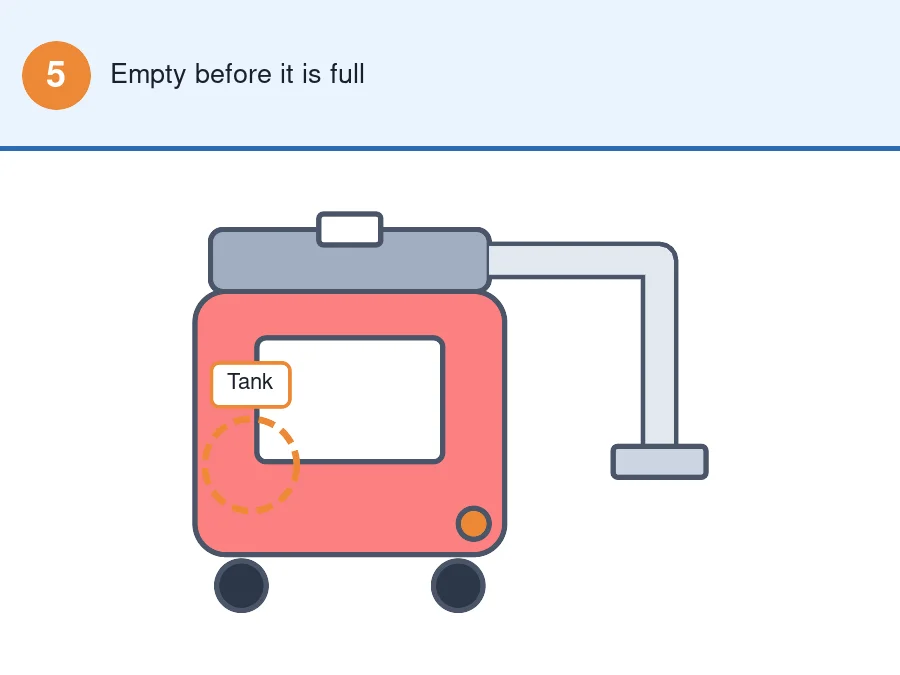
1. Wet tanks fill fast; empty when the float cuts suction.
2. Dry tanks lose power as they fill, so empty early.
3. Pour liquid out through the drain cap or by tipping the tank.
4. Rinse the tank after wet jobs so sludge does not harden inside.
6. Clean the filter every time
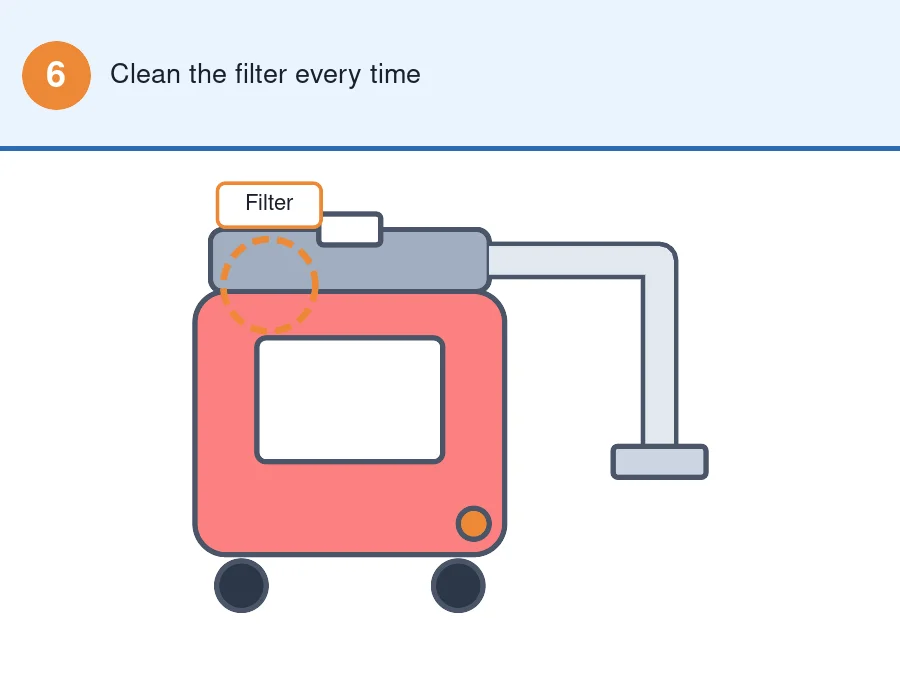
1. Tap dry filters clean or rinse them if the manual allows.
2. Let rinsed filters dry completely before reuse.
3. Wash the foam sleeve after wet jobs and let it dry.
4. A clogged filter strains the motor and cuts suction in half.
7. Store it ready for next time

1. Drain and dry the tank fully before storage.
2. Wrap the hose and cord so they do not kink.
3. Store the vac dry, indoors, with the filter in place.
4. A vac put away wet grows mildew and smells by the next use.
Common mistakes
- Sucking up water with the dry filter in place, which ruins the filter and can kill the motor.
- Vacuuming drywall dust with a standard filter, which blows fine dust straight through and burns out the machine.
- Letting the wet tank sit full, so the contents sour and the tank grows slime.
- Ignoring the float shutoff and overfilling, which sends water into the motor.
Related guides
FAQ
Can a wet dry vac pick up water?
Yes, that is the point. Remove the dry filter and bag, fit the foam sleeve, and it handles spills and shallow flooding. Stop when the float cuts suction and empty the tank.
Can I use a wet dry vac for drywall dust?
Only with a fine-dust or HEPA filter and a collection bag. Standard filters pass the fine dust through, which coats the room and damages the motor.
Why is my shop vac losing suction?
Usually a full tank, a clogged filter or a blocked hose. Empty the tank, clean the filter and check the hose for a clog, in that order.
Can a wet dry vac unclog a drain?
It can pull standing water and some clogs out of a drain opening with a tight seal, but it will not clear a blockage deep in the pipe. Use a snake for that.
More from this topic
- Wet-Dry Vac Comparison: A wet-dry vac comparison of the Shop-Vac 5 gallon, Ridgid RT0600 and Craftsman 6 gallon: stated specs, pros...
- How to Use a Shop Vac: Learn how to use a shop vac: match the filter to wet or dry work, choose the right nozzle and clean it so...
- How to Mix Epoxy So It Cures Hard Every Time: Learn how to mix epoxy: measure the ratio exactly, mix thoroughly without bubbles, and know your working time...
- How to Wash Pillows: Learn how to wash pillows: which types are machine washable, the right settings, and how to dry them fully...
- Laser Level Comparison: A laser level comparison of the Bosch GLL 30, Huepar 902CG and Huepar 3x360 green laser: stated range and...
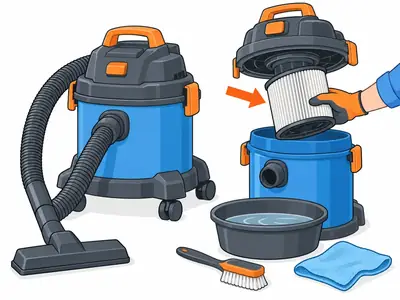 Tools and BasicsWet-Dry Vac ComparisonA wet-dry vac comparison of the Shop-Vac 5 gallon, Ridgid RT0600 and Craftsman 6 gallon: stated specs, pros and cons as of Nov 2026.
 Tools and BasicsHow to Use a Shop VacLearn how to use a shop vac: match the filter to wet or dry work, choose the right nozzle and clean it so suction stays strong.
 Tools and BasicsHow to Mix Epoxy So It Cures Hard Every TimeLearn how to mix epoxy: measure the ratio exactly, mix thoroughly without bubbles, and know your working time before it sets.
 Tools and BasicsHow to Wash PillowsLearn how to wash pillows: which types are machine washable, the right settings, and how to dry them fully without clumps.
 Tools and BasicsLaser Level ComparisonA laser level comparison of the Bosch GLL 30, Huepar 902CG and Huepar 3x360 green laser: stated range and accuracy as of Nov 2026.