
Septic Tank Maintenance: What a Homeowner Can Do
Part of: Basic plumbing

- Difficulty
- Easy for upkeep; pro for pumping and repairs
- Time
- 30 minutes a month plus a pro visit every few years
- Tools
- records of past service, a site sketch of the tank and drain field, a calendar reminder, a notepad
- Call a pro if
- You see sewage backup, soggy or foul-smelling ground over the drain field, slow drains in the whole house, or an alarm sounds.
In this guide
Septic tank maintenance starts with knowing how the system works. A septic system treats household wastewater on your own property. Wastewater flows from the house into a buried tank, solids settle to the bottom as sludge, grease and light material float as scum, and the liquid in the middle flows out to a drain field where soil treats it. Most septic failures come from three things: too much water, the wrong things going down the drain, and skipped pumping. A failed drain field can cost far more than years of upkeep, so the routine below is worth the effort.
How the system works
Everything that goes down a drain ends up in the tank. Bacteria in the tank break down some of the waste. A T-shaped outlet keeps sludge and scum in the tank and lets only the middle layer move on to the drain field. If the tank fills with solids, they can pass into the drain field, clog it and cause backups. Pumping removes the solids before that happens.
How often to inspect and pump
EPA says an average household septic system should be inspected at least every three years by a septic service professional, and household tanks are typically pumped every three to five years. Systems with electrical float switches, pumps or mechanical parts should be inspected more often, generally once a year. Tank size, number of people in the house and how much water and solid waste you send down the drain change the interval, and a garbage disposal means more frequent pumping. Your local health agency may set its own schedule.
What a homeowner can do, step by step
1. Find the system. Look in house records, a property survey or a permit file for the tank and drain field. Ask the county health or environmental agency if you cannot find them. Sketch where the tank lid and field are.
2. Collect the service history. Gather past pumping and inspection reports, tank size and the number of bedrooms it was designed for. Keep them in one folder and add each new report.
3. Learn your local rules. Septic rules are set by states and counties. Ask your local agency about required inspections, pumping, and approval before you change the house or the system.
4. Schedule an inspection. Book a professional inspection at least every three years, or yearly if the system has pumps, alarms or other mechanical parts.
5. Book pumping when the inspector says so. The inspector checks the scum and sludge layers and can tell you when to pump. Write down the levels, so you can track how fast the tank fills.
6. Put only the right things down the drain. Flush toilet paper and human waste only. Keep wipes (even those labeled flushable), grease, coffee grounds, dental floss, cat litter, diapers and feminine products out of the system.
7. Keep chemicals and medicine out. Do not pour paint, solvents, pesticides, medicine or large amounts of bleach or drain cleaner into the system. They can harm the bacteria in the tank or pollute groundwater.
8. Save water. Fix leaking toilets and dripping faucets, use efficient fixtures, and spread laundry across the week. A large dump of water can push solids into the drain field.
9. Go easy on the garbage disposal. A disposal adds solids that the tank digests slowly, so the tank needs pumping more often. Compost food scraps where you can.
10. Protect the drain field. Keep vehicles, heavy equipment, sheds and patios off it. Plant grass, and keep trees and shrubs with deep roots away so roots do not enter the pipes.
11. Send rainwater elsewhere. Point roof drains, sump pump outlets and other runoff away from the drain field. Too much water slows or stops the treatment.
12. Skip the additives. Pumping on schedule does the job. Check with your local agency before using any additive, and do not treat one as a substitute for pumping.
13. Respond to warning signs quickly. Slow drains, gurgling, sewage smell, wet or unusually green patches over the field, and backups are signs to call a septic pro the same day. Cut back on water use while you wait.
Common mistakes
- Forgetting the tank because "it has never given trouble."
- Flushing wipes, grease or kitchen scraps.
- Driving or parking on the drain field.
- Running many loads of laundry in one day.
- Opening the lid to look inside.
- Using an additive in place of pumping.
When to call a pro
- Sewage is backing up into the house or an alarm is sounding.
- Wet, spongy or foul-smelling ground appears over the tank or drain field.
- All drains in the house are slow at once.
- You have no inspection record from the last three years.
- You plan to add a bedroom, a bathroom or a large water user, or to build near the system.
- You have an alternative system with pumps or mechanical parts and no service contract.
Related guides
- Water Heater Maintenance Checklist: Once a Year
- Toilet Tank Not Filling: What to Check
- How to Check a Water Heater Expansion Tank
FAQ
How often should a septic tank be pumped?
Every three to five years is typical, according to EPA. Your inspector and local rules decide the exact interval for your tank.
Does a garbage disposal matter?
Yes. It adds solids, and EPA says a tank with a disposal needs pumping more often.
Can I pump the tank myself?
No. Tank gases and waste handling make this a job for a licensed hauler.
What should I do if the drain field is wet?
Stop extra water use, keep people and pets away, and call a septic professional. Do not try to dig or pump it yourself.
Is it safe to use bleach or cleaners?
Normal household cleaning amounts are generally fine. Avoid large doses and drain cleaners, and check local advice.
Sources
- U.S. Environmental Protection Agency, "How to Care for Your Septic System": https://www.epa.gov/septic/how-care-your-septic-system
- U.S. Environmental Protection Agency, SepticSmart: https://www.epa.gov/septic/septicsmart
- Your state or county health department septic rules (these vary by location)
More from this topic
- How to Check a Water Heater Expansion Tank: Learn how to check a water heater expansion tank, test the air charge, spot a waterlogged tank and know when...
- How to Flush a Water Heater to Remove Sediment: Learn how to flush a water heater to clear sediment: turn off the power or gas, connect a hose, drain the...
- How to Fix a Clogged Garbage Disposal: Reset and Unjam: Learn how to fix a clogged garbage disposal: turn it off, free a jam with a hex key, press the reset button...
- How to Fix a Smelly Floor Drain: Learn how to fix a smelly floor drain: find whether the trap is dry, clean the drain and trap, restore the...
- How to Fix a Toilet That Won't Fill: How to fix a toilet that won't fill: check the shutoff, supply and fill valve in order and restore the tank's...
 PlumbingHow to Check a Water Heater Expansion TankLearn how to check a water heater expansion tank, test the air charge, spot a waterlogged tank and know when to replace it to protect your pipes.
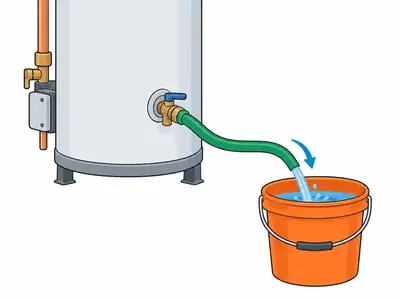 PlumbingHow to Flush a Water Heater to Remove SedimentLearn how to flush a water heater to clear sediment: turn off the power or gas, connect a hose, drain the tank and restart it safely.
 PlumbingHow to Fix a Clogged Garbage Disposal: Reset and UnjamLearn how to fix a clogged garbage disposal: turn it off, free a jam with a hex key, press the reset button and clear a slow drain.
 PlumbingHow to Fix a Smelly Floor DrainLearn how to fix a smelly floor drain: find whether the trap is dry, clean the drain and trap, restore the water seal and stop the sewer smell returning.
 PlumbingHow to Fix a Toilet That Won't FillHow to fix a toilet that won't fill: check the shutoff, supply and fill valve in order and restore the tank's refill in under an hour.