
How to Clean a Range Hood and Filter
Part of: Kitchen
- Difficulty
- Easy
- Time
- 1 to 2 hours
- Tools
- Degreaser, hot water, dish soap, baking soda, a stiff brush, a bucket or the sink, screwdriver, cloths, gloves, a stepladder, replacement charcoal filter if installed
- Call a pro if
- The hood does not extract, the duct is blocked or vented into the roof space, or the fan motor is noisy or dead, since those need repair or replacement rather than cleaning.
In this guide
- Power off first
- Ladder safety
- Wear protection
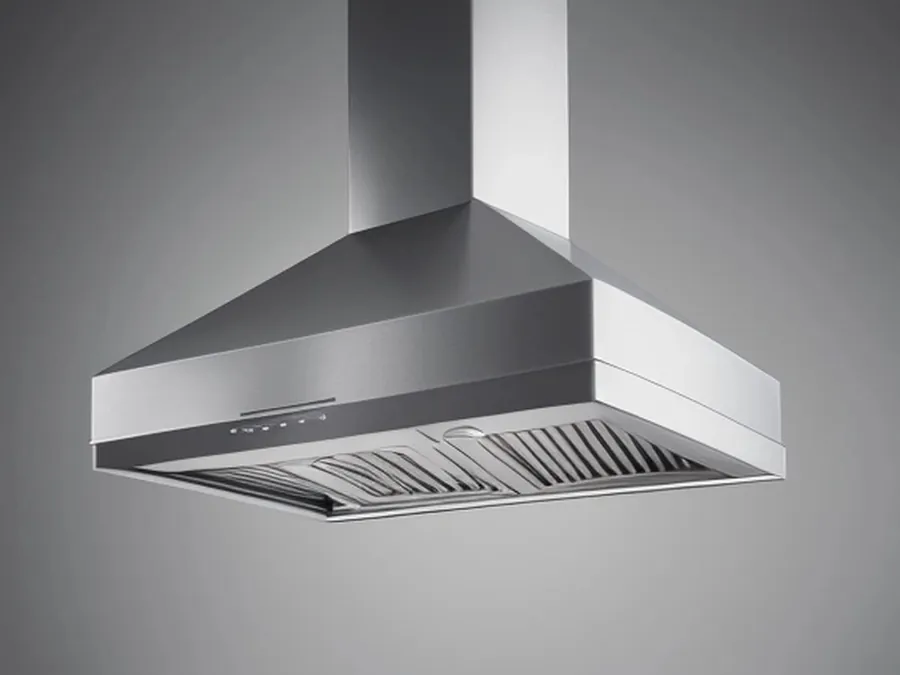
A range hood that has not been cleaned is doing very little. Grease builds up on the filter until air cannot pass, then on the fan blades until the motor labors, and then on the duct until the whole system is blocked. It is also a fire risk: a filter full of grease will catch light if a pan flares. Cleaning it restores the extraction and takes about an hour. Here is how to clean a range hood and filter.
1. Check what kind of hood you have
- Ducted: extracts air to the outside. It has metal mesh filters, which are washable.
- Recirculating: filters the air and returns it to the kitchen. It has a mesh filter plus a charcoal filter, and the charcoal cannot be washed, only replaced.
- Downdraft: rises from behind the cooktop. Same principles, harder access.
The type tells you what to clean and what to replace.
2. Turn it off and remove the filters
1. Switch the hood off, and off at the breaker if it has one.
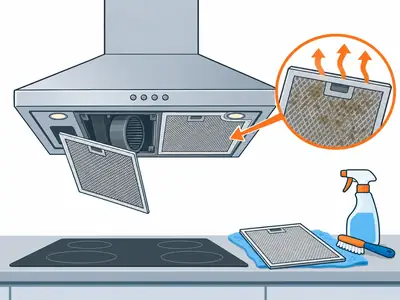
2. Remove the metal mesh filters; most slide out or release with a latch.
3. Note how they fit, or photograph them, so they go back the same way.
4. Remove the charcoal filter if there is one.
3. Wash the metal filters
1. Fill a sink or bucket with very hot water and a strong degreaser or dish soap.
2. Add a couple of tablespoons of baking soda for heavy grease.
3. Soak the filters for 15 to 30 minutes.
4. Scrub with a stiff brush, working along the mesh.
5. Rinse with hot water and check the light comes through the mesh.
6. Leave them to dry completely before refitting.
If the grease has baked on, soak longer, or run the filters through a dishwasher on a hot cycle if the manufacturer allows it. Our guide on cleaning greasy kitchen cabinets uses the same degreasing approach on the surfaces around the cooktop.
4. Clean the hood body
1. Spray the outside with a degreaser and leave it a few minutes.
2. Wipe with a cloth, working from the top down.
3. Pay attention to the underside, where the grease collects.
4. Use a soft brush in the corners and around the controls.
5. Wipe again with a clean damp cloth to remove residue.
Do not spray cleaner directly into the motor or the control panel.
5. Clean the fan blades
With the filters out, you can usually see the fan.
1. Spray a degreaser onto a cloth, not into the housing.
2. Wipe each blade carefully.
3. Do not bend the blades, since an unbalanced fan is noisy.
4. Wipe the inside of the housing around the fan.
If the fan is heavily coated, it may need a technician, since grease inside a motor is a fire and failure risk.
6. Check the duct and the outside vent
- Look into the duct from the hood as far as you can see.
- Check the outside flap opens freely and is not blocked by lint, grease or a bird's nest.
- A duct full of grease is a fire risk and needs professional cleaning.
- Make sure the duct goes outside, not into an attic or a roof space.
7. Replace the charcoal filter if installed
A recirculating hood's charcoal filter cannot be cleaned. Replace it every three to six months, or as the manufacturer states. A saturated charcoal filter stops the hood removing odors at all.
8. Refit and test
1. Refit the dry filters the right way round.
2. Turn the power back on.
3. Run the hood on each speed and listen for rattles.
4. Hold a tissue near the filter to check it is pulling air.
9. Keep it clean
- Wipe the hood exterior weekly while you clean the kitchen.
- Wash the metal filters every one to two months, or monthly if you fry often.
- Replace the charcoal filter every three to six months.
- Check the outside flap a couple of times a year.
- Never leave a cooktop unattended with oil heating.
Common mistakes
- Cleaning the outside and never washing the filters.
- Refitting filters while still wet, which rusts them and grows bacteria.
- Using an abrasive scourer on a stainless hood.
- Spraying degreaser into the motor.
- Ignoring a duct that is blocked or vented indoors.
Related guides
- How to Clean a Vacuum Cleaner Filter and Restore Suction
- How to Clean an Oven Naturally With Baking Soda and Vinegar
- Oven Self-Clean Problems: Door Locked, Smoke and Error Codes
- How to Clean a Microwave With Steam: Fast Method for Baked On Splatters
FAQ
How often should a range hood filter be cleaned?
Every one to two months for normal cooking, monthly if you fry a lot. Charcoal filters are replaced, not washed.
Can I put range hood filters in the dishwasher?
Many metal mesh filters can go on a hot cycle, but check the manufacturer's instructions, since some finishes discolor.
Why is my range hood not pulling air?
Usually a clogged filter, a blocked duct or a fan caked in grease. Clean the filter first, then check the duct.
Is a greasy range hood a fire risk?
Yes. Grease in the filter and duct can ignite. Cleaning is a safety task, not just a cosmetic one.
More from this topic
- How to Clean a Gas Stove Burner That Will Not Light Well: Learn how to clean a gas stove burner: remove the cap and grate, clear clogged ports, dry everything and...
- How to Clean a Range Hood Filter and Remove Baked On Grease: Learn how to clean a range hood filter with hot water, dish soap, and baking soda: remove it, soak, scrub,...
- Replace Range Hood Filter: Mesh and Charcoal Types: Greasy or clogged filter? Replace range hood filter parts, tell mesh from charcoal types and keep your...
- Range Hood Fan Weak or Noisy: Causes and Simple Fixes: Range hood fan weak or noisy? Clean the filters and blades, check the duct and the damper, and tighten loose...
- How to Clean a Toaster Oven Inside and Out: Learn how to clean a toaster oven: unplug it, empty the crumb tray, scrub the rack and walls, wipe the glass...
 KitchenHow to Clean a Gas Stove Burner That Will Not Light WellLearn how to clean a gas stove burner: remove the cap and grate, clear clogged ports, dry everything and reseat the burner so the flame burns even and blue.
 KitchenHow to Clean a Range Hood Filter and Remove Baked On GreaseLearn how to clean a range hood filter with hot water, dish soap, and baking soda: remove it, soak, scrub, rinse, dry, and put it back so the fan works well.
 KitchenReplace Range Hood Filter: Mesh and Charcoal TypesGreasy or clogged filter? Replace range hood filter parts, tell mesh from charcoal types and keep your kitchen hood working well.
 KitchenRange Hood Fan Weak or Noisy: Causes and Simple FixesRange hood fan weak or noisy? Clean the filters and blades, check the duct and the damper, and tighten loose parts. Easy steps that restore airflow.
 KitchenHow to Clean a Toaster Oven Inside and OutLearn how to clean a toaster oven: unplug it, empty the crumb tray, scrub the rack and walls, wipe the glass door and dry it all before the next use.