
How to Find Your Main Water Shutoff Valve Before You Need It
Part of: Basic plumbing
- Difficulty
- Easy
- Time
- 15 to 45 minutes
- Tools
- Flashlight, gloves, adjustable wrench, marker or tag, camera, key for the meter box if needed
- Call a pro if
- The valve is seized, the handle is broken, or you cannot find any shutoff, since a valve that will not close is the same as no valve in an emergency.
In this guide
- Water off first
A burst supply line dumps gallons a minute into a house. The single most useful thing you can know is where the valve is that stops it, and whether it still turns. Here is how to find your main water shutoff valve.
1. Start at the water meter
1. Find the meter, usually in the basement, garage, utility closet or a pit near the curb.
2. The main shutoff is normally on the house side of the meter.
3. It is a lever or a round handle on the supply pipe.
4. Photograph it with the handle position visible.
5. Tag it so nobody mistakes it for something else.
2. Check the likely spots
- Basement: on the front wall where the supply enters.
- Crawl space: near the entry point, often on the joist.
- Utility closet or garage: where the line comes in.
- Outside at the wall: in warm climates, a valve on the exterior.
- At the curb: a curb stop owned by the water utility, which needs a key.
3. Know the valve types
- Ball valve: a lever that turns a quarter turn. Fast and reliable.
- Gate valve: a round wheel that turns several times. Older, can seize.
- Curb stop: at the street, needs a long key, utility property.
- Angle stop: the small valves under sinks and behind toilets, for one fixture only.
4. Test it now
1. Open a faucet at the highest point in the house.
2. Turn the main valve closed.
3. The faucet should stop within seconds.
4. If it slows but does not stop, the valve is passing.
5. Open the valve again and check the faucet runs.
5. Label everything
1. Tag the main valve with a clear label.
2. Tag the fixture shutoffs under each sink and behind each toilet.
3. Draw a simple map and keep it with the water heater paperwork.
4. Show everyone in the house.
5. Keep a wrench near the valve if it needs one.
6. Deal with a valve that will not close
1. Do not force a stuck wheel; it may snap the stem.
2. Work it back and forth gently with penetrating oil.
3. If it still will not close, have a plumber replace it.
4. A passing gate valve should be replaced with a ball valve.
5. Replacing the main valve needs the water off at the curb.
7. Know the fixture shutoffs too
1. Every sink should have two angle stops underneath.
2. Every toilet should have one behind the tank.
3. The water heater has its own valve on the cold inlet.
4. The washing machine has valves in the wall box.
5. If a fixture has no valve, a plumber can add one when the water is off for another job.
8. Make an emergency plan
1. Know the valve, the wrench and the flashlight location.
2. Teach everyone old enough to use it.
3. Keep the plumber's number with the map.
4. Know where the water heater drain is.
5. Know how to shut off the gas or power if water reaches equipment.
9. Check it once a year
1. Turn the main valve closed and open it again.
2. Operate the fixture valves.
3. Look for corrosion or drips at the valve.
4. Replace a valve that weeps at the stem.
5. Update the map if any plumbing has changed.
Common mistakes
- Never testing the valve until there is a flood.
- Forcing a seized gate valve.
- Confusing the water valve with the gas valve.
- Ignoring a valve that passes water.
- Not telling the rest of the household where it is.
Related guides
- How to Install a Water Pressure Regulator
- How to Fix a Running Water Meter When Nothing Is On
- Replace Toilet Shutoff Valve: Compression or Push-Fit
- Toilet Tank Not Filling: What to Check
FAQ
Where is the main water shutoff usually located?
Near the water meter, on the house side, often in the basement or utility area.
How do I know if my shutoff is a ball valve?
It has a lever that turns a quarter turn, rather than a wheel that spins.
Can I shut off water at the street myself?
Often not; the curb stop usually belongs to the utility and needs their key.
What if my valve will not close all the way?
Have a plumber replace it. A passing valve will not stop a leak.
More from this topic
- How to Shut Off Water Main (and Find the Shutoff Valve): Learn how to shut off water main in an emergency. Find the shutoff valve, tell ball valves from gate valves...
- How to Test a Sump Pump Before You Need It: Learn how to test a sump pump: check the float, pour water to trigger it, test the check valve and backup,...
- How to Install a Water Pressure Regulator: Learn how to install a water pressure regulator: test the pressure, shut off the main, fit the valve the...
- How to Replace a Main Water Shutoff Valve: How to replace a main water shutoff valve: kill the supply at the meter, swap the failed valve and restore...
- Low Hot Water Pressure: What to Check: Low hot water pressure but normal cold? Check the aerator, shutoff valves and water heater valves. Safe...
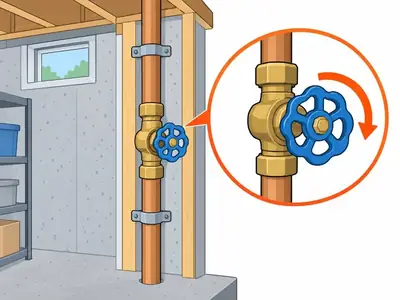 PlumbingHow to Shut Off Water Main (and Find the Shutoff Valve)Learn how to shut off water main in an emergency. Find the shutoff valve, tell ball valves from gate valves and test it before you need it.
 PlumbingHow to Test a Sump Pump Before You Need ItLearn how to test a sump pump: check the float, pour water to trigger it, test the check valve and backup, and keep the pit clear so it works in a storm.
 PlumbingHow to Install a Water Pressure RegulatorLearn how to install a water pressure regulator: test the pressure, shut off the main, fit the valve the right way round and set it to a safe pressure.
 PlumbingHow to Replace a Main Water Shutoff ValveHow to replace a main water shutoff valve: kill the supply at the meter, swap the failed valve and restore water without leaks.
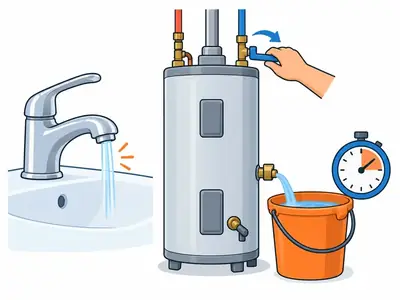 PlumbingLow Hot Water Pressure: What to CheckLow hot water pressure but normal cold? Check the aerator, shutoff valves and water heater valves. Safe steps, tools and when to call a plumber.