
How to Test a Sump Pump Before You Need It
Part of: Basic plumbing
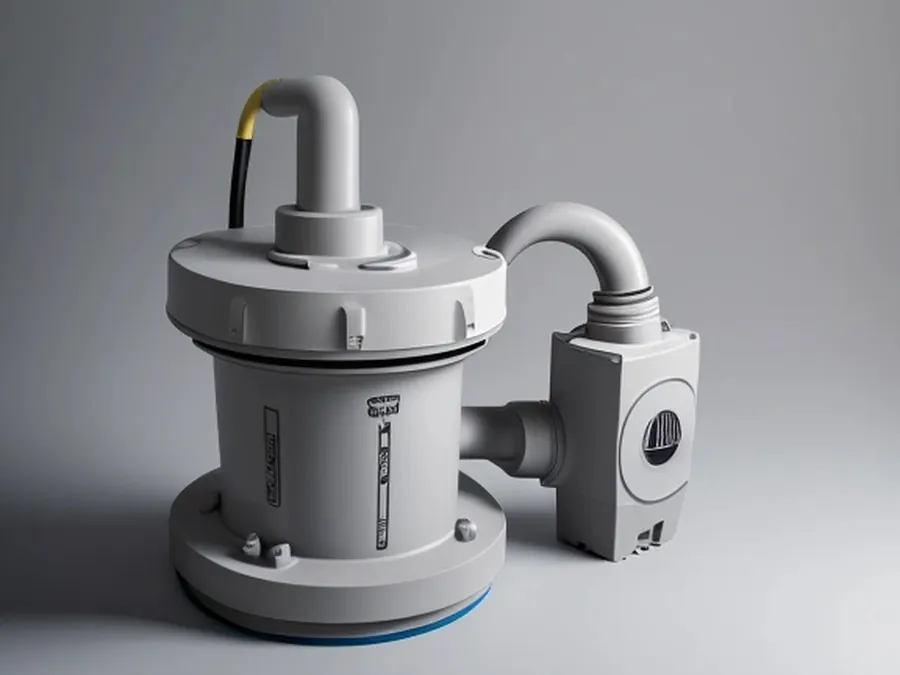
- Difficulty
- Easy
- Time
- 20 to 45 minutes
- Tools
- Bucket of water, flashlight, gloves, cloth, screwdriver, spare check valve, battery for backup pump
- Call a pro if
- The pump does not start, trips the breaker, or the pit fills faster than the pump clears it, since those point to a failing pump or a drainage problem.
In this guide
- Power off first
- Wear protection
A sump pump that has sat idle for a year is a pump you cannot trust. Testing takes half an hour and is the difference between a dry basement and a flooded one. Here is how to test a sump pump.
1. Look at the setup first
1. Find the pit and lift the lid.
2. Identify the pump, the float and the discharge pipe.
3. Check the check valve on the discharge line.
4. Note whether there is a backup pump or a battery unit.
5. Check the pit for debris and the water level.
2. Check the float
1. The float is a switch; it must move freely.
2. Lift it by hand and listen for the pump to start.
3. If the pump runs when you lift the float, the switch works.
4. If the float is stuck, clean it and check the rod is straight.
5. A float that has been sitting in dirty water may need replacing.
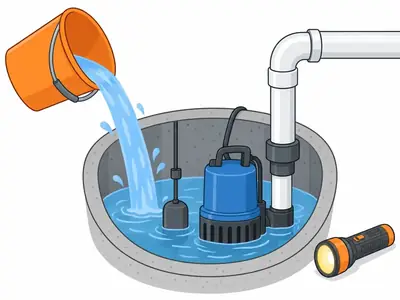
3. Pour water to trigger it
1. Fill a bucket with water.
2. Pour it slowly into the pit.
3. Watch for the pump to start as the level rises.
4. Check the water level drops quickly.
5. Note how long the pump takes to clear the pit.
This is the test that matters: it uses the real trigger, not your hand.
4. Check the discharge
1. Go outside and find where the pipe discharges.
2. Confirm water comes out with force.
3. Check the pipe is not frozen, blocked or buried.
4. Make sure the water runs away from the foundation.
5. A pump that runs but moves little water has a blocked or frozen line.
5. Test the check valve
1. The check valve stops water flowing back into the pit.
2. After the pump stops, listen for water running back.
3. If the pump cycles on and off repeatedly, the valve is failing.
4. Replace a stuck valve; they are cheap.
6. Test the backup
1. Unplug the main pump.
2. Pour water in and see whether the backup pump starts.
3. For a battery backup, check the battery charge and the alarm panel.
4. Replace a battery older than three to five years.
5. Test the backup every few months.
7. Check the electrics
1. Confirm the pump is on a GFCI protected outlet.
2. Check the cord for damage.
3. Do not use an extension cord permanently.
4. Make sure the pump is not on a switched outlet that someone turns off.
5. A pump that trips the breaker needs an electrician.
8. Clean the pit
1. Unplug the pump.
2. Remove silt and debris with gloves.
3. Check the pump intake is not blocked.
4. Clean the float and the pit walls.
5. Refit the lid so nothing falls in.
9. Make a maintenance habit
- Test in spring and before the wet season.
- Test the backup at the same time.
- Keep the discharge line clear of leaves.
- Check the pit after heavy rain.
- Replace a pump older than about ten years before it fails.
Common mistakes
- Testing by lifting the float only.
- Ignoring the discharge line outside.
- Leaving a stuck check valve that short-cycles the pump.
- Forgetting the backup battery.
- Running the pump on a long extension cord.
Related guides
- How to Dry Out a Damp Basement
- How to Install or Replace a Sump Pump Check Valve
- How to Install a Sump Pump
- How to Get a Sump Pump Ready for Spring Rain
- Water Pressure, Pipes and Sump Pumps: What to Check
- Sump Pump Discharge Pipe Frozen: How to Fix It
- Sump pump runs constantly after rain: what to check
FAQ
How often should I test a sump pump?
Every few months, and always before the wet season.
How do I test a sump pump without water?
Lift the float to trigger it, but also pour water to test the real flow.
Why does my sump pump run constantly?
Usually a failing check valve, a stuck float, or groundwater coming in faster than the pump clears it.
Can a sump pump run dry?
It should not. Running dry overheats the motor.
More from this topic
- Clean Sump Pump Pit and Check the Float: Simple Steps: Need to clean sump pump pit silt and debris? Learn the safe steps, test the float switch and keep your...
- Sump Pump Runs Constantly: What It Means: Sump pump runs constantly? It is usually a stuck float, a failed check valve or more water than it can...
- How to Replace a Sump Pump Float Switch: Learn how to replace a sump pump float switch: test the old one, unplug the pump, match the switch type, set...
- Sump Pump Battery Backup: A sump pump battery backup keeps your basement dry during a power outage. Learn how it works, how to test it...
- Sump Pump Not Working: What to Check: Sump pump not working? Check power, the float switch, the discharge pipe and the check valve. Safe steps,...
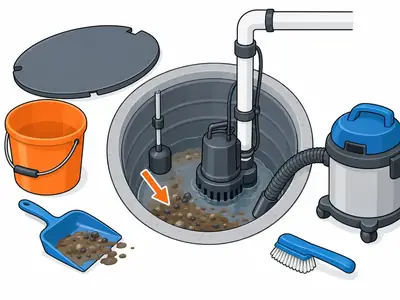 PlumbingClean Sump Pump Pit and Check the Float: Simple StepsNeed to clean sump pump pit silt and debris? Learn the safe steps, test the float switch and keep your basement dry when heavy rain arrives.
 PlumbingSump Pump Runs Constantly: What It MeansSump pump runs constantly? It is usually a stuck float, a failed check valve or more water than it can handle. How to tell and what to do.
 PlumbingHow to Replace a Sump Pump Float SwitchLearn how to replace a sump pump float switch: test the old one, unplug the pump, match the switch type, set the on and off levels and check the pump cycles.
 PlumbingSump Pump Battery BackupA sump pump battery backup keeps your basement dry during a power outage. Learn how it works, how to test it and how to maintain the battery and the pump.
 PlumbingSump Pump Not Working: What to CheckSump pump not working? Check power, the float switch, the discharge pipe and the check valve. Safe steps, tools and when to call a pro before the rain.