
How to Get Rid of Mice in the House
Part of: Kitchen
- Difficulty
- Moderate
- Time
- 2 to 4 hours, then a week of follow-up
- Tools
- Gloves, flashlight, steel wool or copper mesh, caulk, snap traps, peanut butter, disinfectant spray, paper towels, mask
- Call a pro if
- You see signs in many rooms, you hear scratching in walls for weeks, you find chewed wires, or you have a baby, a pet or a health concern that makes traps risky.
In this guide
- Wear protection
You hear scratching in the wall at night, find droppings in a drawer, or notice a chewed bag of rice. These are signs of mice. They breed fast, so a small problem can grow quickly. The goal is to catch the ones inside and close the ways in. Here is how to get rid of mice in the house.
This guide is part of our wider guide to tools, costs and first-home setup.
Confirm the signs
Signs include small dark droppings roughly like grains of rice, gnaw marks on food bags and cardboard, shredded paper or fabric nests, and greasy rub marks along baseboards. Check under sinks, behind the fridge, in the pantry, in the attic and in the garage. Use a flashlight. A musty, ammonia-like smell can point to a nest.
Find how they get in
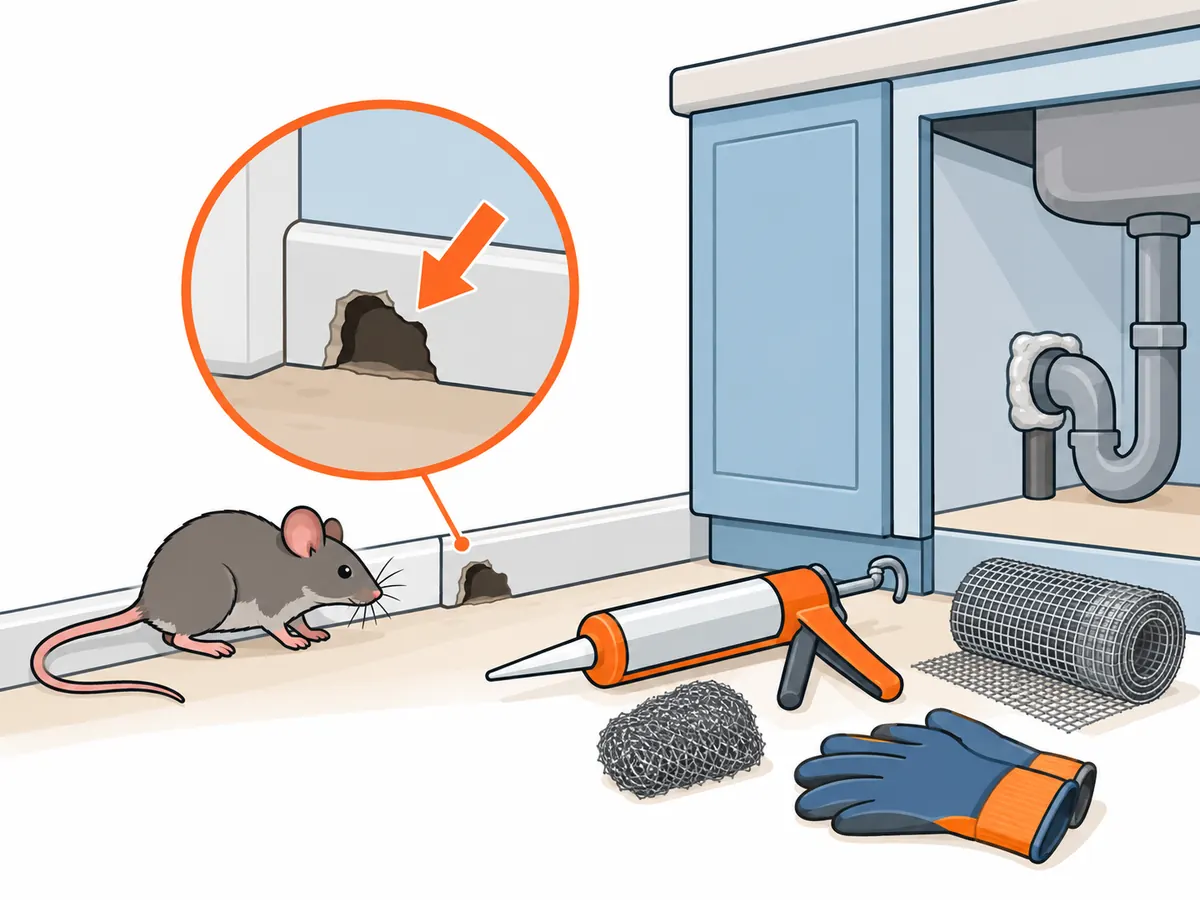
Mice can squeeze through very small gaps. A gap of about a quarter inch, roughly the width of a pencil, is enough for a mouse to squeeze through. Check the outside of the house for gaps around pipes, vents, the garage door, the foundation and the roof line. Inside, look under sinks, behind the stove and around the dryer vent. Mark each spot.
Seal the openings
Stuff small holes with steel wool or copper mesh, which mice do not like to chew through, and then cover it with caulk. For larger holes, use metal flashing or hardware cloth fixed with screws. Add a door sweep to exterior doors. See our guide to the gap under an exterior door. Do the sealing after you have trapped the mice inside, or leave a way out so you do not trap them behind walls.
Set traps
Snap traps are a common choice. Put them along walls where you see signs, with the bait end near the wall, because mice run along edges. Use a pea-sized amount of peanut butter or a bit of chocolate, pushed into the bait cup so they have to work for it. Set several traps, about 6 to 10 feet apart, because one trap is not enough. Check traps daily. Wear gloves and put the dead mouse in a sealed bag in the trash. Wash your hands.
Think carefully about poison
Poison baits can kill a mouse in a wall, where the smell lasts, and they can harm pets and wildlife. If you use any bait, follow the label, use a tamper-resistant station and keep it out of reach of children and pets. Many people avoid it for these reasons.
Clean up the right way
Put on gloves and a mask. Spray droppings and nests with a disinfectant until they are wet, wait the time on the label, then wipe them up with paper towels and put them in a sealed bag. Mop the floor. Do not sweep or vacuum dry droppings. Wash your hands afterward. Wash any food-contact surface with soap and water.
Remove what attracts them
Store pantry food in glass, metal or hard plastic containers. Keep pet food in sealed containers and do not leave bowls out at night. Take out the trash. Clear clutter in the garage and attic, since mice like to nest in cardboard. Trim shrubs touching the house, and keep firewood away from the walls.
When to call a pro
If trapping does not work after a week or two, or you see mice at all hours, there may be a large infestation. A pest professional can find the entry points and set a plan. If wires are chewed, an electrician should check them.
Related guides
- Ants in the Kitchen: How to Get Rid of Them and Keep Them Out
- How to Get Rid of Cockroaches: Sanitation, Baits and When to Call a Pro
- How to Check a New Home for Pests Before You Move In
- How to Pack a Kitchen for a Move (Dishes, Glasses and Appliances)
- How to Set Up Utilities When You Move Into a New Home
- How to Get Rid of Fruit Flies in the Kitchen
FAQ
Do ultrasonic repellers work?
Evidence is mixed. Do not rely on them alone.
How long will it take?
A small problem may clear in a week. A bigger one may need a few weeks.
Is peanut butter the best bait?
It works for many people. Use a small amount.
More from this topic
- Ants in the Kitchen: How to Get Rid of Them: Ants in the kitchen follow food and water trails. Clean the trail, use baits safely, seal entry points and...
- How to Get Rid of Silverfish in Bathrooms, Closets and Books: Learn how to get rid of silverfish: cut humidity, remove food sources, seal cracks, use traps or dust safely...
- How to Get Rid of Cockroaches: Get rid of cockroaches with a four-week plan: map activity, place gel bait in small dots, remove food...
- How to Get Rid of Clothes Moths and Save Your Wardrobe: Learn how to get rid of clothes moths: find the infested items, deep clean closets and fabrics, trap the...
- How to Get Rid of Dust Mites in Your Home: Learn how to get rid of dust mites: wash bedding hot, encase mattresses, control humidity, and clean the...
 KitchenAnts in the Kitchen: How to Get Rid of ThemAnts in the kitchen follow food and water trails. Clean the trail, use baits safely, seal entry points and keep them from coming back.
 KitchenHow to Get Rid of Silverfish in Bathrooms, Closets and BooksLearn how to get rid of silverfish: cut humidity, remove food sources, seal cracks, use traps or dust safely and protect books, paper and closets.
 KitchenHow to Get Rid of CockroachesGet rid of cockroaches with a four-week plan: map activity, place gel bait in small dots, remove food sources, seal cracks and check traps weekly.
 First HomeHow to Get Rid of Clothes Moths and Save Your WardrobeLearn how to get rid of clothes moths: find the infested items, deep clean closets and fabrics, trap the adults and protect wool long term.
 Tools and BasicsHow to Get Rid of Dust Mites in Your HomeLearn how to get rid of dust mites: wash bedding hot, encase mattresses, control humidity, and clean the fabrics where they live.