
How to Get Rid of Silverfish in Bathrooms, Closets and Books
Part of: Kitchen
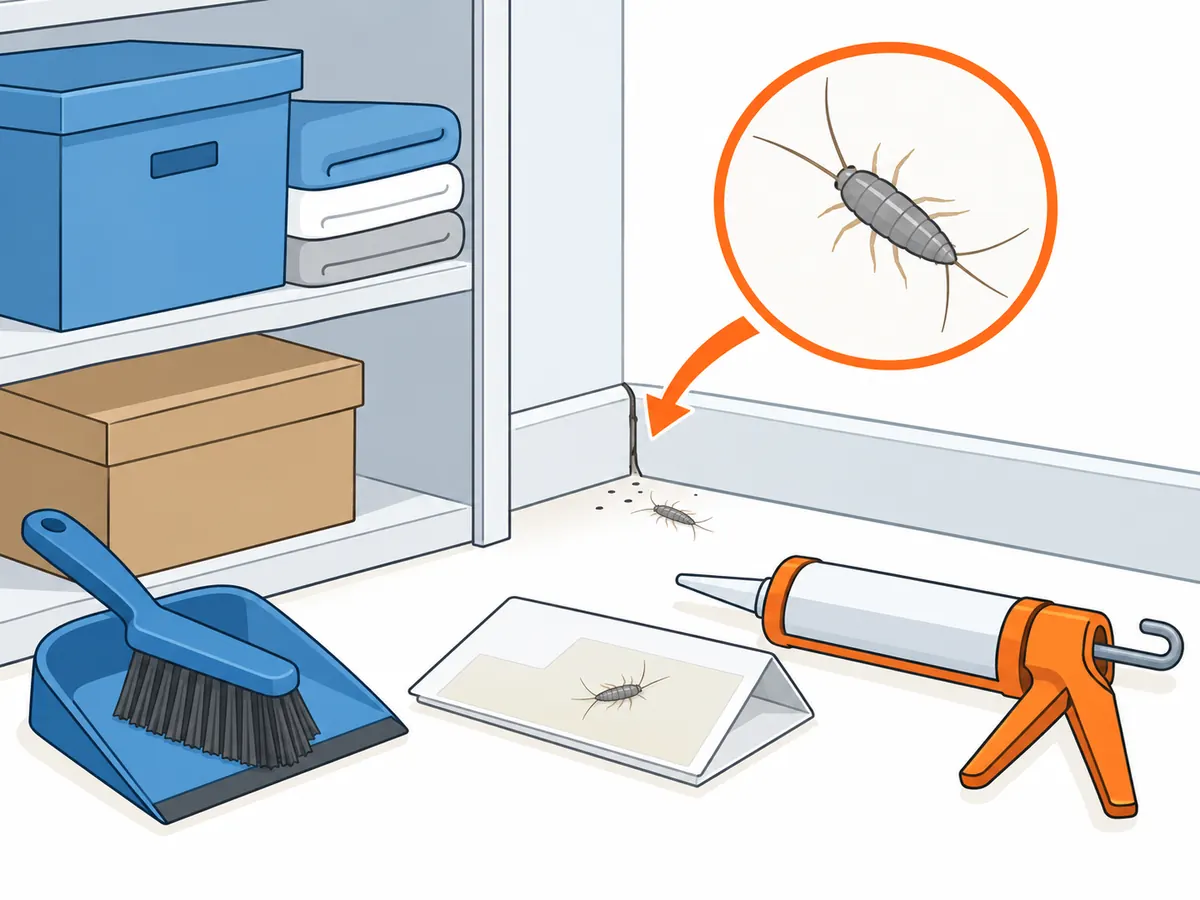
- Difficulty
- Easy to moderate
- Time
- 1 to 3 hours plus weekly follow-up
- Tools
- Dehumidifier, hygrometer, sticky traps, caulk, airtight bins, vacuum, food-grade diatomaceous earth, flashlight
- Call a pro if
- You see many silverfish in several rooms, you find damage to important documents, or you also see other pests like roaches or moisture damage.
In this guide
Silverfish are small, wingless insects with a silvery color and a fish-like wiggle. They are not dangerous to people, but they chew on paper, glue, fabric and starch. They like damp, dark places, such as bathrooms, basements, attics and closets. If you see one, check the room for moisture. Here is how to get rid of silverfish by changing their habitat.
This guide is part of our wider guide to tools, costs and first-home setup.
Confirm what you see
Silverfish are about half an inch long with a tapering body and long antennae and three tails at the rear. They move fast. Signs include small holes in paper, yellow stains on fabric, and tiny pepper-like droppings. They usually come out at night.
Step 1: Reduce moisture
Silverfish need humidity, often above 75 percent. Use a hygrometer to check. Run a dehumidifier in damp rooms and basements. Fix leaks, and run bathroom fans. Vent the dryer outside. Keep humidity in the 30 to 50 percent range if you can. See our guide to a musty basement smell for drying tips.
Step 2: Remove food and nesting spots
Silverfish eat starch, glue, paper and some fabrics. Store books, papers and photos in sealed plastic bins instead of cardboard boxes. Clear clutter in closets and attics. Clean up crumbs, store dry food in airtight containers and wash fabrics you want to protect.
Step 3: Vacuum and clean
Vacuum cracks and corners, along baseboards and under shelves. Empty the canister or bag outside. Wipe shelves with a damp cloth and let them dry.
Step 4: Seal the cracks
Caulk gaps around pipes, baseboards, window frames and cabinets. Silverfish hide in tiny spaces, so sealing removes their shelter and their access. See our guide to gaps in caulk or baseboards.
Step 5: Use traps
Sticky traps placed along baseboards, in corners and in closets will catch silverfish and show where they are most active. Replace them every week or two. You can also make a trap with a jar wrapped in masking tape on the outside, with a piece of bread inside, since they can climb the tape but not out of the slick glass. Check it daily.
Step 6: Use dust carefully
Food-grade diatomaceous earth can be dusted in a thin line in cracks and behind appliances, where silverfish pass. It works by drying out the insects. Keep it dry and out of reach of kids and pets. Do not breathe the dust. Boric acid products are also sold for this, but they are toxic if eaten, so use only as the label says and keep them where kids and pets cannot reach.
Protect books and papers
Keep books on open shelves away from outside walls, not in damp basements. Store important papers in sealed plastic containers with a desiccant pack. Check them twice a year. Avoid storing paper in attics or basements.
When to call a pro
If silverfish are everywhere, if you also see roaches or water damage, or if the infestation continues after several weeks, a pest professional can look for hidden moisture or a nest.
Check the results after two weeks. Fewer insects on the sticky traps and no new damage to paper or fabric mean the damp spots and food sources are under control. If you keep finding them, look again for hidden moisture behind baseboards or under sinks.
Related guides
- Fruit Flies in the Kitchen: Where They Come From and How to End It
- How to Check a New Home for Pests Before You Move In
- Ants in the Kitchen: How to Get Rid of Them and Keep Them Out
- How to Get Rid of Cockroaches
- How to Get Rid of Pantry Moths for Good
- How to Get Rid of Fruit Flies in the Kitchen
FAQ
Are silverfish harmful?
They do not bite or spread disease, but they damage paper and fabric.
Why do they appear in the bathroom?
Humidity and food in the form of soap, glue and hair.
How long does it take to clear them?
It can take weeks. Drying out the room is the key.
More from this topic
- How to Get Rid of Mice in the House: Learn how to get rid of mice in the house: find signs, seal entry points, set traps safely, clean droppings...
- How to Get Rid of a Musty Basement Smell by Fixing the Cause: A musty basement smell usually means moisture. Find the source, dry the air, clean affected surfaces and keep...
- How to Get Rid of Clothes Moths and Save Your Wardrobe: Learn how to get rid of clothes moths: find the infested items, deep clean closets and fabrics, trap the...
- How to Get Rid of Dust Mites in Your Home: Learn how to get rid of dust mites: wash bedding hot, encase mattresses, control humidity, and clean the...
- How to Keep Pests Out of the Garage Year-Round: Learn how to keep pests out of the garage: seal gaps, remove food and clutter, manage moisture, and stop...
 KitchenHow to Get Rid of Mice in the HouseLearn how to get rid of mice in the house: find signs, seal entry points, set traps safely, clean droppings with care and know when to call a pro.
 Heating and CoolingHow to Get Rid of a Musty Basement Smell by Fixing the CauseA musty basement smell usually means moisture. Find the source, dry the air, clean affected surfaces and keep humidity down so the smell does not return.
 First HomeHow to Get Rid of Clothes Moths and Save Your WardrobeLearn how to get rid of clothes moths: find the infested items, deep clean closets and fabrics, trap the adults and protect wool long term.
 Tools and BasicsHow to Get Rid of Dust Mites in Your HomeLearn how to get rid of dust mites: wash bedding hot, encase mattresses, control humidity, and clean the fabrics where they live.
 Garage and OutdoorsHow to Keep Pests Out of the Garage Year-RoundLearn how to keep pests out of the garage: seal gaps, remove food and clutter, manage moisture, and stop rodents and insects from settling in.