
Ants in the Kitchen: How to Get Rid of Them
Part of: Kitchen
- Difficulty
- Easy
- Time
- 30 minutes to start, a few days to finish
- Tools
- Soap and water, white vinegar, sponge, ant bait stations, caulk, caulk gun, paper towels, flashlight
- Call a pro if
- You see large ants with wings, sawdust-like debris near wood, ants keep returning for weeks after baiting, or the infestation is in the walls.
In this guide
- Chemical safety
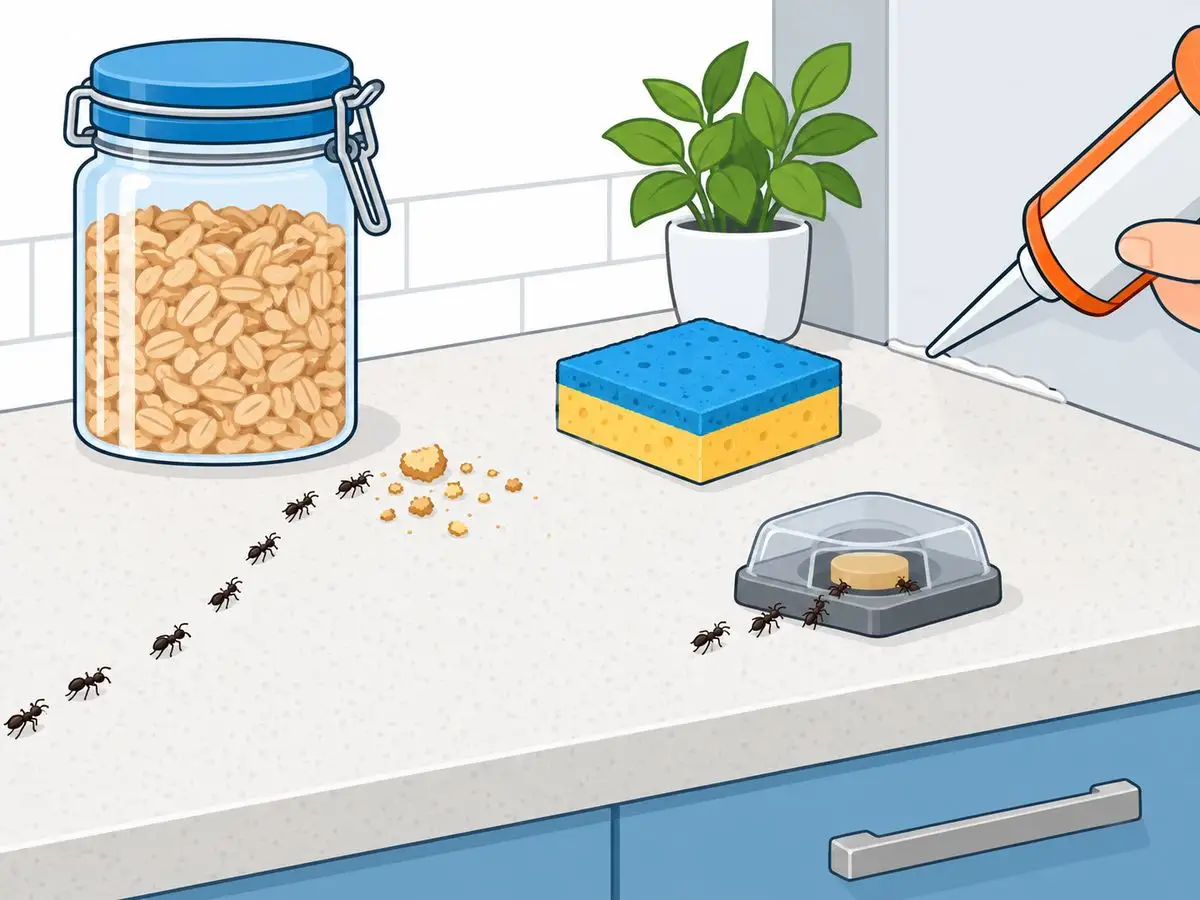
Ants in the kitchen are rarely a sign of a dirty house. A single scout finds a crumb, goes home and leaves a scent trail. In an hour, a line of ants follows. The way to stop them is to break the trail and then deal with the nest, not just the ants you can see.
This guide is part of our wider guide to tools, costs and first-home setup.
Do not squash and spray
Killing the visible ants feels good, but the colony sends more. A contact spray also scatters ants and can spread the problem to other rooms. You want the workers to carry food back to the nest, so use a bait.
Clean the trail
Wipe the trail with soapy water or a vinegar and water mix. This removes the scent they follow. Wipe the whole path from the door or window to the food. Wash counters, the stove top and the floor edges. Look for sticky drips on jars and the pantry shelf.
Find the entry point
Follow the line with a flashlight. Ants may enter through a gap around a window, a crack at the baseboard, a pipe hole under the sink or a gap in the door seal. Mark where they come in and out.
Use bait
Put ant bait stations near the trail, but not on it. Ants take the bait to the nest, and it can take a few days to a week to see an effect. Do not clean away the ants at the bait. It is working. Replace bait when it is used up or dried out.
Seal entry points
Once the ants are gone, caulk small cracks around windows and along baseboards, and seal gaps around pipes with caulk or steel wool for larger holes. Check the weatherstripping at the door.
Remove the food and water
Store sugar, honey, pet food and cereal in sealed containers. Wipe sticky spots. Empty the trash often. Fix drips, since ants also seek water. Our guide to fixing a leaky faucet can help.
Outside the house
Trim shrubs touching the walls. Move firewood and mulch away from the foundation. Look for ant hills near the house and treat them with a bait made for outdoors.
Know when to call a pro
If the ants are large and black with wings, or you see wood dust near trim, you may have carpenter ants or termites, which can damage wood. Call a pest control company.
Different ants, different habits
Small sugar-loving ants go for sweet spills, while others prefer grease and protein. If one bait does not work in a few days, try another type. Place the bait where you see the most ant traffic, and keep it up for about a week. Many people stop too early because the ants seem to increase at first. That is the bait being carried home.
Cleaning products that help and ones that do not
Plain dish soap in warm water is one of the best cleaners for ant trails because it removes the scent. Vinegar works too, though its smell fades quickly. Peppermint oil and similar sprays are popular, but they mostly push ants to a new path rather than solve the problem, and strong essential oils can bother pets, especially cats. Skip them near pet bowls. Keep your bait stations in place and avoid cleaning in the exact spot where ants are feeding from them. Wipe elsewhere, and keep the bait area calm.
Related guides
- How to Get Rid of Cockroaches: Sanitation, Baits and When to Call a Pro
- Fruit Flies in the Kitchen: Where They Come From and How to End It
- How to Get Rid of Silverfish in Bathrooms, Closets and Books
- How to Pack a Kitchen for a Move (Dishes, Glasses and Appliances)
- How to Check a New Home for Pests Before You Move In
FAQ
Why do ants come in winter?
They look for warmth, food and water.
Do vinegar sprays kill the nest?
No. They clean the scent trail, but do not reach the nest.
How long does bait take?
Often several days. Be patient.
More from this topic
- How to Get Rid of Cockroaches: Get rid of cockroaches with a four-week plan: map activity, place gel bait in small dots, remove food...
- How to Get Rid of Mice in the House: Learn how to get rid of mice in the house: find signs, seal entry points, set traps safely, clean droppings...
- How to Get Rid of Silverfish in Bathrooms, Closets and Books: Learn how to get rid of silverfish: cut humidity, remove food sources, seal cracks, use traps or dust safely...
- How to Get Rid of Fruit Flies in the Kitchen: Learn how to get rid of fruit flies: find the breeding source, trap the adults, clean the drains and stop...
- Fruit Flies in the Kitchen: Fruit flies in the kitchen breed in ripe produce and damp spots. Remove the source, set a simple trap and...
 KitchenHow to Get Rid of CockroachesGet rid of cockroaches with a four-week plan: map activity, place gel bait in small dots, remove food sources, seal cracks and check traps weekly.
 KitchenHow to Get Rid of Mice in the HouseLearn how to get rid of mice in the house: find signs, seal entry points, set traps safely, clean droppings with care and know when to call a pro.
 KitchenHow to Get Rid of Silverfish in Bathrooms, Closets and BooksLearn how to get rid of silverfish: cut humidity, remove food sources, seal cracks, use traps or dust safely and protect books, paper and closets.
 KitchenHow to Get Rid of Fruit Flies in the KitchenLearn how to get rid of fruit flies: find the breeding source, trap the adults, clean the drains and stop them coming back for good.
 KitchenFruit Flies in the KitchenFruit flies in the kitchen breed in ripe produce and damp spots. Remove the source, set a simple trap and keep them from coming back.