
Fruit Flies in the Kitchen
Part of: Kitchen
- Difficulty
- Easy
- Time
- 30 minutes plus a few days
- Tools
- Apple cider vinegar, dish soap, small bowl or jar, plastic wrap, rubber band, sponge, trash bags, drain brush
- Call a pro if
- Flies keep coming back after a thorough cleaning, you see them coming from a drain with a bad smell, or you find larvae in more than one area.
In this guide
- Chemical safety
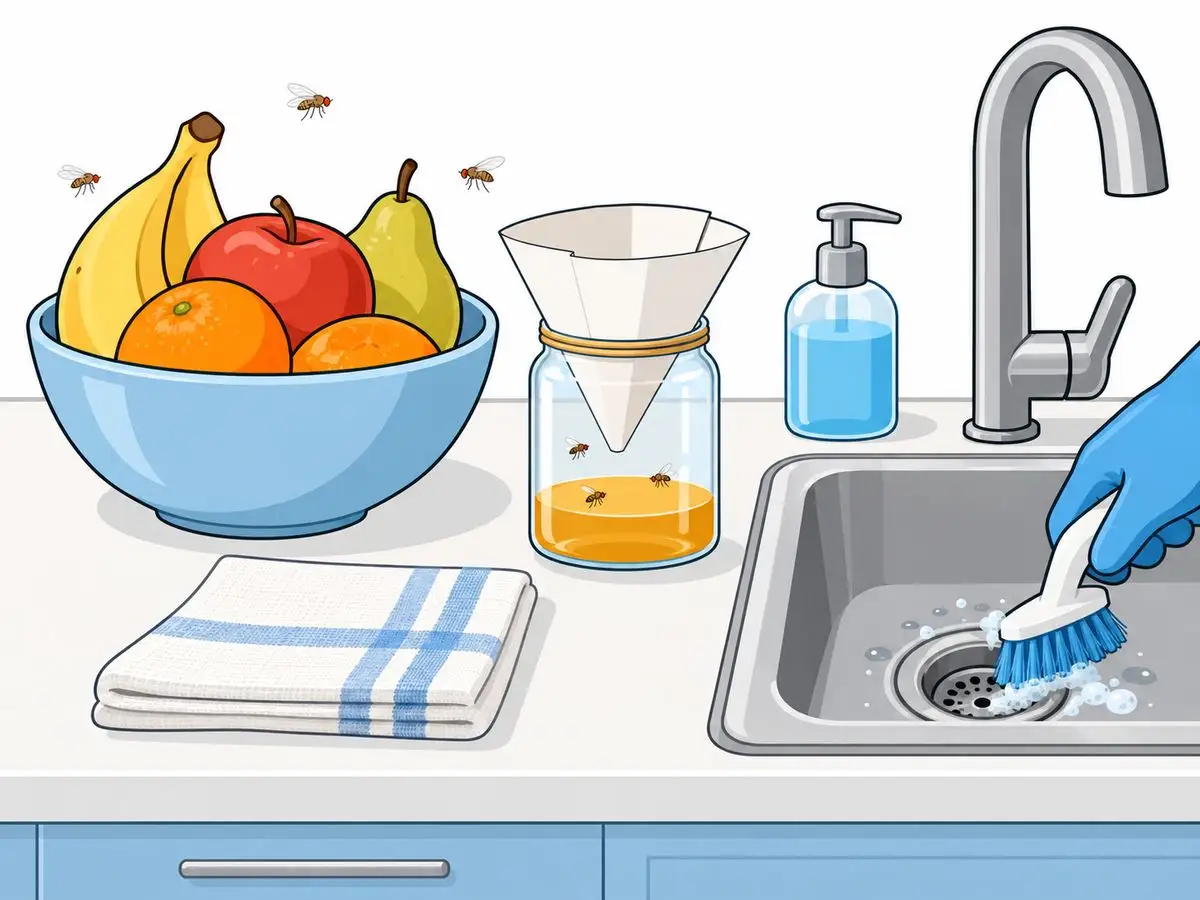
Fruit flies in the kitchen show up out of nowhere. You bring home a few bananas, and two days later there is a small cloud around the fruit bowl. These tiny flies are drawn to the smell of fermenting fruit. They lay eggs on it, and a new generation hatches in about a week. So the goal is to remove what feeds them, not just swat the adults.
This guide is part of our wider guide to tools, costs and first-home setup.
Find the source first
Look around the kitchen for anything that is ripe, damp or sour.
- Fruit and vegetables on the counter, especially overripe ones.
- Open trash or recycling with sticky bottles and cans.
- A sink with leftover food or a wet sponge.
- A drain with a film of gunk in it.
- Spills under the fridge or in the pantry.
- Wet mop heads or dirty cloths.
Throw away anything that is spoiled. Put the trash out of the house. Wipe the counters and wash fruit that you keep, or put it in the fridge.
Trap the adults
A simple trap works well. Pour about half an inch of apple cider vinegar into a small bowl or jar. Add a drop or two of dish soap and stir gently. The soap breaks the surface tension, so flies sink. Cover the top with plastic wrap, poke a few small holes in it, and leave it near the fruit. Empty and refresh it every few days. A little overripe fruit works as bait too.
Check the drains
Some small flies are drain flies, which look similar but are fuzzier and live in sink drains. To check, tape a piece of clear tape over the drain opening overnight. If flies stick to it, the drain is the breeding spot. Scrub the pipe with a drain brush and flush with hot water. Do not use chemical drain cleaners with other products. If the problem keeps up, a plumber can check for a deeper clog, and our guide to unclogging a drain can help.
Clean for a week
For the next several days, wipe the counters every night, empty the trash often, and keep food covered. Rinse bottles and cans before you put them in recycling. Do not leave dishes with food overnight. Eggs and larvae need moisture, so dry the sink at night.
Store produce smartly
Keep bananas, tomatoes and stone fruit in the fridge once they are ripe. Keep onions and potatoes in a cool, dry place and check them for soft spots. Do not leave cut fruit out.
Seal the entry
Fruit flies can come in through window screens, or they hitchhike in on grocery produce. Repair torn screens. Our guide to repairing a window screen shows how. Rinse fresh produce when you get home.
When to get help
If you have a large number of flies even after a week of cleaning, there may be a hidden source, such as a spill behind an appliance, a leak under the sink or a broken drain line. Look for the source before you call a pest professional.
If you have a compost bin or a pet bowl
Compost pails, pet food bowls and recycling bins are favorite spots. Empty the kitchen compost pail every day or two and rinse it, and keep a tight lid on it. Wash pet bowls after each meal, and do not leave wet food out for hours. If your trash can has a sticky bottom, wash it with soap and hot water and let it dry in the sun. A few minutes on these spots often ends the problem faster than any trap.
Related guides
- How to Replace a Kitchen Sink Strainer Basket and Stop the Drip
- How to Pack a Kitchen for a Move (Dishes, Glasses and Appliances)
- How to Get Rid of Silverfish in Bathrooms, Closets and Books
- How to Check a New Home for Pests Before You Move In
- How to Line a Kitchen Shelf
FAQ
Where do they come from?
Mostly from produce brought home, or tiny eggs that were already there.
How long does it take to get rid of them?
Often several days to a couple of weeks, depending on the source.
Do bug sprays work?
They kill adults for a moment, but not eggs or the source. Cleaning is better.
More from this topic
- How to Get Rid of Fruit Flies in the Kitchen: Learn how to get rid of fruit flies: find the breeding source, trap the adults, clean the drains and stop...
- Replace Kitchen Sink Trap: Step by Step: Kitchen sink trap leaking, cracked or smelly? Replace kitchen sink trap parts step by step, match the pipe...
- How to Fix a Slow Kitchen Sink Drain Without Chemicals: How to fix a slow kitchen sink drain: clean the strainer and tailpiece, clear the P-trap, snake the branch...
- Ants in the Kitchen: How to Get Rid of Them: Ants in the kitchen follow food and water trails. Clean the trail, use baits safely, seal entry points and...
- How to Get Rid of Cockroaches: Get rid of cockroaches with a four-week plan: map activity, place gel bait in small dots, remove food...
 KitchenHow to Get Rid of Fruit Flies in the KitchenLearn how to get rid of fruit flies: find the breeding source, trap the adults, clean the drains and stop them coming back for good.
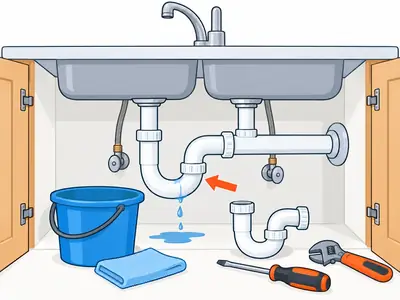 KitchenReplace Kitchen Sink Trap: Step by StepKitchen sink trap leaking, cracked or smelly? Replace kitchen sink trap parts step by step, match the pipe size and test for leaks.
 KitchenHow to Fix a Slow Kitchen Sink Drain Without ChemicalsHow to fix a slow kitchen sink drain: clean the strainer and tailpiece, clear the P-trap, snake the branch line and stop grease buildup.
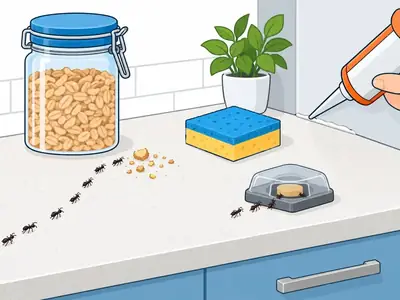 KitchenAnts in the Kitchen: How to Get Rid of ThemAnts in the kitchen follow food and water trails. Clean the trail, use baits safely, seal entry points and keep them from coming back.
 KitchenHow to Get Rid of CockroachesGet rid of cockroaches with a four-week plan: map activity, place gel bait in small dots, remove food sources, seal cracks and check traps weekly.