
How to Unclog a Drain Without Harsh Chemicals
Part of: Basic plumbing
- Difficulty
- Easy
- Time
- 15 to 40 minutes
- Tools
- Plunger, drain snake or plastic drain tool, bucket, rubber gloves, baking soda and white vinegar
- Call a pro if
- More than one drain is slow, water backs up in the tub or toilet when you use a sink, or a snake will not pass the clog.
In this guide
- Wear protection
- Chemical safety
This guide covers how to unclog a drain in the sink, tub or shower, starting with the least harsh methods. A slow or blocked drain usually comes from hair, soap scum and grease. Most clogs sit within a couple of feet of the opening, which means you can often unclog a drain yourself without strong chemicals. Chemical drain cleaners can damage pipes, are harsh on skin and eyes, and can be dangerous if they splash or mix with other products.
This guide is part of our wider guide to clogs and slow drains.
Step 1: Remove what you can see
Take off the stopper or strainer. In a bathroom sink or tub, hair often wraps around the stopper. Pull it out with gloved fingers or a bent piece of wire. Wipe off the slime and put the stopper back. This is often all it takes.
Step 2: Try hot water
For a kitchen sink with a grease clog, pour a kettle of very hot, not boiling, water down the drain in two or three rounds. Add a squirt of dish soap first. Do not use boiling water on PVC pipes or a cracked porcelain sink, because it can soften or damage them.
Step 3: Use a plunger
Use a cup plunger on a flat-bottomed sink or tub. Fill the sink with enough water to cover the cup. If the sink has an overflow hole, block it with a wet rag. Seat the plunger over the drain and pump it hard 15 to 20 times, keeping the rim sealed to the surface. Then see if the water drains. Repeat a few times if needed.
Step 4: Try baking soda and vinegar
This will not cut through a heavy clog, but it can clear light buildup. Add half a cup of baking soda, then half a cup of white vinegar. Cover the drain and wait 15 minutes. Flush with hot water.
Step 5: Use a drain snake
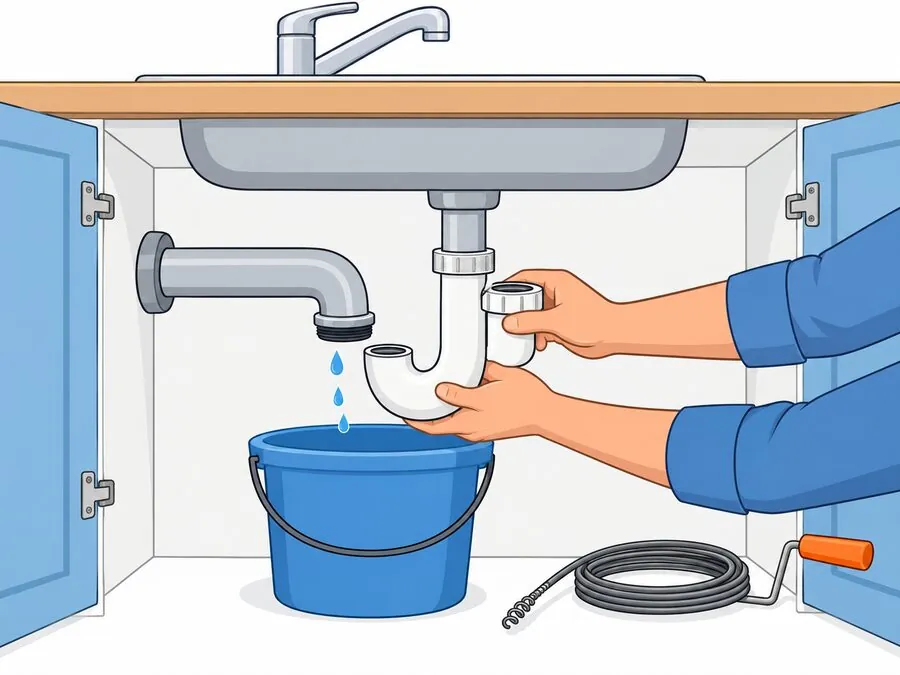
A plastic drain snake, sometimes called a hair tool, costs a few dollars and has barbs that catch hair. Push it down the drain, twist, and pull it back slowly. Clean off what comes up. For deeper clogs, a small hand-crank auger works better. Push the cable in until it stops against something, then turn the handle so the tip bores into the clog or snags it. Retract it and flush with water.
Step 6: Clean the trap
If the water still will not drain, the P-trap under the sink may be blocked. Set a bucket beneath the trap, back off the two slip nuts, and lift the curved pipe away. Empty it, rinse it and check the pipe stub for buildup. Reconnect it, making sure the washers are seated, and run water to test for leaks.
Prevent future clogs
- Use a hair catcher in the shower and tub.
- Do not pour cooking grease down the sink. Let it cool and put it in the trash.
- Run hot water for a few seconds after using the kitchen sink.
- Clean stoppers every month.
Common mistakes
- Mixing different chemical cleaners. This can release toxic fumes.
- Plunging with a drain cleaner still in the sink. It can splash.
- Forcing a snake too hard and scratching the pipe.
When to call a plumber
When several drains slow down together, when water backs up into a tub or floor drain, or if you smell sewage, the problem is probably in the main line. That needs a plumber with a larger tool.
Related guides
- How to Fix a Slow Kitchen Sink Drain Without Chemicals
- How to Unclog a Bathtub Drain With a Hair Clog
- Slow Bathroom Sink Drain: How to Fix It
- How to Unclog a Toilet Without a Plunger: 5 Methods That Work
- How to Clean Oven Racks Without Harsh Chemicals
- Water Heater Drain Valve Leak: How to Fix It
FAQ
Do baking soda and vinegar really unclog a drain?
They can loosen light buildup, but they will not break up a solid hair clog. A snake or plastic drain tool works better.
Is it safe to use chemical drain cleaners?
They can burn skin and damage old pipes. Try a plunger or snake first.
Why does my drain clog again so quickly?
Hair, grease and soap film are the usual reasons. A drain strainer and monthly cleaning help.
More from this topic
- How to Use a Drain Auger: Clear Clogs a Plunger Can't: How to use a drain auger: feed, crank and retrieve the cable through sinks, tubs and toilets without...
- How to Unclog a Kitchen Sink: Clear It in Minutes: How to unclog a kitchen sink with boiling water, a plunger and a P-trap cleanout. Fix a slow or blocked drain...
- How to Unclog a Shower Drain: Hair Clogs Gone in 30 Minutes: How to unclog a shower drain: pull the cover, extract the hair, flush the line and auger the stubborn ones,...
- How to Unclog a Toilet: Plunger, Hot Water and Auger: Learn how to unclog a toilet with a flange plunger, hot water and soap, or a toilet auger, plus what to avoid...
- How to Unclog a Toilet Without a Plunger: How to unclog a toilet without a plunger using hot water, dish soap, a toilet brush, a wire hanger...
 PlumbingHow to Use a Drain Auger: Clear Clogs a Plunger Can'tHow to use a drain auger: feed, crank and retrieve the cable through sinks, tubs and toilets without scratching fixtures or pushing clogs deeper.
 PlumbingHow to Unclog a Kitchen Sink: Clear It in MinutesHow to unclog a kitchen sink with boiling water, a plunger and a P-trap cleanout. Fix a slow or blocked drain without chemicals.
 PlumbingHow to Unclog a Shower Drain: Hair Clogs Gone in 30 MinutesHow to unclog a shower drain: pull the cover, extract the hair, flush the line and auger the stubborn ones, all without chemicals.
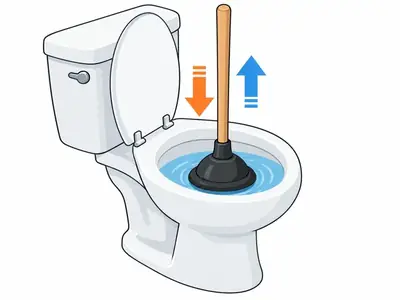 PlumbingHow to Unclog a Toilet: Plunger, Hot Water and AugerLearn how to unclog a toilet with a flange plunger, hot water and soap, or a toilet auger, plus what to avoid and when to call a plumber.
 PlumbingHow to Unclog a Toilet Without a PlungerHow to unclog a toilet without a plunger using hot water, dish soap, a toilet brush, a wire hanger alternative or an auger, and when to stop.