
How to Use a Drain Auger: Clear Clogs a Plunger Can't
Part of: Basic plumbing
- Difficulty
- Moderate
- Time
- 20 to 45 minutes per drain
- Tools
- A hand auger or toilet auger, a bucket, gloves, old towels
- Call a pro if
- The auger hits something solid it cannot pass, multiple drains clog at once, or sewage backs up anywhere, since those mean main-line trouble.
In this guide
- Wear protection
- Chemical safety
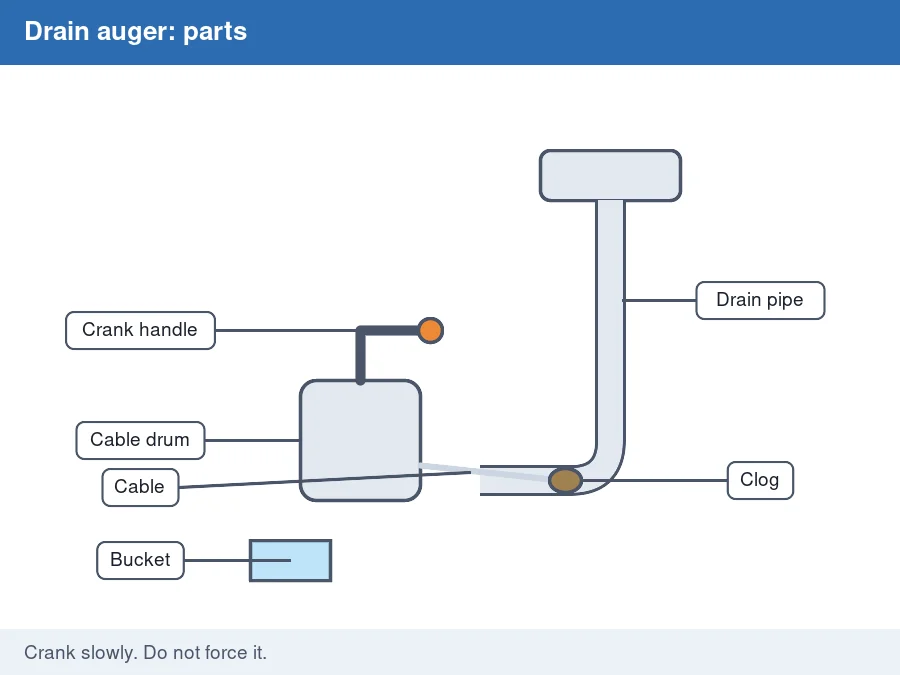
When the plunger fails, the auger is next, and learning how to use a drain auger properly turns most clogs into a twenty-minute job. The tool is simple, a coiled cable you feed and crank, but technique decides whether you clear the blockage or just poke a hole through it. Here is the full method for each fixture.
1. Pick the right auger for the drain
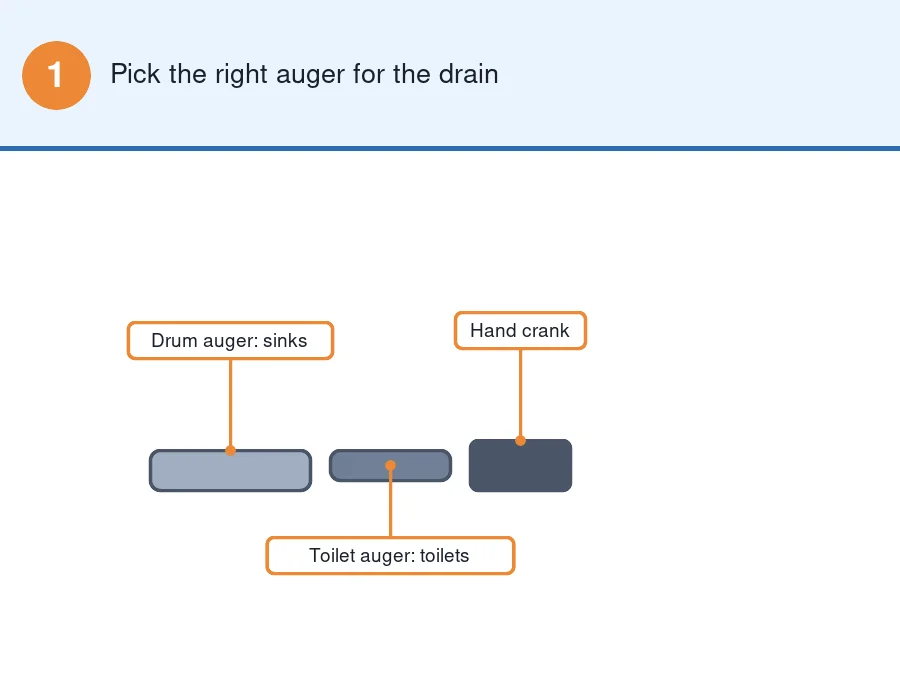
Three tools, three jobs.
1. A hand auger with a quarter-inch cable handles sink and tub drains.
2. A toilet auger, with its protective sleeve, is the only auger for toilets.
3. A drum auger or rental power auger handles longer runs toward the main line.
4. Do not improvise with straightened hangers; they scratch fixtures and break off.
2. Prep the area and the drain
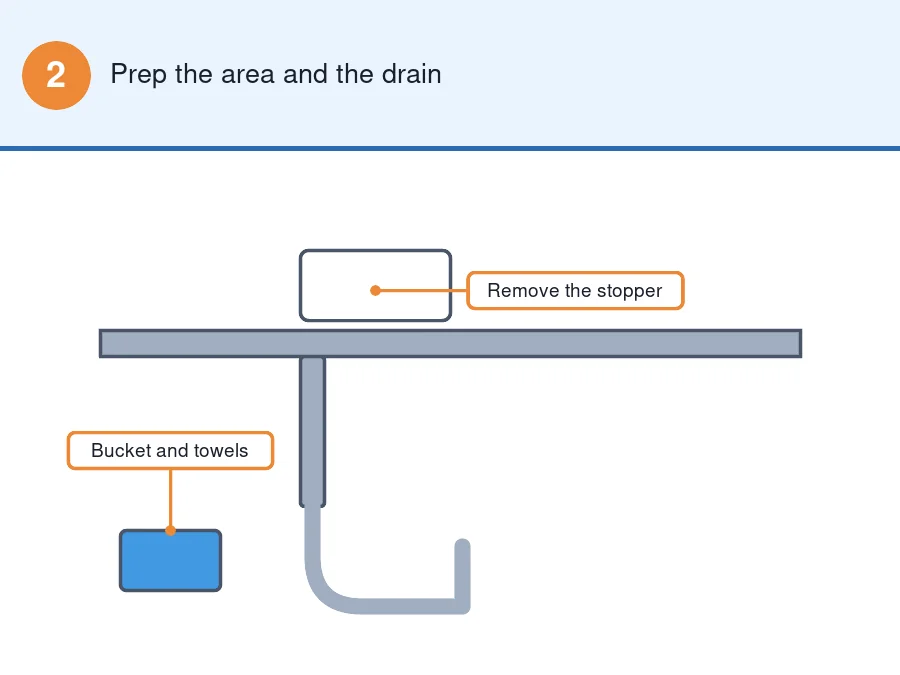
Two minutes that save twenty.
1. Lay towels and set a bucket next to the fixture; auger cables come back dirty.
2. Remove the stopper or strainer; hair clogs often live right there and lift straight out.
3. For sinks, the cleanest path is often through the trap: loosen the slip nuts, empty it into the bucket, then auger past it if the clog persists.
4. Run a little water so you can feel when the drain clears.
3. Feed the cable properly
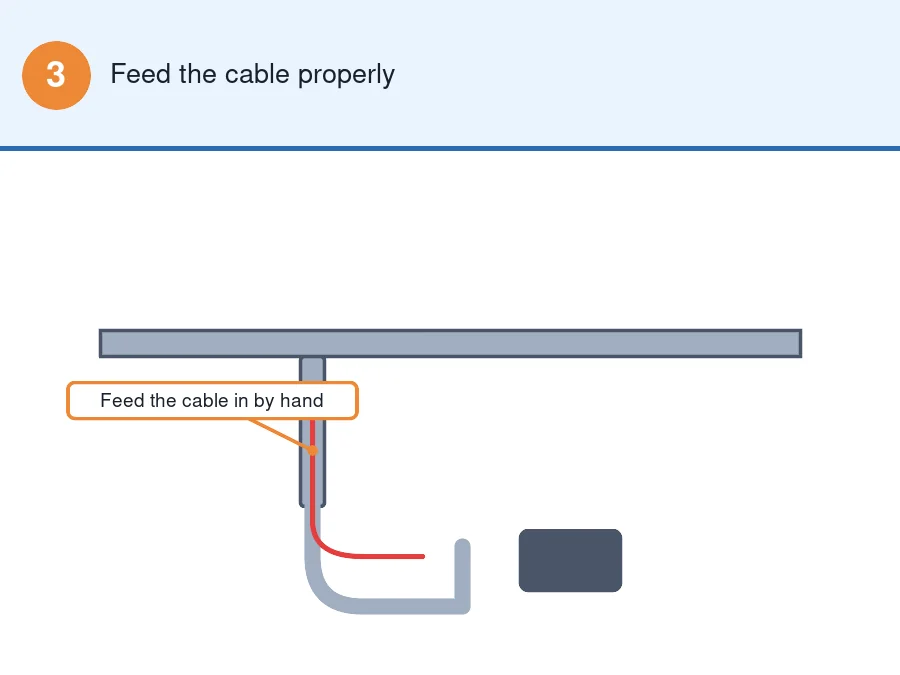
Patience beats force at every bend.
1. Loosen the set screw and feed cable slowly into the drain while turning the handle clockwise.
2. When the cable stops at a bend, pull back slightly, turn, and feed again; cranking guides it around traps.
3. Never force the cable; kinked cables jam, and forced cables scratch pipes.
4. Keep about six inches of cable between your hand and the drain for control.
4. Work the clog, don't just poke it
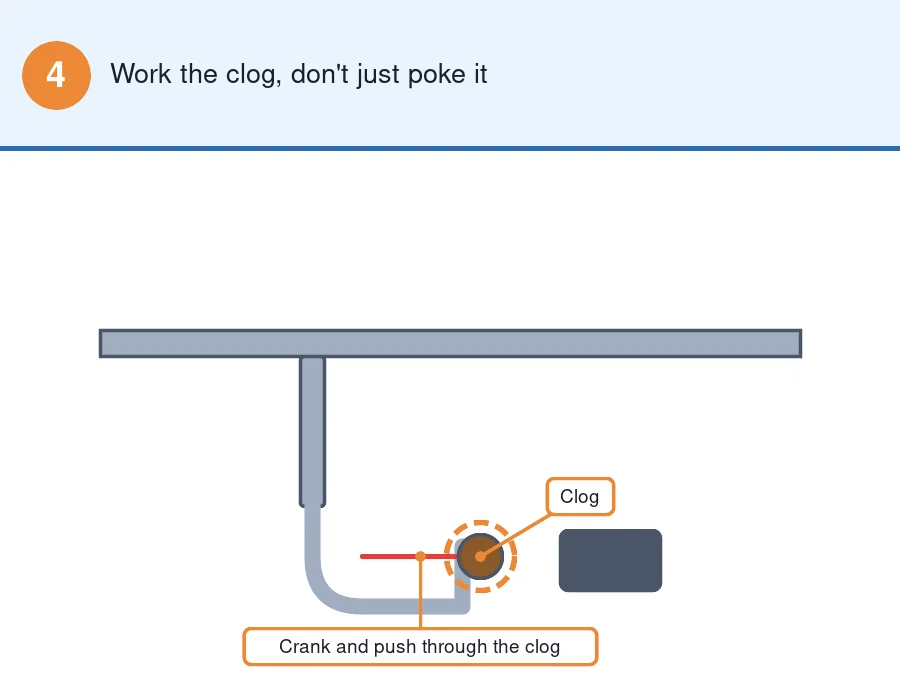
The goal is retrieval, not relocation.
1. When the cable reaches resistance, tighten the set screw and crank steadily.
2. The tip either breaks through or hooks the blockage; you want the hook.
3. Push-pull gently while cranking to work the cable into the mass.
4. Pull the cable back slowly, still turning, and expect the clog to arrive with it.
5. Repeat until the water runs free
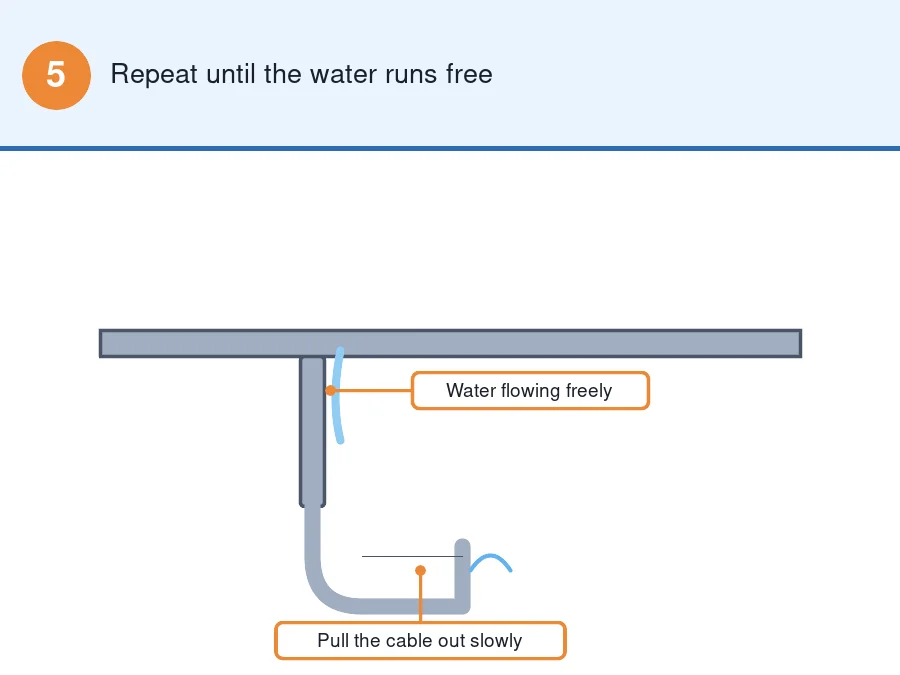
One pass rarely finishes.
1. Clean the retrieved mess off the cable into the bucket.
2. Feed and retrieve again until the cable comes back clean.
3. Run hot water for a minute and watch the drain speed.
4. A drain that stays slow after clean retrieval has buildup on the pipe walls; another pass with the cable turning fast usually strips it.
6. Use a toilet auger the right way
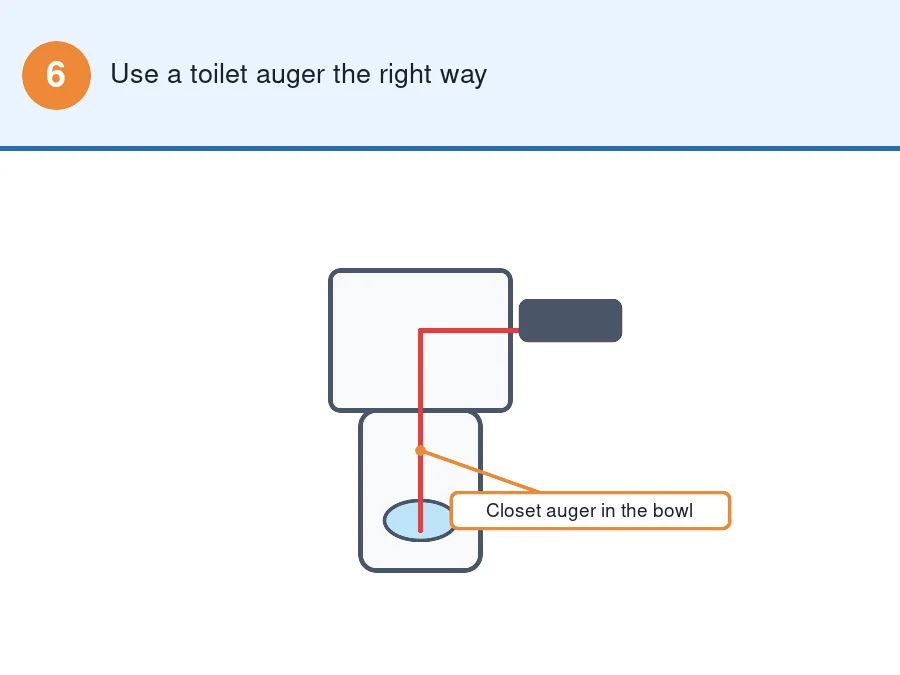
Porcelain has rules.
1. Insert the sleeve into the bowl outlet and feed cable by cranking, never by forcing.
2. Work through the obstruction, crank, and retrieve; most toilet clogs live in the trap.
3. Toilet won't flush properly helps when auguring clears nothing, since weak flushes are often a tank problem instead.
4. If the auger pulls back wipes or foreign objects repeatedly, the fix is habit change, not more cable.
7. Know when the clog is beyond the auger
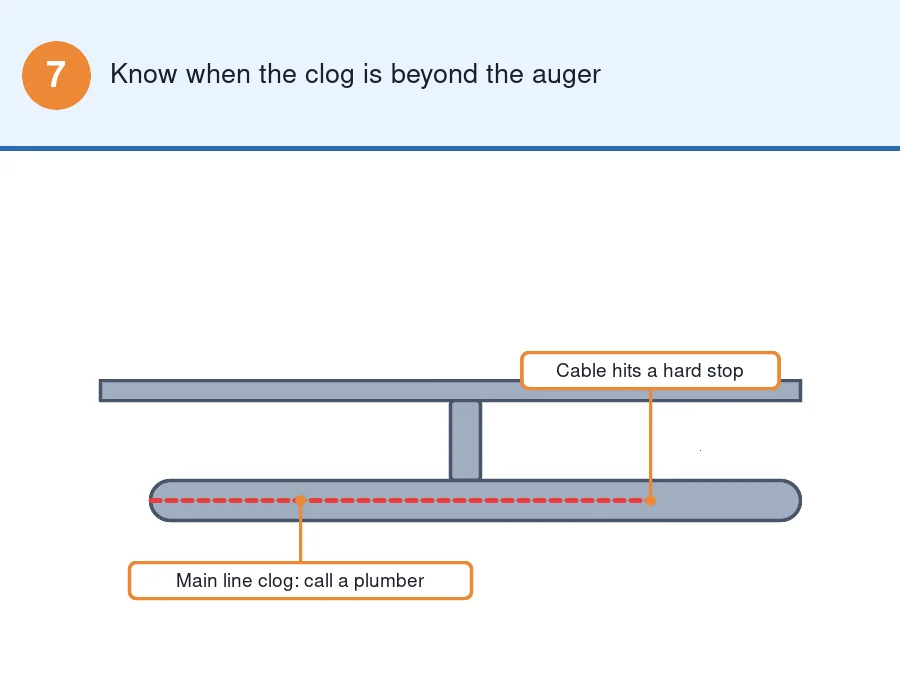
The main line announces itself.
1. Multiple slow fixtures at once means the blockage is shared, downstream of them all.
2. Water backing up in a tub when the washer drains is a main-line symptom; toilet gurgles when the washer drains explains it.
3. A solid stop the cable cannot pass can be a collapsed pipe or a lost object, and either way, that is plumber work.
4. Recurring clogs in the same drain deserve a camera inspection, not endless augering.
Common mistakes
- Using a standard auger in a toilet and scratching the bowl.
- Forcing the cable until it kinks inside the drain.
- Augering through a drain full of chemical cleaner.
- Poking a hole through the clog and calling it cleared.
- Skipping the trap and strainer, where many clogs actually live.
Related guides
- How to Unclog a Shower Drain: Hair Clogs Gone in 30 Minutes
- Clogs and Slow Drains: How to Clear Them and Keep Them Clear
- How to Unclog a Toilet Without a Plunger: 5 Methods That Work
- How to Unclog a Bathroom Sink: Five Ways That Work
- How to Find a Water Leak in Your House
FAQ
How do you use a drain auger?
Feed the cable slowly while cranking clockwise, ease it around bends with light back-and-forth, crank into the clog until it hooks, then retrieve slowly. Repeat until the cable comes back clean and water runs free.
Can you use a drain snake on a toilet?
Only a toilet auger, which has a protective sleeve that keeps the cable from scratching porcelain. A standard hand auger will mark the bowl permanently.
What if the drain auger won't go any further?
Back up, crank, and try again at a different angle, since it may be a bend rather than the clog. A hard stop that will not pass after several attempts can be a collapsed pipe or foreign object and needs a plumber.
Is a drain auger better than chemical drain cleaner?
Yes, almost always. The auger physically removes the clog, while chemicals often burn a small channel through it and damage older pipes. Never combine them; auger a drain only when it is chemical-free.
More from this topic
- Plunger vs Toilet Auger vs Drain Snake: Which to Use: Toilet auger vs drain snake vs plunger: what each tool is for, with a Korky plunger, Ridgid K-3 auger and...
- How to Unclog a Drain Without Harsh Chemicals: See how to unclog a drain with a plunger, hot water, a drain snake or baking soda. Learn what to try first...
- How to Unclog a Shower Drain: Hair Clogs Gone in 30 Minutes: How to unclog a shower drain: pull the cover, extract the hair, flush the line and auger the stubborn ones,...
- Clogs and Slow Drains: How to Clear Them and Keep Them Clear: Clogs and slow drains: work out which drain is clogged and why, clear it with a plunger, snake or hot water....
- Septic Tank Maintenance: What a Homeowner Can Do: Septic tank maintenance explained: how the system works, what to do yourself, how often to pump and inspect,...
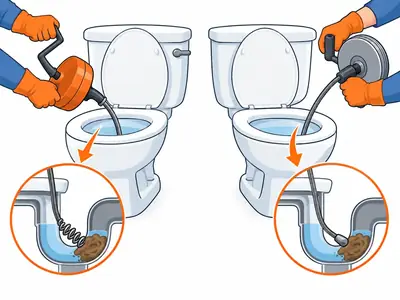 Tools and BasicsPlunger vs Toilet Auger vs Drain Snake: Which to UseToilet auger vs drain snake vs plunger: what each tool is for, with a Korky plunger, Ridgid K-3 auger and Cobra snake compared by use as of Nov 2026.
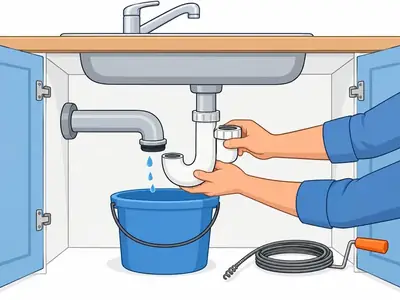 PlumbingHow to Unclog a Drain Without Harsh ChemicalsSee how to unclog a drain with a plunger, hot water, a drain snake or baking soda. Learn what to try first and what to avoid. Steps and safety tips included.
 PlumbingHow to Unclog a Shower Drain: Hair Clogs Gone in 30 MinutesHow to unclog a shower drain: pull the cover, extract the hair, flush the line and auger the stubborn ones, all without chemicals.
 PlumbingClogs and Slow Drains: How to Clear Them and Keep Them ClearClogs and slow drains: work out which drain is clogged and why, clear it with a plunger, snake or hot water. Includes the tools you need and when to call a pro.
 PlumbingSeptic Tank Maintenance: What a Homeowner Can DoSeptic tank maintenance explained: how the system works, what to do yourself, how often to pump and inspect, and when to call a pro.