
How to Unclog a Shower Drain: Hair Clogs Gone in 30 Minutes
Part of: Basic plumbing
- Difficulty
- Easy
- Time
- 15 to 45 minutes
- Tools
- A screwdriver for the cover, a plastic drain snake or zip tool, a plunger, a hand auger for stubborn clogs, gloves
- Call a pro if
- The clog survives the auger, multiple fixtures drain slowly, or sewage backs up at the lowest drain, since that is main-line trouble.
In this guide
- Wear protection
- Chemical safety
Hair collects right below the surface, but how you reach it depends on the drain. A grid, a pop-up and a lever each come apart differently. Here is how to unclog a shower drain once you know which one you have.
1. Identify the drain
1. Look at what is in the floor of the shower or tub.
2. A flat grid or cover with screws or a small center screw is a strainer.
3. A knob you push or twist is a pop-up stopper.
4. A lever on the overflow plate above the drain is a trip lever.
2. Strainer drain
Remove the screw and lift the grid. Pull out the hair mat by hand or with a bent wire. Then run a plastic zip tool down the pipe, working it slowly so it catches and brings the hair back up.
3. Pop-up stopper
Unscrew the small set screw under the knob if there is one, or twist the stopper counterclockwise and lift it straight up. Wipe the hair off the stem and the base, then clean the opening below.
4. Trip lever
Take the two screws out of the overflow plate and pull the linkage slowly up through the hole. The plunger at the end collects hair. Clean it, check that it moves freely, and feed it back down.
5. Flush it
Run hot tap water for a minute, then squirt in dish soap and flush again. If the water is still slow, the clog is deeper than the drain body. Plunge with the overflow covered by a wet cloth, or use a hand auger.
6. Stop it coming back
Fit a hair catcher over the drain and empty it after showers. Pull the stopper and clean it every month.
Common mistakes
- Pouring chemicals first and leaving them in the pipe.
- Forcing a stopper that has a hidden set screw.
- Dropping the overflow linkage down the pipe.
- Plunging without sealing the overflow.
FAQ
Why does my shower drain back up so often?
Hair and soap bind together just below the grate. A catcher stops most of it.
Can I use boiling water?
Not on plastic fittings or a drain with sealed joints. Hot tap water is enough.
When is it not the shower?
If other drains are slow or sewage rises, the clog is in the main line.
Related guides
- How to Unclog a Bathroom Sink: Five Ways That Work: How to unclog a bathroom sink: clear the stopper, plunge, clean the trap and auger the line, in the order...
- How to Unclog a Kitchen Sink: Clear It in Minutes: How to unclog a kitchen sink with boiling water, a plunger and a P-trap cleanout. Fix a slow or blocked drain...
- How to Use a Drain Auger: Clear Clogs a Plunger Can't: How to use a drain auger: feed, crank and retrieve the cable through sinks, tubs and toilets without...
- How to Unclog a Bathtub Drain With a Hair Clog: How to unclog a bathtub drain with a hair clog using a bent wire, a drain snake or baking soda and vinegar....
- How to Unclog a Toilet Without a Plunger: How to unclog a toilet without a plunger using hot water, dish soap, a toilet brush, a wire hanger...
 PlumbingHow to Unclog a Bathroom Sink: Five Ways That WorkHow to unclog a bathroom sink: clear the stopper, plunge, clean the trap and auger the line, in the order that clears most clogs fastest.
 PlumbingHow to Unclog a Kitchen Sink: Clear It in MinutesHow to unclog a kitchen sink with boiling water, a plunger and a P-trap cleanout. Fix a slow or blocked drain without chemicals.
 PlumbingHow to Use a Drain Auger: Clear Clogs a Plunger Can'tHow to use a drain auger: feed, crank and retrieve the cable through sinks, tubs and toilets without scratching fixtures or pushing clogs deeper.
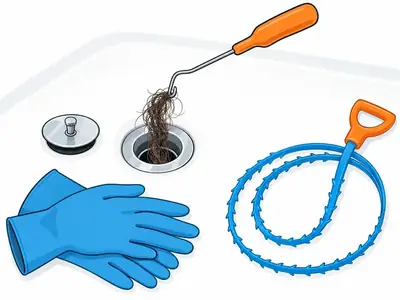 BathroomHow to Unclog a Bathtub Drain With a Hair ClogHow to unclog a bathtub drain with a hair clog using a bent wire, a drain snake or baking soda and vinegar. Steps, time and when to call a plumber.
 PlumbingHow to Unclog a Toilet Without a PlungerHow to unclog a toilet without a plunger using hot water, dish soap, a toilet brush, a wire hanger alternative or an auger, and when to stop.