
How to Unclog a Kitchen Sink: Clear It in Minutes
Part of: Basic plumbing
- Difficulty
- Easy
- Time
- 30 to 60 minutes
- Tools
- A plunger, a bucket, an adjustable wrench, rubber gloves, a drain auger
- Call a pro if
- The clog persists after the trap and auger work, since the blockage is past the arm and into the branch or main line.
In this guide
- Chemical safety
A kitchen sink clog is almost always grease, and grease almost always lives in the trap or the first few feet of drain line. How to unclog a kitchen sink without chemicals takes thirty minutes of escalation: hot water, then the plunger, then the trap, then the auger. One of the four nearly always wins.
1. Start with boiling water
The free first try.
1. Scoop standing water out of the sink into a bucket first.
2. Pour a full kettle of boiling water down the drain in stages, letting each pour work.
3. Grease clogs melt and flush; a drain that swallows the kettle and runs free is done.
4. Water that stands still means the clog is mechanical or dense; move on.
2. Try the plunger
Kitchen plunging is not toilet plunging.
1. Use a cup plunger, not a flange plunger.
2. Seal the second bowl of a double sink with a wet rag or the stopper, or the pressure escapes.
3. Fill the clogged side with a few inches of water, seal the plunger over the drain and pump firmly ten to fifteen times.
4. Water that drains after plunging is the clog breaking up; flush it with hot water for a minute.
3. Clean the P-trap
Where kitchen clogs live.
1. Place the bucket under the curved trap beneath the sink.
2. Loosen the two slip nuts by hand or with the wrench and drop the trap into the bucket.
3. Scrape the trap clean; grease coats it like candle wax and catches everything behind it.
4. Shine a light into the trap arm, the pipe into the wall; a clog you can see there comes out with the auger.
4. Auger the drain line
The step that reaches the wall.
1. Feed the auger into the trap arm, the pipe the trap connected to.
2. Crank the handle as you push; the cable corkscrews into the clog.
3. Resistance followed by a release is the clog breaking; pull the cable back with the debris.
4. Reassemble the trap and run hot water for two full minutes.
5. When the disposal is the clog
Kitchen sinks with a disposal have an extra suspect.
1. A humming, non-spinning disposal is jammed; how to reset a garbage disposal walks the fix.
2. Run the disposal with hot water after any unclog to flush the line.
3. A disposal that grinds but does not drain means the clog is past it, in the trap or arm.
4. Never put a hand in the disposal, even unplugged; the tool lives in the kit.
6. Check for the double-sink split
Two bowls, one drain line.
1. Both bowls clogging at once means the clog is below the shared point, in the trap or arm.
2. One bowl clogging while the other drains means the clog is above the shared point.
3. The disposal side backing up into the second bowl is the classic trap clog.
4. Plunge the non-disposal side with the disposal side stopped for the best seal.
7. Keep the kitchen drain clear
The habits that prevent the next clog.
1. Never pour grease down the drain; wipe the pan with a paper towel first.
2. Run hot water for thirty seconds after every dish session.
3. Keep coffee grounds, rice, pasta and fibrous peels out of the disposal.
4. A monthly kettle of boiling water melts the grease film before it builds; how to replace a P-trap covers a trap too corroded to clean.
Common mistakes
- Reaching for chemical cleaner first, then plunging a caustic soup.
- Plunging a double sink with the second bowl unsealed.
- Reassembling the trap without cleaning the trap arm.
- Augering through the disposal instead of removing the trap.
- Declaring victory on a slow drain; a partial clog returns within days.
FAQ
How do you unclog a kitchen sink fast?
Start with a kettle of boiling water, then plunge with the second bowl sealed, then drop and clean the P-trap, then auger the trap arm. Most kitchen clogs clear at the trap, thirty to sixty minutes total.
Why does my kitchen sink keep clogging?
Grease is the usual repeat offender; it coats the trap and catches food particles until the line closes. Wipe greasy pans before washing, run hot water after use and boil-flush monthly.
Can you use drain cleaner on a kitchen sink?
Skip it. Chemical cleaners corrode pipes, burn on contact and usually push a grease clog deeper. Boiling water, a plunger, the trap cleanout and an auger clear the same clog safely.
How do you unclog a double kitchen sink?
Stopper or rag the unclogged side tight, then plunge the clogged side with a few inches of water. If both bowls back up together, the clog is in the shared trap; drop and clean it.
Related guides
- How to Unclog a Bathroom Sink: Five Ways That Work: How to unclog a bathroom sink: clear the stopper, plunge, clean the trap and auger the line, in the order...
- How to Unclog a Shower Drain: Hair Clogs Gone in 30 Minutes: How to unclog a shower drain: pull the cover, extract the hair, flush the line and auger the stubborn ones,...
- How to Use a Drain Auger: Clear Clogs a Plunger Can't: How to use a drain auger: feed, crank and retrieve the cable through sinks, tubs and toilets without...
- How to Unclog a Toilet Without a Plunger: How to unclog a toilet without a plunger using hot water, dish soap, a toilet brush, a wire hanger...
- Kitchen Sink Clogged Double Basin: How to Fix It: Kitchen sink clogged double basin? Plunge with the other side blocked, clean the trap and check the disposal....
 PlumbingHow to Unclog a Bathroom Sink: Five Ways That WorkHow to unclog a bathroom sink: clear the stopper, plunge, clean the trap and auger the line, in the order that clears most clogs fastest.
 PlumbingHow to Unclog a Shower Drain: Hair Clogs Gone in 30 MinutesHow to unclog a shower drain: pull the cover, extract the hair, flush the line and auger the stubborn ones, all without chemicals.
 PlumbingHow to Use a Drain Auger: Clear Clogs a Plunger Can'tHow to use a drain auger: feed, crank and retrieve the cable through sinks, tubs and toilets without scratching fixtures or pushing clogs deeper.
 PlumbingHow to Unclog a Toilet Without a PlungerHow to unclog a toilet without a plunger using hot water, dish soap, a toilet brush, a wire hanger alternative or an auger, and when to stop.
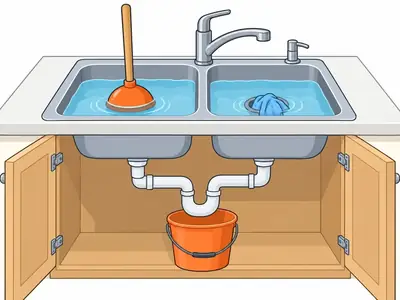 PlumbingKitchen Sink Clogged Double Basin: How to Fix ItKitchen sink clogged double basin? Plunge with the other side blocked, clean the trap and check the disposal. Steps, tools and when to call a plumber.